
India's Fiscal Deficit Falls to 26.8% of FY27 Target
India's fiscal deficit eased, tax revenue rose, and RBI dividend supported non-tax revenue.
'%3E%3Crect%20width%3D'96'%20height%3D'96'%20fill%3D'%230B6E4F'%2F%3E%3Ccircle%20cx%3D'30'%20cy%3D'24'%20r%3D'44'%20fill%3D'%23fff'%20opacity%3D'.12'%2F%3E%3Ccircle%20cx%3D'60'%20cy%3D'74'%20r%3D'40'%20fill%3D'%23000'%20opacity%3D'.10'%2F%3E%3C%2Fg%3E%3Cg%20fill%3D'none'%20stroke%3D'%23fff'%20stroke-width%3D'3.2'%20stroke-linecap%3D'round'%20stroke-linejoin%3D'round'%3E%3Cpolyline%20points%3D'31%2C59%2041%2C49%2049%2C54%2063%2C37'%2F%3E%3Cpolyline%20points%3D'55%2C37%2063%2C37%2063%2C45'%2F%3E%3C%2Fg%3E%3C%2Fsvg%3E)
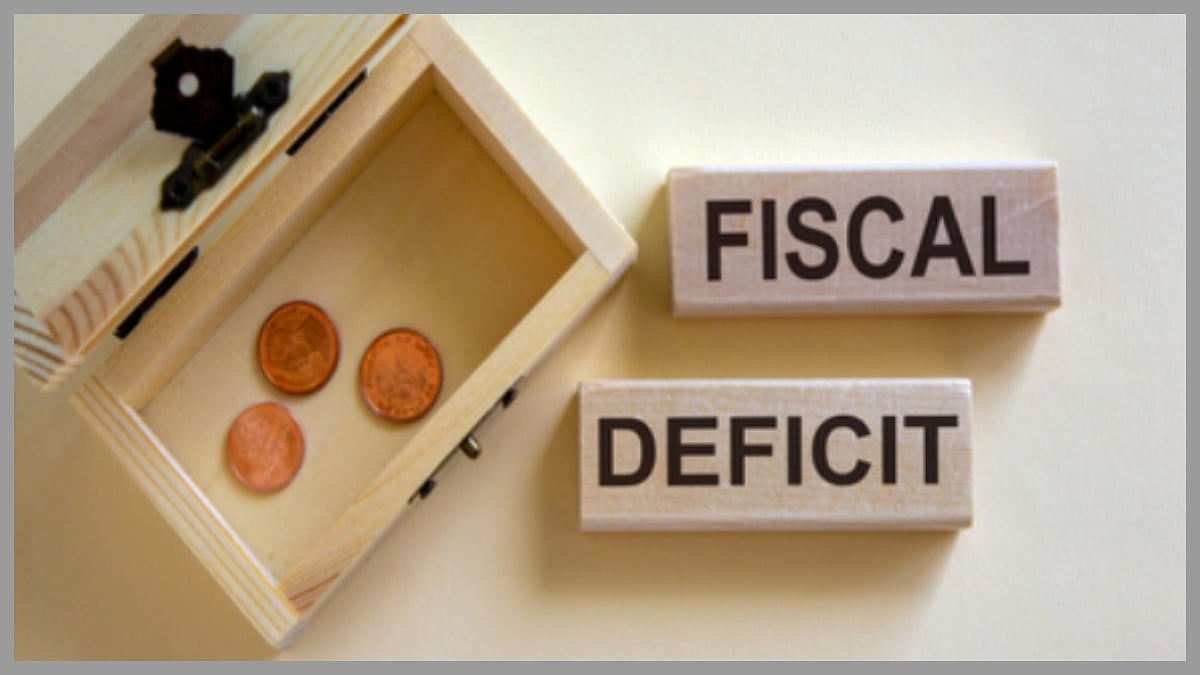
India's fiscal deficit declined during the first four months of the financial year 2026-27, reaching Rs 4.55 lakh crore, which is 26.8% of the government's full-year target. This is a decrease from the same period in the previous year, when the deficit was Rs 4.70 lakh crore, or 29.9% of the full-year estimate.
The government's total receipts during April-July were Rs 13.07 lakh crore, accounting for 35.8% of the Budget Estimate for FY27. This includes tax revenue of Rs 8.45 lakh crore and non-tax revenue of Rs 4.23 lakh crore. The non-tax revenue was supported by the Reserve Bank of India's (RBI) record dividend transfer of Rs 2.87 lakh crore to the Central government.
The overall expenditure during the same period was Rs 17.62 lakh crore, representing 32.9% of the annual target. In comparison, the expenditure during the same period last year accounted for 30.9% of the annual target.
The revenue receipts totalled Rs 12.68 lakh crore, with tax revenue making up Rs 8.45 lakh crore and non-tax revenue making up Rs 4.23 lakh crore. The non-tax revenue also includes dividends from public sector companies, spectrum-related income, and fees collected by government departments.
India's revenue deficit stood at Rs 43,645 crore during April-July, equivalent to 7.4% of the full-year Budget target. The government achieved its fiscal deficit target of 4.4% of GDP in FY26 and has lowered the target to 4.3% for FY27 as part of its fiscal consolidation plan.
However, elevated petroleum and fertiliser prices due to the West Asia crisis could increase the subsidy bill and put pressure on government spending. A lower fiscal deficit can reduce government borrowing, improve economic stability, and leave banks with more funds to lend to businesses and consumers.
This can support investment and growth while helping maintain price stability. The government's efforts to manage its fiscal deficit are crucial for maintaining economic stability and promoting growth.
In the context of India's economic growth, the management of the fiscal deficit is critical. The government's ability to keep its spending in check and increase revenue will be essential in achieving its fiscal targets.
The RBI's dividend transfer has provided significant support to the government's non-tax revenue. The record dividend transfer of Rs 2.87 lakh crore is higher than the previous year's transfer of Rs 2.69 lakh crore.
Overall, the decrease in India's fiscal deficit is a positive sign for the economy. However, the government must continue to manage its spending and revenue carefully to achieve its fiscal targets and promote economic growth.
The implications of the fiscal deficit on the economy are significant. A lower fiscal deficit can lead to reduced government borrowing, which can improve economic stability and increase lending to businesses and consumers. This, in turn, can support investment and growth while maintaining price stability.
In conclusion, India's fiscal deficit has eased, reaching 26.8% of the government's full-year target. The government's efforts to manage its fiscal deficit are crucial for maintaining economic stability and promoting growth. The RBI's dividend transfer has provided significant support to the government's non-tax revenue, and the government must continue to manage its spending and revenue carefully to achieve its fiscal targets.
Frequently asked questions
What is India's fiscal deficit target for FY27?
India's fiscal deficit target for FY27 is 4.3% of GDP.
What supported the increase in non-tax revenue?
The RBI's record dividend transfer of Rs 2.87 lakh crore supported the increase in non-tax revenue.