Tenneco Launches Vrikshaaropan Abhiyan Phase II
Tenneco Clean Air India Limited launches phase II of Vrikshaaropan Abhiyan, aiming to plant 14,000 native saplings. The initiative focuses on urban afforestation and environmental sustainability.
'%3E%3Crect%20width%3D'96'%20height%3D'96'%20fill%3D'%234A235A'%2F%3E%3Ccircle%20cx%3D'30'%20cy%3D'24'%20r%3D'44'%20fill%3D'%23fff'%20opacity%3D'.12'%2F%3E%3Ccircle%20cx%3D'60'%20cy%3D'74'%20r%3D'40'%20fill%3D'%23000'%20opacity%3D'.10'%2F%3E%3C%2Fg%3E%3Cg%20fill%3D'none'%20stroke%3D'%23fff'%20stroke-width%3D'3'%3E%3Ccircle%20cx%3D'48'%20cy%3D'48'%20r%3D'16'%2F%3E%3Cellipse%20cx%3D'48'%20cy%3D'48'%20rx%3D'6.5'%20ry%3D'16'%2F%3E%3Cline%20x1%3D'32'%20y1%3D'42'%20x2%3D'64'%20y2%3D'42'%2F%3E%3Cline%20x1%3D'32'%20y1%3D'54'%20x2%3D'64'%20y2%3D'54'%2F%3E%3C%2Fg%3E%3C%2Fsvg%3E)
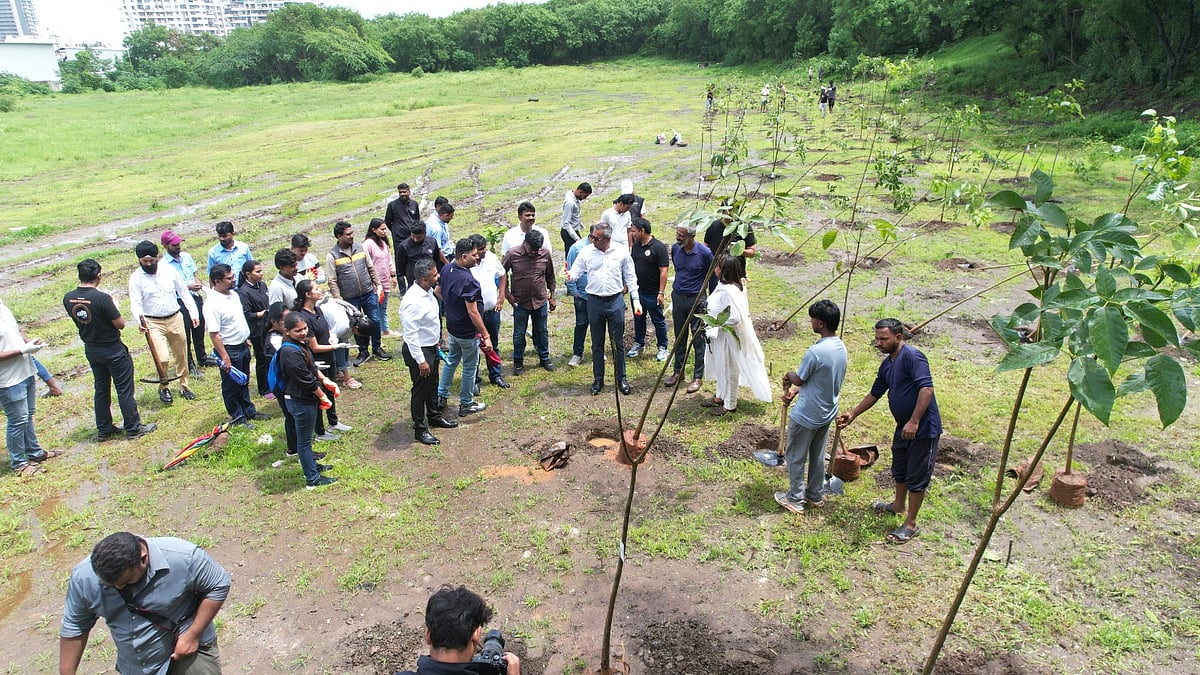
Tenneco Clean Air India Limited, in collaboration with Vaghmi Foundation and the Indian Army, has launched the second phase of its flagship Vrikshaaropan Abhiyan.
The initiative aims to plant 14,000 native saplings across India by the end of the current financial year.
The launch of the second phase took place on Saturday at Army Cantonment Land in Pune.
As part of this initiative, 5,000 native trees will be planted and scientifically maintained in Pune by Vaghmi Foundation.
Additionally, 9,000 saplings will be planted across Pune and Gurugram in partnership with the Times Employ India Foundation.
The Vrikshaaropan Abhiyan initiative focuses on improving urban biodiversity, enhancing air quality, reducing heat island effects, restoring degraded ecosystems, and contributing to long-term climate resilience.
This phase builds upon the success of the first phase, under which 5,000 native trees were planted at the same Army land and continue to be scientifically maintained by Vaghmi Foundation.
Speaking at the launch, Arvind Chandra, Chief Executive Officer, Tenneco Clean Air India Limited, emphasized the company's responsibility towards cleaner air and its commitment to creating greener, healthier communities.
He highlighted the importance of initiatives like Vrikshaaropan Abhiyan in strengthening nature's ability to absorb carbon dioxide.
Samaiirah, Founder of Vaghmi Foundation, also spoke at the launch, emphasizing the importance of long-term ecological restoration.
She stated that tree plantation is not just about planting saplings, but about restoring ecosystems and securing a healthier future for generations to come.
The Vrikshaaropan Abhiyan initiative demonstrates the collaborative efforts of Tenneco Clean Air India Limited, Vaghmi Foundation, and the Indian Army towards building a more sustainable future.
The focus on scientific plantation practices, continuous monitoring, and dedicated maintenance ensures high survival rates and lasting environmental impact.
This initiative is a significant step towards promoting urban afforestation and environmental sustainability in India.
It highlights the importance of collective efforts in addressing environmental challenges and creating a better future for generations to come.
In conclusion, the launch of Vrikshaaropan Abhiyan Phase II marks a significant milestone in the journey towards a more sustainable and environmentally conscious India.
The initiative's focus on urban afforestation, biodiversity, and climate resilience is a testament to the commitment of the organizations involved in creating a better future for all.
Frequently asked questions
What is the goal of Vrikshaaropan Abhiyan Phase II?
The goal is to plant 14,000 native saplings across India by the end of the current financial year.
What are the key focus areas of the initiative?
The initiative focuses on improving urban biodiversity, enhancing air quality, reducing heat island effects, restoring degraded ecosystems, and contributing to long-term climate resilience.