Phoenix Cuts Road Heat by 12F with Cool Pavement
Phoenix reduces road heat, but increases pedestrian exposure.
'%3E%3Crect%20width%3D'96'%20height%3D'96'%20fill%3D'%231B5E20'%2F%3E%3Ccircle%20cx%3D'30'%20cy%3D'24'%20r%3D'44'%20fill%3D'%23fff'%20opacity%3D'.12'%2F%3E%3Ccircle%20cx%3D'60'%20cy%3D'74'%20r%3D'40'%20fill%3D'%23000'%20opacity%3D'.10'%2F%3E%3C%2Fg%3E%3Cg%3E%3Ccircle%20cx%3D'48'%20cy%3D'48'%20r%3D'15'%20fill%3D'%23fff'%2F%3E%3Cpath%20d%3D'M43%2034%20Q50%2048%2043%2062'%20fill%3D'none'%20stroke%3D'%238a94a6'%20stroke-width%3D'2.4'%2F%3E%3Cpath%20d%3D'M47%2033%20Q54%2048%2047%2063'%20fill%3D'none'%20stroke%3D'%238a94a6'%20stroke-width%3D'1.8'%20stroke-dasharray%3D'1.5%203'%2F%3E%3C%2Fg%3E%3C%2Fsvg%3E)
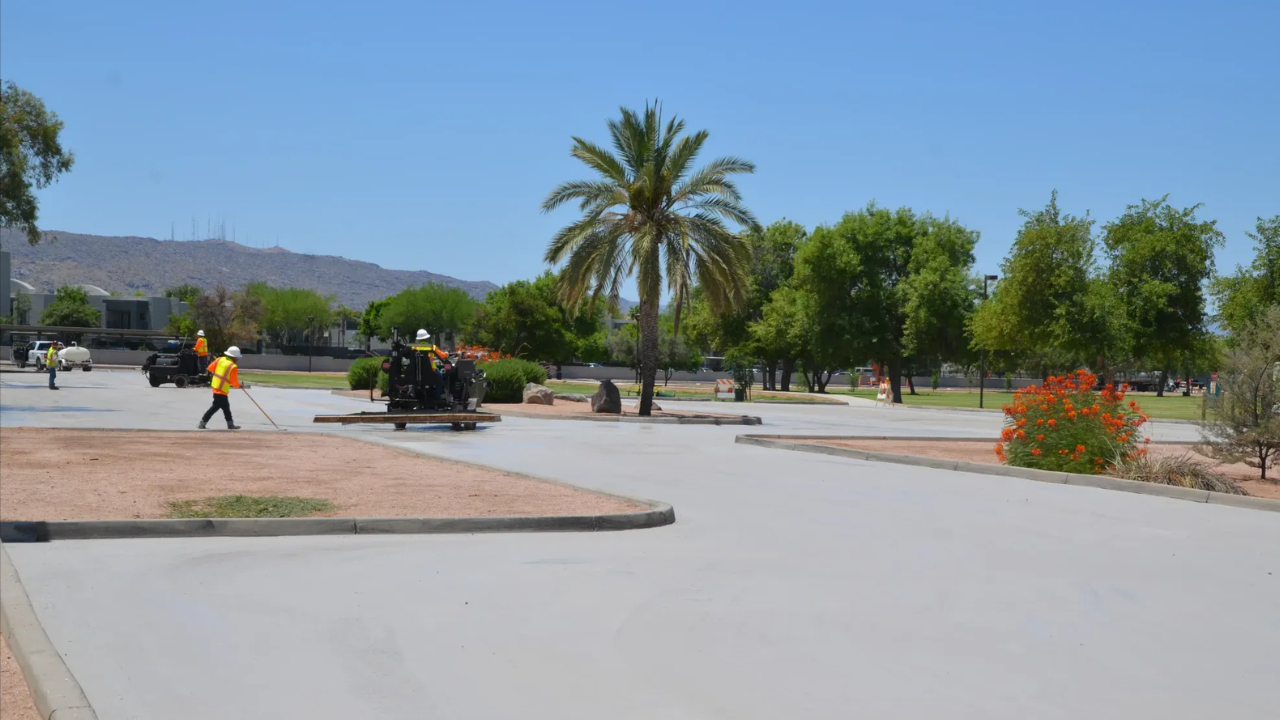
Phoenix has implemented a new initiative to reduce the urban heat island effect by applying a reflective coating to its roads. This coating has been effective in reducing asphalt temperatures by 12 degrees Fahrenheit during daylight hours. However, researchers have found that this treatment has an unintended consequence: it increases heat radiation exposure for pedestrians who are in close proximity to the coated roads.
The study's findings suggest that while the reflective coating is successful in reducing road heat, it does not necessarily translate to improved comfort for pedestrians. In fact, the increased heat radiation exposure can have negative impacts on human health, particularly for vulnerable populations such as the elderly and young children.
The researchers behind the study recommend that cities like Phoenix explore a range of solutions to address the urban heat island effect, rather than relying solely on reflective coatings. One key strategy is to incorporate shade from trees and buildings into urban design. This can help to reduce the amount of direct sunlight that pedestrians are exposed to, thereby decreasing their heat radiation exposure.
Phoenix's experiment with cool pavement is part of a broader effort to mitigate the effects of rising temperatures in urban areas. As cities continue to grow and develop, they are likely to experience increased temperatures due to the urban heat island effect. This effect occurs when built-up areas like roads, buildings, and sidewalks absorb and retain heat from the sun, causing temperatures to rise.
The use of reflective coatings on roads is just one of many strategies that cities are exploring to address this issue. Other approaches include increasing the amount of green space in urban areas, implementing smart urban planning designs, and promoting the use of cool roofs and walls.
While Phoenix's experience with cool pavement has yielded mixed results, it highlights the importance of considering the complex interactions between urban design, climate, and human health. By taking a comprehensive approach to addressing the urban heat island effect, cities can create more sustainable, livable, and comfortable environments for their residents.
The study's findings have significant implications for cities around the world, particularly those in hot and dry climates like Phoenix. As temperatures continue to rise due to climate change, it is essential that cities prioritize the development of effective strategies to mitigate the urban heat island effect and protect the health and well-being of their residents.
In conclusion, Phoenix's experiment with cool pavement has shown that reducing road heat is just one part of the solution to addressing the urban heat island effect. By incorporating shade, green space, and other design elements into urban planning, cities can create more comfortable and sustainable environments for their residents, even in the face of rising temperatures.
Frequently asked questions
What is the urban heat island effect?
The urban heat island effect occurs when built-up areas like roads, buildings, and sidewalks absorb and retain heat from the sun, causing temperatures to rise.
How can cities mitigate the urban heat island effect?
Cities can mitigate the urban heat island effect by incorporating shade from trees and buildings, increasing green space, and promoting the use of cool roofs and walls.