India Regains Control in Kargil War on July 14, 1999
India marks a turning point, regaining control and forcing Pakistan's withdrawal.
'%3E%3Crect%20width%3D'96'%20height%3D'96'%20fill%3D'%234A235A'%2F%3E%3Ccircle%20cx%3D'30'%20cy%3D'24'%20r%3D'44'%20fill%3D'%23fff'%20opacity%3D'.12'%2F%3E%3Ccircle%20cx%3D'60'%20cy%3D'74'%20r%3D'40'%20fill%3D'%23000'%20opacity%3D'.10'%2F%3E%3C%2Fg%3E%3Cg%20fill%3D'none'%20stroke%3D'%23fff'%20stroke-width%3D'3'%3E%3Ccircle%20cx%3D'48'%20cy%3D'48'%20r%3D'16'%2F%3E%3Cellipse%20cx%3D'48'%20cy%3D'48'%20rx%3D'6.5'%20ry%3D'16'%2F%3E%3Cline%20x1%3D'32'%20y1%3D'42'%20x2%3D'64'%20y2%3D'42'%2F%3E%3Cline%20x1%3D'32'%20y1%3D'54'%20x2%3D'64'%20y2%3D'54'%2F%3E%3C%2Fg%3E%3C%2Fsvg%3E)
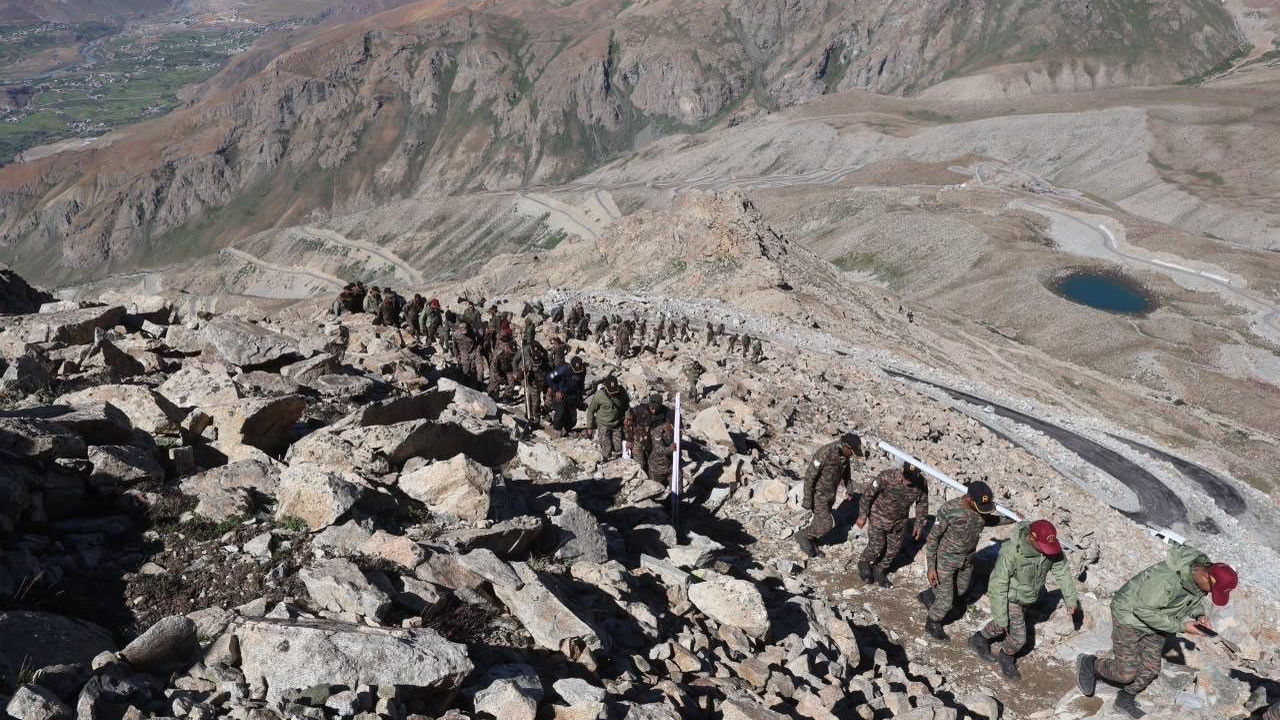
The Kargil War, a pivotal conflict between India and Pakistan, saw a significant turning point on July 14, 1999. On this day, the Indian Army successfully regained control of strategic heights in the Kargil region, forcing Pakistan to announce the withdrawal of its troops.
The Fire and Fury Corps played a crucial role in this operation, showcasing exceptional courage and coordinated efforts. Their bravery and determination were instrumental in achieving this milestone. The Indian Army's success on July 14, 1999, was a result of meticulous planning and execution.
Prime Minister Atal Bihari Vajpayee declared Operation Vijay a success on July 14, 1999, marking a significant victory for India. This announcement came after the Indian Army had secured key positions and forced the Pakistani troops to retreat. The success of Operation Vijay was a testament to the Indian Army's strength and resilience.
The Kargil War was sparked by Pakistan's infiltration into Indian territory in May 1999. The conflict escalated quickly, with both countries engaging in intense fighting. However, the Indian Army's strategic planning and bravery eventually paid off, leading to the withdrawal of Pakistani troops.
The Kargil region, located in the state of Jammu and Kashmir, is a strategic location due to its proximity to the Line of Control (LoC). The region's high-altitude terrain and harsh weather conditions made it a challenging battlefield for both armies. Despite these challenges, the Indian Army persevered and emerged victorious.
The success of Operation Vijay on July 14, 1999, was a significant milestone in the Kargil War. It marked a turning point in the conflict, with India gaining the upper hand and Pakistan being forced to withdraw its troops. The Indian Army's victory was a result of its bravery, strategic planning, and determination.
In the years following the Kargil War, India and Pakistan have made efforts to improve relations and reduce tensions. However, the conflict remains a significant event in the history of both countries, serving as a reminder of the importance of diplomacy and cooperation.
The Kargil War also highlighted the importance of military preparedness and strategic planning. The Indian Army's success in regaining control of the Kargil region was a result of its ability to adapt to challenging situations and execute effective strategies.
In conclusion, July 14, 1999, was a significant day in the Kargil War, marking a turning point in the conflict and a major victory for India. The Indian Army's bravery, strategic planning, and determination were instrumental in achieving this milestone, and the success of Operation Vijay remains an important event in Indian history.
The impact of the Kargil War can still be felt today, with the conflict serving as a reminder of the importance of diplomacy and cooperation between nations. The war also highlighted the importance of military preparedness and strategic planning, demonstrating the need for countries to be prepared for unexpected challenges and conflicts.
The legacy of the Kargil War continues to be felt in India, with the conflict remembered as a significant event in the country's history. The bravery and determination of the Indian Army during the war serve as an inspiration to future generations, and the success of Operation Vijay remains a source of national pride.
The Kargil War was a significant conflict that had far-reaching consequences for both India and Pakistan. The war marked a turning point in the relationship between the two countries, highlighting the need for diplomacy and cooperation. The conflict also demonstrated the importance of military preparedness and strategic planning, serving as a reminder of the need for countries to be prepared for unexpected challenges and conflicts.
The success of Operation Vijay on July 14, 1999, was a major milestone in the Kargil War, marking a significant victory for India and a turning point in the conflict. The Indian Army's bravery, strategic planning, and determination were instrumental in achieving this milestone, and the legacy of the war continues to be felt in India today.
The Kargil War serves as a reminder of the importance of national security and the need for countries to be prepared for unexpected challenges and conflicts. The conflict highlighted the importance of diplomacy and cooperation, demonstrating the need for nations to work together to resolve disputes and prevent conflicts.
In the end, the Kargil War was a significant event in the history of India and Pakistan, marking a turning point in the relationship between the two countries. The bravery and determination of the Indian Army during the war serve as an inspiration to future generations, and the success of Operation Vijay remains a source of national pride.
The impact of the Kargil War can still be felt today, with the conflict serving as a reminder of the importance of diplomacy and cooperation between nations. The war also highlighted the importance of military preparedness and strategic planning, demonstrating the need for countries to be prepared for unexpected challenges and conflicts.
The legacy of the Kargil War continues to be felt in India, with the conflict remembered as a significant event in the country's history. The bravery and determination of the Indian Army during the war serve as an inspiration to future generations, and the success of Operation Vijay remains a source of national pride.