Dr Dibya Singha Revolutionizes Joint Care in Eastern India with Robotic Orthopaedics
Robotic technology transforms joint care, Dr Dibya Singha leads the change, Improving surgical accuracy
'%3E%3Crect%20width%3D'96'%20height%3D'96'%20fill%3D'%23B3261E'%2F%3E%3Ccircle%20cx%3D'30'%20cy%3D'24'%20r%3D'44'%20fill%3D'%23fff'%20opacity%3D'.12'%2F%3E%3Ccircle%20cx%3D'60'%20cy%3D'74'%20r%3D'40'%20fill%3D'%23000'%20opacity%3D'.10'%2F%3E%3C%2Fg%3E%3Cg%20fill%3D'%23fff'%3E%3Crect%20x%3D'29'%20y%3D'49'%20width%3D'8'%20height%3D'19'%20rx%3D'1'%2F%3E%3Crect%20x%3D'39'%20y%3D'40'%20width%3D'9'%20height%3D'28'%20rx%3D'1'%2F%3E%3Crect%20x%3D'50'%20y%3D'45'%20width%3D'8'%20height%3D'23'%20rx%3D'1'%2F%3E%3Crect%20x%3D'60'%20y%3D'53'%20width%3D'7'%20height%3D'15'%20rx%3D'1'%2F%3E%3Crect%20x%3D'41'%20y%3D'34'%20width%3D'5'%20height%3D'6'%2F%3E%3C%2Fg%3E%3C%2Fsvg%3E)
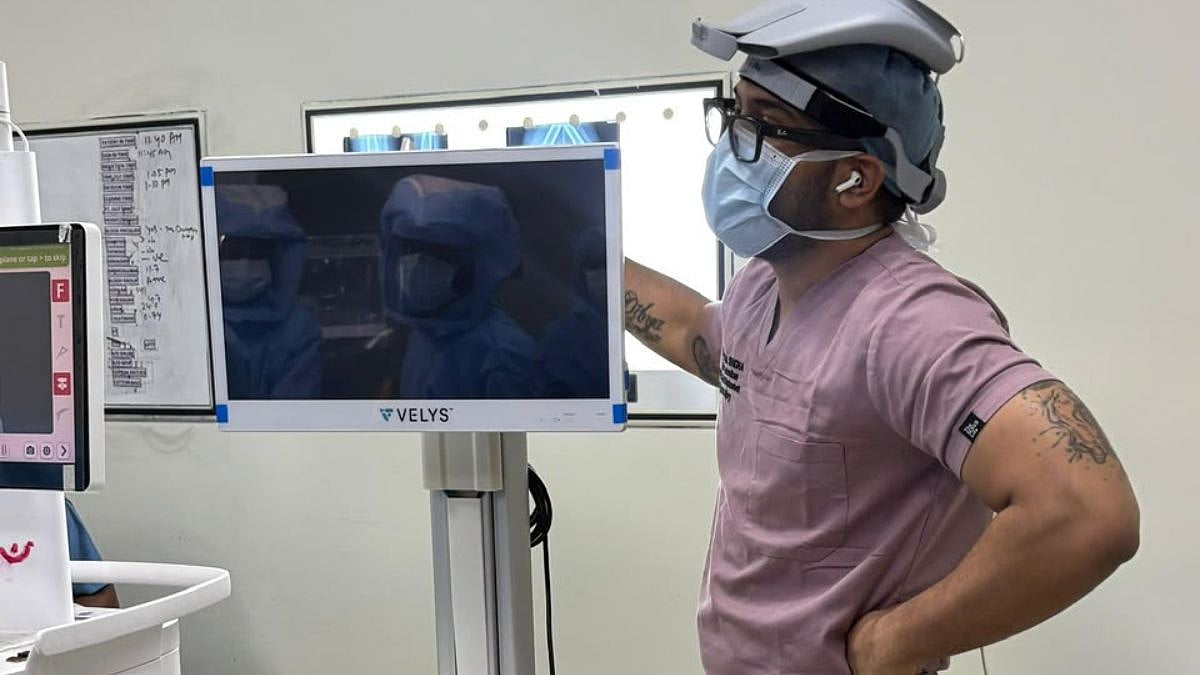
A significant transformation is underway in orthopaedic care in India, driven by the adoption of robotic technology, minimally invasive procedures, and precise surgical techniques. This shift is improving treatment outcomes for patients with joint disorders and sports injuries. At the forefront of this change is Dr. Dibya Singha, a renowned orthopaedic surgeon based in Bhubaneswar.
Dr. Singha is currently a Senior Consultant in Orthopaedics, Robotic Joint Replacement, Arthroscopy, and Sports Medicine at Utkal Hospital. His expertise spans robotic-assisted joint replacements, arthroscopic surgery, complex trauma management, sports injury treatment, and minimally invasive procedures. Additionally, he leads OrthoOne Orthopaedics, a specialized center providing comprehensive care for bone, joint, ligament, muscle, and spine-related issues.
The demand for specialized orthopaedic care has been on the rise over the past decade, driven by factors such as increased life expectancy, growing participation in recreational sports, sedentary lifestyles, obesity, and age-related conditions. As a result, orthopaedic surgeons are increasingly combining traditional skills with modern technology to create personalized treatment plans.
One of the significant developments in recent years is the use of robotic-assisted joint replacement surgery. This technology enables surgeons to create patient-specific surgical plans using detailed 3D images before surgery begins. During the operation, the robotic system assists with precise bone preparation and implant placement, while the surgeon maintains full control. The goal of this approach is to improve implant alignment, preserve healthy bone and soft tissue, and ensure consistent surgical results.
Dr. Singha has incorporated these modern techniques into his orthopaedic practice, particularly in knee and hip replacements. While robotic technology does not replace the surgeon's judgment or skill, it serves as a powerful tool that enhances planning and execution. As healthcare institutions continue to invest in digital surgical platforms, robotic orthopaedics is becoming an essential part of joint replacement programs in India.
In addition to robotic joint replacement, Dr. Singha is skilled in arthroscopic surgery of the knee and shoulder, sports medicine, fracture management, trauma reconstruction, ligament repair, and minimally invasive procedures. Arthroscopy, which involves using small cameras and special instruments through tiny cuts, is a preferred technique for diagnosing and treating many sports-related injuries. This approach typically results in less tissue damage, shorter hospital stays, and faster recovery compared to traditional open surgery.
Dr. Singha's professional training has played a crucial role in shaping his clinical career. His expertise and commitment to staying updated with the latest advancements in orthopaedic care have enabled him to provide high-quality treatment to his patients.
The integration of robotic technology and minimally invasive procedures in orthopaedic care is expected to continue transforming the field, enabling surgeons like Dr. Singha to provide more accurate and effective treatment options for patients. As the demand for specialized orthopaedic care continues to grow, the adoption of these modern techniques is likely to become more widespread, improving outcomes for patients across India.
The significance of Dr. Singha's work lies in its potential to improve the lives of countless individuals suffering from joint disorders and sports injuries. By leveraging the latest advancements in orthopaedic care, he is setting a new standard for treatment in Eastern India, and his work is likely to have a lasting impact on the field of orthopaedics in the region.
In conclusion, Dr. Dibya Singha's pioneering work in robotic orthopaedics is revolutionizing joint care in Eastern India. His commitment to providing personalized treatment plans, combined with his expertise in modern techniques, is improving outcomes for patients and setting a new standard for orthopaedic care in the region. As the field of orthopaedics continues to evolve, it is likely that Dr. Singha's work will serve as a model for other surgeons, inspiring a new generation of orthopaedic specialists to adopt innovative approaches to joint care.
The impact of Dr. Singha's work extends beyond the medical community, as it has the potential to improve the quality of life for individuals and families affected by joint disorders and sports injuries. By providing more accurate and effective treatment options, he is helping to reduce the burden of these conditions on individuals, families, and society as a whole. As the demand for specialized orthopaedic care continues to grow, Dr. Singha's work is likely to play an increasingly important role in shaping the future of joint care in India.
Frequently asked questions
What is robotic orthopaedics and how does it work?
Robotic orthopaedics uses robotic systems to assist surgeons in planning and executing joint replacement surgery, improving accuracy and reducing recovery time.
What are the benefits of arthroscopic surgery?
Arthroscopic surgery typically results in less tissue damage, shorter hospital stays, and faster recovery compared to traditional open surgery.