US Targets Transnational Terror Control Rooms
US Treasury sanctions key figures, charities and companies linked to Hamas, highlighting shift in focus to terror networks' leadership centers.
'%3E%3Crect%20width%3D'96'%20height%3D'96'%20fill%3D'%234A235A'%2F%3E%3Ccircle%20cx%3D'30'%20cy%3D'24'%20r%3D'44'%20fill%3D'%23fff'%20opacity%3D'.12'%2F%3E%3Ccircle%20cx%3D'60'%20cy%3D'74'%20r%3D'40'%20fill%3D'%23000'%20opacity%3D'.10'%2F%3E%3C%2Fg%3E%3Cg%20fill%3D'none'%20stroke%3D'%23fff'%20stroke-width%3D'3'%3E%3Ccircle%20cx%3D'48'%20cy%3D'48'%20r%3D'16'%2F%3E%3Cellipse%20cx%3D'48'%20cy%3D'48'%20rx%3D'6.5'%20ry%3D'16'%2F%3E%3Cline%20x1%3D'32'%20y1%3D'42'%20x2%3D'64'%20y2%3D'42'%2F%3E%3Cline%20x1%3D'32'%20y1%3D'54'%20x2%3D'64'%20y2%3D'54'%2F%3E%3C%2Fg%3E%3C%2Fsvg%3E)
The international effort to combat transnational terror networks has entered a new phase, with a focus on targeting the leadership centers responsible for managing, financing, and coordinating operations across multiple countries.
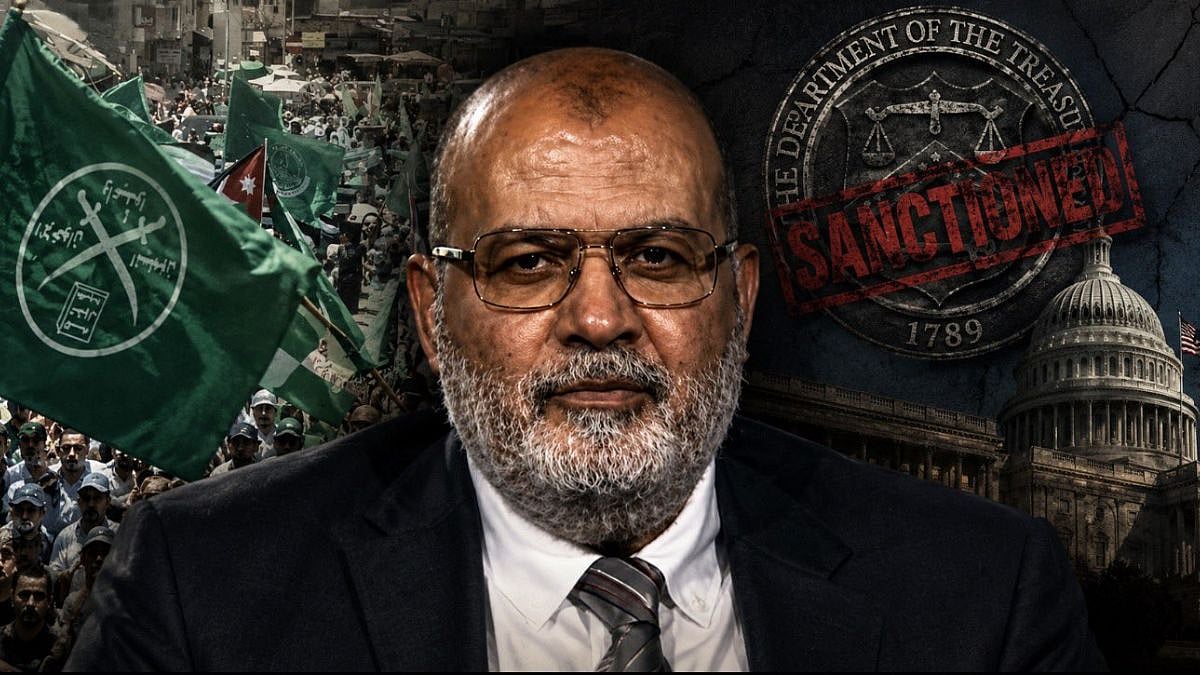
A recent example of this shift is the US Treasury's action against Mahmoud al-Abyari, a senior Egyptian Muslim Brotherhood leader based in the United Kingdom. On July 23, al-Abyari was designated alongside three individuals and three entities accused of providing material support to Hamas.
The US Treasury described a complex network in which Muslim Brotherhood affiliates and Hamas-directed front organizations used charitable structures and underground banking networks to move and disguise funds across jurisdictions. Al-Abyari, identified as secretary-general of the Muslim Brotherhood, was accused of supporting fundraising for two previously sanctioned organizations linked to Hamas.
The Treasury also identified two fundraising charities and a Türkiye-based company that transferred hundreds of thousands of dollars for Hamas and provided underground banking services involving both conventional currency and cryptocurrency.
The significance of this action lies not just in the targeting of a senior figure, but in the connections that link leadership, fundraising, and financial intermediation across countries. US Treasury Secretary Scott Bessent stated that the administration would pursue those enabling Hamas, whether under the guise of charities, businesses, or underground financial networks.
This reflects a broader change in the financial picture of transnational organizations. The Financial Action Task Force's 2025 assessment found that terrorist financing is becoming more decentralized, with networks exploiting regional financial hubs, informal systems, and self-financing alongside traditional fundraising.
For authorities, this means that there may be no single headquarters to disable. Instead, the critical infrastructure can consist of a senior figure in one country, a charity in another, a financial intermediary elsewhere, and trusted relationships connecting them.
Jennifer Shasky Calvery, a former director of the US Financial Crimes Enforcement Network, described financial reporting as a means to connect the dots between seemingly unrelated individuals and entities. This information has helped authorities identify terrorist supporters and overseas financial networks.
Observers argue that this development reflects a shift from pursuing separate branches to treating the organization as an interconnected network in which leadership, financing, and implementation are closely integrated.
The implications of this shift are significant, as it highlights the need for a more nuanced and coordinated approach to combating transnational terror networks. By targeting the leadership centers and financial networks that enable these organizations, authorities can disrupt their operations and prevent further attacks.
In the context of the global fight against terrorism, this shift in focus is a crucial step forward. It recognizes that transnational terror networks are complex and decentralized, and that a comprehensive approach is needed to disrupt their operations.
As the international community continues to evolve its strategies for combating terrorism, the targeting of transnational terror control rooms is likely to play an increasingly important role.
The US Treasury's action against al-Abyari and other individuals and entities linked to Hamas is a significant step in this direction, and highlights the need for continued cooperation and coordination between authorities to disrupt the financial networks that enable these organizations.
In conclusion, the shift in focus to transnational terror control rooms reflects a growing understanding of the complex and decentralized nature of these networks. By targeting the leadership centers and financial networks that enable them, authorities can disrupt their operations and prevent further attacks, ultimately making a significant contribution to the global fight against terrorism.
Frequently asked questions
What is the US Treasury's approach to combating transnational terror networks?
The US Treasury is targeting the leadership centers and financial networks that enable these organizations, recognizing that they are complex and decentralized.
Who was sanctioned by the US Treasury in its recent action?
Mahmoud al-Abyari, a senior Egyptian Muslim Brotherhood leader, and three individuals and three entities linked to Hamas were sanctioned.