Global Food Prices Rise 7% in July
Global food prices increased in July. Cereals and sugar costs rose.
'%3E%3Crect%20width%3D'96'%20height%3D'96'%20fill%3D'%230B6E4F'%2F%3E%3Ccircle%20cx%3D'30'%20cy%3D'24'%20r%3D'44'%20fill%3D'%23fff'%20opacity%3D'.12'%2F%3E%3Ccircle%20cx%3D'60'%20cy%3D'74'%20r%3D'40'%20fill%3D'%23000'%20opacity%3D'.10'%2F%3E%3C%2Fg%3E%3Cg%20fill%3D'none'%20stroke%3D'%23fff'%20stroke-width%3D'3.2'%20stroke-linecap%3D'round'%20stroke-linejoin%3D'round'%3E%3Cpolyline%20points%3D'31%2C59%2041%2C49%2049%2C54%2063%2C37'%2F%3E%3Cpolyline%20points%3D'55%2C37%2063%2C37%2063%2C45'%2F%3E%3C%2Fg%3E%3C%2Fsvg%3E)
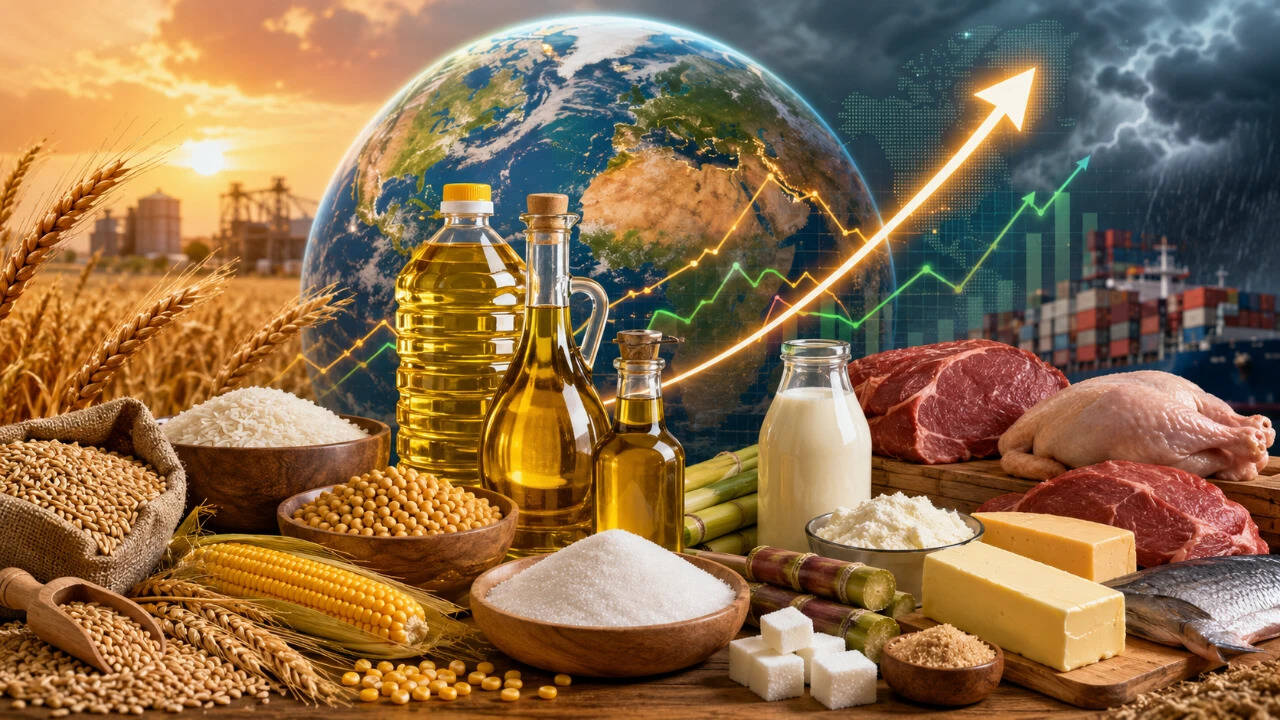
Global food prices saw a significant increase in July, driven by rising costs of cereals, vegetable oils, and sugar. The prices of wheat and maize surged due to unfavorable weather conditions and market concerns. This surge in cereal prices was further exacerbated by supply chain disruptions and global demand.
Vegetable oils also reached their highest level since June 2022, driven by strong demand from various industries. The increase in vegetable oil prices can be attributed to the growing need for biofuels and food production.
Sugar prices rebounded in July, driven by weather-related impacts on sugarcane production and expectations around ethanol use. The rise in sugar prices is expected to have a significant impact on the food industry, particularly on manufacturers of sugary products.
On the other hand, meat and dairy prices faced a decline during this period. The decrease in meat and dairy prices can be attributed to increased production and stable demand.
The rise in global food prices is a cause for concern, as it can have a significant impact on food security and inflation. The increase in food prices can lead to higher production costs for manufacturers, which can then be passed on to consumers.
The global food price index is closely monitored by economists and policymakers, as it can have a significant impact on the economy. The index is used to track changes in the prices of various food commodities and can be used to predict future price trends.
In recent years, global food prices have been volatile, driven by various factors such as weather conditions, supply chain disruptions, and changes in demand. The rise in food prices can have a significant impact on vulnerable populations, particularly in developing countries where food is a significant portion of household expenses.
The increase in global food prices is a reminder of the need for sustainable and resilient food systems. Policymakers and industry leaders must work together to address the challenges facing the food industry and ensure that food is available, accessible, and affordable for all.
The rise in global food prices in July is a significant development that can have far-reaching implications for the food industry and the economy. As the global food price index continues to fluctuate, it is essential to monitor the situation closely and take proactive measures to mitigate the impact of rising food prices.
In conclusion, the increase in global food prices in July is a cause for concern, and it is essential to address the challenges facing the food industry. By working together, we can ensure that food is available, accessible, and affordable for all, and mitigate the impact of rising food prices on vulnerable populations.
Frequently asked questions
What drove the rise in global food prices in July?
The rise in global food prices in July was driven by increasing costs of cereals, vegetable oils, and sugar, due to weather conditions, market apprehensions, and robust demand.
Which food commodities saw a decline in prices in July?
Meat and dairy prices faced a decline during this period, due to increased production and stable demand.