Beaver-Like Dams Boost Salmon Survival Rates
Innovative dams increase salmon survival, aid drought resistance
'%3E%3Crect%20width%3D'96'%20height%3D'96'%20fill%3D'%23B3261E'%2F%3E%3Ccircle%20cx%3D'30'%20cy%3D'24'%20r%3D'44'%20fill%3D'%23fff'%20opacity%3D'.12'%2F%3E%3Ccircle%20cx%3D'60'%20cy%3D'74'%20r%3D'40'%20fill%3D'%23000'%20opacity%3D'.10'%2F%3E%3C%2Fg%3E%3Cg%20fill%3D'%23fff'%3E%3Crect%20x%3D'29'%20y%3D'49'%20width%3D'8'%20height%3D'19'%20rx%3D'1'%2F%3E%3Crect%20x%3D'39'%20y%3D'40'%20width%3D'9'%20height%3D'28'%20rx%3D'1'%2F%3E%3Crect%20x%3D'50'%20y%3D'45'%20width%3D'8'%20height%3D'23'%20rx%3D'1'%2F%3E%3Crect%20x%3D'60'%20y%3D'53'%20width%3D'7'%20height%3D'15'%20rx%3D'1'%2F%3E%3Crect%20x%3D'41'%20y%3D'34'%20width%3D'5'%20height%3D'6'%2F%3E%3C%2Fg%3E%3C%2Fsvg%3E)
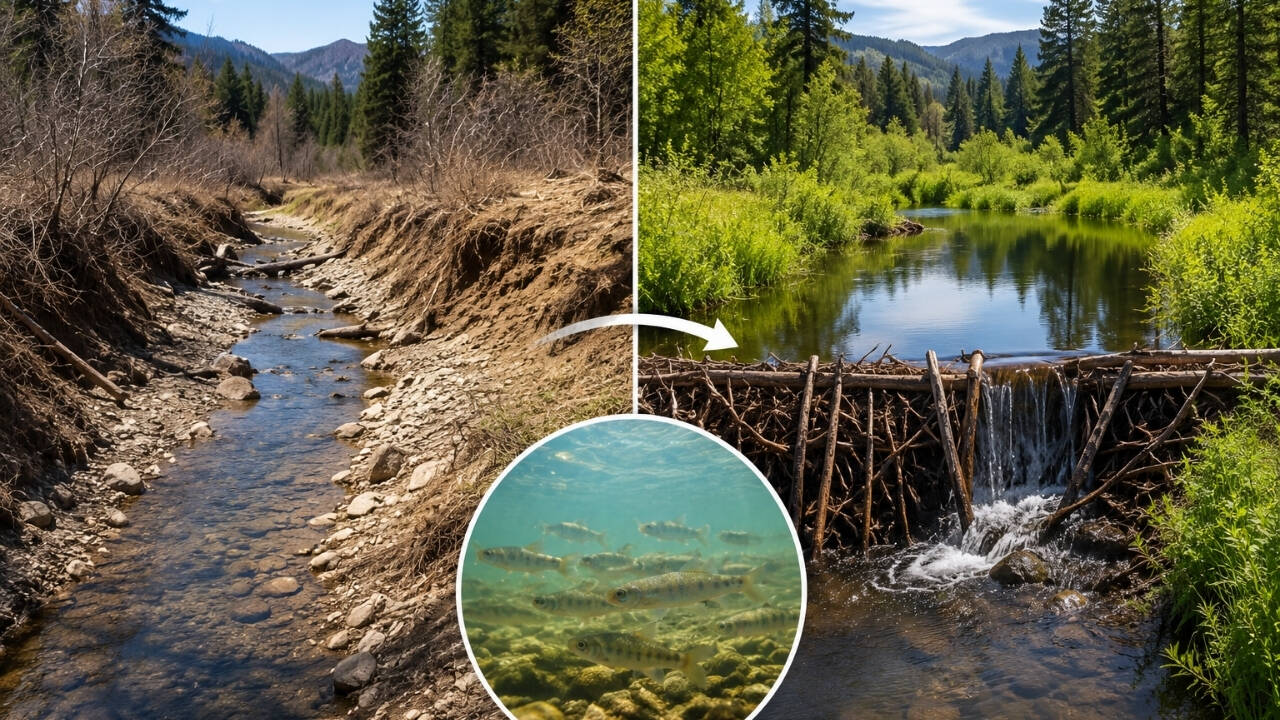
A recent study has shown that beaver-like dams in a California creek have significantly improved the survival rates of young coho salmon. The dams, which mimic the natural structures built by beavers, have increased the survival rate of juvenile salmon from 8% to 60%.
This innovative approach to restoration has been successful in creating a cooler and slower water environment, which is essential for the growth and development of young salmon. The structures have also helped to bolster the resistance of the Scott River watershed to drought conditions, highlighting the importance of restoring vital wetland habitats for at-risk salmon species.
The use of beaver-like dams is a relatively new approach to restoration, but it has shown promising results. By creating a more natural environment, these structures are able to provide the necessary conditions for young salmon to thrive. The increased survival rate of the salmon is a significant indicator of the success of this approach.
The Scott River watershed, where the study was conducted, is a critical habitat for coho salmon. The watershed has been impacted by drought and other environmental factors, which have contributed to the decline of the salmon population. The use of beaver-like dams is part of a larger effort to restore the watershed and improve the habitat for the salmon.
The restoration of wetland habitats is a crucial step in the recovery of at-risk salmon species. Wetlands provide a critical nursery habitat for young salmon, and their loss has been a major contributor to the decline of salmon populations. By restoring these habitats, conservation efforts can help to improve the survival rates of young salmon and increase the overall health of the population.
The success of the beaver-like dams in California has important implications for conservation efforts elsewhere. The use of innovative restoration techniques, such as these dams, can help to improve the habitat for at-risk species and increase their chances of survival. As conservation efforts continue to evolve, the use of beaver-like dams is likely to become an increasingly important tool in the fight to protect and restore critical habitats.
In conclusion, the use of beaver-like dams in California has been shown to be a highly effective approach to improving the survival rates of young coho salmon. The success of this approach highlights the importance of restoring vital wetland habitats and creating a more natural environment for at-risk species. As conservation efforts move forward, the use of innovative restoration techniques, such as beaver-like dams, will be critical in the fight to protect and restore critical habitats.
The increased survival rate of the salmon is a significant indicator of the success of this approach, and it is likely that this technique will be used in other conservation efforts in the future. The restoration of wetland habitats and the use of beaver-like dams are critical steps in the recovery of at-risk salmon species, and their importance cannot be overstated.
The study's findings have significant implications for the conservation of salmon species, and they highlight the need for continued innovation and experimentation in restoration efforts. By using new and innovative approaches, such as the beaver-like dams, conservation efforts can help to improve the habitat for at-risk species and increase their chances of survival.
Overall, the success of the beaver-like dams in California is a positive step forward in the fight to protect and restore critical habitats. The use of innovative restoration techniques, such as these dams, will be critical in the future of conservation efforts, and their importance cannot be overstated.
The increased survival rate of the salmon is a significant achievement, and it demonstrates the potential of beaver-like dams to improve the habitat for at-risk species. The study's findings are a testament to the power of innovation and experimentation in conservation efforts, and they highlight the need for continued investment in restoration initiatives.
In the end, the use of beaver-like dams is a crucial step in the recovery of at-risk salmon species. The success of this approach in California has significant implications for conservation efforts elsewhere, and it highlights the importance of restoring vital wetland habitats. As conservation efforts move forward, the use of innovative restoration techniques, such as beaver-like dams, will be critical in the fight to protect and restore critical habitats.
Frequently asked questions
What is the purpose of beaver-like dams in salmon restoration?
The purpose of beaver-like dams is to create a cooler and slower water environment, which is essential for the growth and development of young salmon.
How effective have beaver-like dams been in improving salmon survival rates?
Beaver-like dams have been highly effective, increasing the survival rate of juvenile salmon from 8% to 60% in a specific creek.