
Andheri: A Local's Guide to Mumbai's Sprawling Entertainment Suburb
A local's guide to Andheri, Mumbai: the East-West split, Versova's Koli beach, Gilbert Hill, Aram Nagar film offices, Lokhandwala shopping and Marol job hubs.
'%3E%3Crect%20width%3D'96'%20height%3D'96'%20fill%3D'%23E65100'%2F%3E%3Ccircle%20cx%3D'30'%20cy%3D'24'%20r%3D'44'%20fill%3D'%23fff'%20opacity%3D'.12'%2F%3E%3Ccircle%20cx%3D'60'%20cy%3D'74'%20r%3D'40'%20fill%3D'%23000'%20opacity%3D'.10'%2F%3E%3C%2Fg%3E%3Cg%3E%3Ccircle%20cx%3D'48'%20cy%3D'48'%20r%3D'15'%20fill%3D'none'%20stroke%3D'%23fff'%20stroke-width%3D'3'%2F%3E%3Cpath%20fill%3D'%23fff'%20d%3D'M48%2037%20l3.5%2011%20-3.5%2011%20-3.5%20-11%20z'%2F%3E%3Ccircle%20cx%3D'48'%20cy%3D'48'%20r%3D'2.2'%20fill%3D'%23fff'%2F%3E%3C%2Fg%3E%3C%2Fsvg%3E)
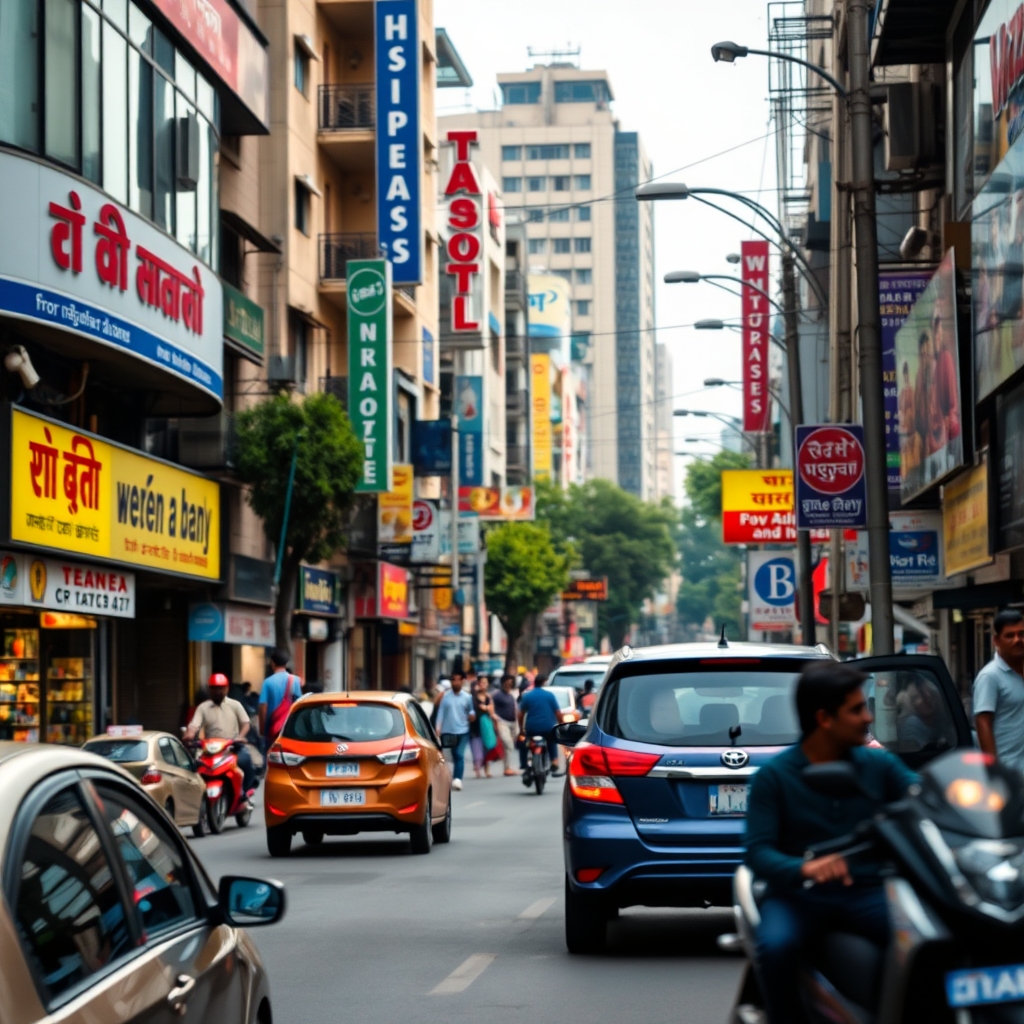
Photo: Suraj Digrase · CC0 · via Wikimedia Commons
Andheri is less a neighbourhood than a small city wearing one name. The Western Railway line slices it cleanly down the middle into two very different halves. To the west, the suburb slopes toward the Arabian Sea through Lokhandwala, Versova and a long ribbon of film offices. To the east, it hardens into a grid of business parks, industrial estates and the international airport. It is among the largest and most populous suburbs in Mumbai, and Andheri station is one of the busiest on the entire network. That sheer size is exactly what unsettles people when they first arrive — but the trick is to stop treating Andheri as one place. Read it as two suburbs loosely stitched together, learn a handful of landmarks, and it becomes navigable within a week. Whether you are a newcomer hunting your first flat, a jobseeker chasing an interview in a Marol tower, or a film buff who simply wants to breathe the same air as the industry, here is how to make sense of it.
Andheri at a glance
| Side | What it feels like | Best for | Rough 1BHK rent* | |
|---|---|---|---|---|
| Lokhandwala Complex | West | Planned high-rises, cafés, boutiques | Families, creative professionals | ₹40,000–70,000 |
| Versova & Yari Road | West | Koli fishing village meets film crowd, sea lanes | Media and film workers, sea lovers | ₹35,000–65,000 |
| Four/Seven Bungalows, D.N. Nagar | West | Older, settled, well-served residential | Long-term renters who want the west | ₹35,000–60,000 |
| Marol, Chakala, MIDC | East | Office estates and glass towers | Jobseekers who want a short commute | ₹25,000–45,000 |
| Saki Naka & eastern fringe | East | Dense, industrial-adjacent, metro-connected | Budget-conscious renters | ₹18,000–35,000 |
*Broad market ranges for an unfurnished 1BHK. Furnishing, building age and the exact lane move these a great deal, so treat them as orientation rather than quotes.
Reading the map: the East–West split
The single most useful thing to understand about Andheri is that East and West behave like separate towns that happen to share a station. The tracks divide them, and the two halves are joined only at a handful of choke points — chiefly the Andheri subway (the road underpass beside the station) and the Gokhale road overbridge. This is why locals will quote you two completely different travel times depending on whether you are staying on your side or crossing to the other. In the evening peak, hopping from a Marol office to a Versova flat can genuinely take longer than the train ride that brought you into Andheri in the first place.
Get this one fact into your bones before you sign a lease or accept a job, because it quietly shapes everything: where you should live relative to where you work, which side you meet friends on, and how much of your week you are willing to spend inching over an overbridge. If your office is in the eastern estates, life is far calmer if you sleep in the east too.
Getting in, out and around
Trains remain the fastest way in and out of Andheri. The suburb sits on both the Western and Harbour suburban lines, which means you can reach Churchgate, Dadar, Bandra or the Harbour-line stretch toward Vashi without ever touching a road. If you are new to the system, it is worth reading a proper Mumbai local train guide before your first rush-hour attempt — Andheri’s platforms are not the place to learn on the fly.
On top of the trains, Andheri is now a real metro hub, and this has changed the suburb more than almost anything in the past decade. The Blue Line (Metro Line 1) — the city’s first metro, opened in 2014 — runs the 11.4 km Versova–Andheri–Ghatkopar corridor, connecting the western seafront right across to the eastern suburbs in air-conditioned minutes rather than a road-bound crawl. The Yellow Line (2A) comes down from Dahisar and terminates at D.N. Nagar in Andheri West, while the Red Line (7) runs the eastern flank to Gundavali, near Marol. Between them, they have quietly solved a lot of the old East–West misery — provided your two endpoints happen to sit on a line.
For the last mile, autorickshaws rule the inner lanes; they are cheap, plentiful and often quicker than a cab through narrow streets. App cabs make more sense for longer or late trips, or when you are carrying luggage. If you are still building a mental model of how the city knits together, the broader guide to getting around Mumbai is worth a read. And the airport is on the doorstep: Terminal 2 sits in Andheri East, typically fifteen to twenty minutes from most of the suburb in fair traffic — though “fair traffic” near the airport is more an aspiration than a promise, so give yourself a buffer and skim an airport transport guide before an early flight.
Andheri West: sea, cinema and the good life
Andheri West is where the suburb turns residential, creative and, at its western edge, coastal. Much of it — Lokhandwala Complex especially — was reclaimed marshland, developed from the 1980s by the builder Lokhandwala Constructions, whose name the whole area now carries. Older pockets keep their colonial-era labels: Four Bungalows and Seven Bungalows, each christened after the handful of British-era and merchant bungalows that once stood there, a couple of which still survive between the towers. These names mean nothing on a map and everything to an autorickshaw driver, so learn them early.
Versova Beach and the Koli village
Versova is a working Koli fishing village first and a beach second, and it rewards you for arriving with that expectation rather than a resort in mind. The sand is not for swimming — the water is rough, and for years it was notoriously fouled with waste. That the shoreline is walkable at all is largely down to lawyer Afroz Shah, who from October 2015 organised weekly volunteer “dates with the ocean.” Over roughly 21 months, the effort cleared some 5,300 tonnes of largely plastic waste and earned him the UN’s Champions of the Earth award in 2016 — one of the more genuinely uplifting civic stories the city has produced.
Come at dusk, sit on the rocks at the quieter northern end, and watch the fishing boats slide back in with the day’s catch. If those boats leave you hungry, Versova and the wider suburb do proper Koli-style seafood, and it is worth planning a meal around the city’s seafood restaurants. Dress and behave as you would in someone’s home village, because that is exactly what this is — not a manicured tourist beach.
Versova jetty and the Madh ferry
At the top of the beach, the jetty is where the catch is landed and auctioned in the early hours, all noise and ice and bargaining. From here, a tiny passenger ferry crosses the creek to Madh Island in about five minutes for a fare of roughly ₹10. It is one of the best-value escapes in Mumbai: for the price of nothing, you swap the density of the city for a near-rural strip of coconut groves, old forts and quiet beaches. Crossings run from early morning until around 10 pm, but they are entirely weather-dependent — during the monsoon, rough seas can suspend them without warning, so never make it your only way back after dark. Carry small cash; nobody at the jetty is waiting for you to find a QR code.
Aram Nagar and Yari Road: the film fringe
If Andheri has a soul for film buffs, it is here. Aram Nagar (Parts I and II) is a low-rise colony of old cottages under big, shady trees, most of them long since converted into casting agencies, production offices and edit suites — effectively the ground floor of India’s digital-content boom. Well-known casting houses, including Mukesh Chhabra’s, operate out of these lanes, and on any given morning you will see hopefuls clutching portfolios outside the studios. It is a genuine workplace, not an attraction, so the respectful way to experience it is to settle into one of its cafés and let the industry hum around you rather than gawking at auditions. Several of these spots double as informal offices, and if you work remotely they slot neatly into a round-up of work-friendly cafés.
Nearby Yari Road carries the same DNA: a warren of musicians, technicians and small recording studios where a striking share of the industry’s working talent actually lives, not just clocks in. Walk it in the evening and you will hear rehearsals leaking out of first-floor windows.
Two ancient survivors
For all its film sets and glass towers, Andheri hides two things far older than the city around them.
Gilbert Hill
Wedged between apartment blocks off S.V. Road stands a 200-foot (61 m) vertical column of black basalt, forced up as molten rock roughly 66 million years ago — a formation geologists rank alongside Wyoming’s Devil’s Tower. A steep staircase cut into the rock climbs to the Gaodevi and Durgamata temples and a small garden at the summit, from where you get an unlikely view across the suburb’s rooftops. It was declared a Grade II heritage structure in 2007, which finally halted the quarrying that had been eating into its base. Go early in the morning to dodge both the heat and the crowds on the narrow steps; ten minutes of climbing buys you a genuine geological rarity in the middle of a residential grid. It is peculiar enough to deserve its own visit, and there is a dedicated Gilbert Hill guide if you want the full backstory before you go.
Mahakali Caves
On the eastern side, near the SEEPZ boundary off the Jogeshwari–Vikhroli Link Road, sit the Mahakali (Kondivite) Caves — a group of 19 rock-cut Buddhist monuments carved between roughly the 1st century BCE and the 6th century CE, now protected by the Archaeological Survey of India. Most are plain monks’ cells and viharas; the largest, Cave 9, is a chaitya with a stupa. This is not Ajanta, and you should not arrive expecting grandeur. Go instead for the quiet and the sheer improbability of standing in a 2,000-year-old monastery with modern SEEPZ towers visible a stone’s throw away — the full sweep of Andheri’s timeline in one glance. If the caves whet your appetite for something more dramatic, the Kanheri Caves in Sanjay Gandhi National Park are the grander northern cousin and make an easy day out.
Andheri East: the engine room
If the west is where Andheri relaxes, the east is where it works. SEEPZ — the Santacruz Electronic Export Processing Zone, established in 1973 — anchors a dense cluster of electronics, software and gems-and-jewellery exporters. Around it spread the MIDC, Marol, Chakala and Saki Naka estates, packed with IT firms, media houses, pharma companies and back-offices, plus a thick supply of coworking spaces for anyone who arrives without a desk of their own. For a jobseeker, this is the entire reason to be in Andheri: a huge share of the western suburbs’ white-collar work sits within a few kilometres of here, and the airport is right alongside.
The practical upside is money. Rents in the eastern pockets are generally kinder than the sea-facing west, and the metro and Harbour line keep the commute manageable, so it is a sensible landing zone for a first year in the city — a scenario the flat-renting guide for Mumbai walks through in detail. Two honest caveats: build airport-area traffic into any interview timing, because a jam on the Western Express Highway can swallow half an hour without notice; and if a job requires frequent flights or you are only in town for a stint, staying near the terminal has real appeal — the cluster of hotels near Mumbai airport exists precisely for that crowd.
Eating, shopping and going out
Andheri West does the heavy lifting when it comes to leisure, and you can happily spend a weekend without crossing to the east at all.
Where to eat
For a proper Mughlai blowout, Persian Darbar in Lokhandwala is a reliable institution — the chain has been going since 1976 and stays open until the small hours, which makes it a genuine post-midnight rescue. Reckon on around ₹800 for two. Urban Tadka, also along the Lokhandwala–Veera Desai belt, is a long-standing casual North Indian option when you want a full meal without the ceremony. If it is kebabs and rich gravies you are chasing, the wider city Mughlai and kebab trail puts Andheri’s offerings in context. As a rule, prices climb as you move toward the sea and dip as you head inland, so a little walking earns you cheaper plates.
Shopping
The suburb’s retail runs the full range. At one end are the bargain rails of Lokhandwala Market — silver jewellery, small boutiques and Western wear, best approached with a haggling instinct and small cash. At the other are the air-conditioned floors of Infiniti Mall on Link Road (Mumbai’s first Infiniti, opened in 2004, complete with a multiplex), the older Citi Mall, and Fun Republic on Veera Desai Road. If mall-hopping is your idea of a good afternoon, it is worth cross-referencing the round-up of Mumbai’s best shopping malls so you know which trip is worth the traffic.
Going out
Veera Desai Road is the suburb’s nightlife spine, and it is compact enough to bar-hop on foot. Fun Republic alone doubles as a night out, housing a Social outlet, the Irish House and Typsy Gypsy, plus a cinema, all under one roof. Elsewhere, Versova Social shifts from café to coworking spot to bar as the day turns, while Bombay Cocktail Bar in the Lokhandwala–Veera Desai area is the go-to for a loud, Bollywood-soundtracked club night. Andheri’s scene is more neighbourhood-friendly than glossy, so if you want the citywide picture — the big clubs and the quieter rooftop bars alike — pair this with a broader guide to Mumbai nightlife and clubs and plan your night accordingly.
Seasons, timing and honest cautions
November to February is the comfortable window: cooler air, clear evenings, and the sea breeze at Versova doing its best work. The monsoon (roughly June to September) is the season to be genuinely wary of in Andheri specifically. The subway near the station is one of the city’s most dependable flooding points, and the low-lying eastern estates waterlog quickly, which can turn a routine commute into a stranded afternoon. If you are moving here or visiting during the rains, read a Mumbai monsoon guide and keep your plans flexible.
A few standing rules make life easier year-round. Autorickshaws are cheap and quick in the inner lanes, but crossing East–West at rush hour is slow whatever you take, so treat “near Andheri station” as a warning about traffic rather than a reassurance about convenience. Keep app-cab timings generous, especially around the airport. And always carry a little cash — the Madh ferry and the market stalls will not wait while you fumble for a payment app.
Where Andheri fits in the city
It helps to place Andheri among its neighbours. To the south sits Juhu, with its wide beach and old film-star bungalows, and beyond it the cafés and bars of Bandra; to the north and east lie the newer, greener enclaves. If you are still deciding which slice of the western suburbs to call home, the citywide Mumbai neighbourhoods guide lays the options side by side so you can weigh Andheri against the rest.
The bottom line
Andheri rewards you for treating it as two suburbs rather than one. Come to the west for Versova’s fishing boats, Gilbert Hill’s improbable rock, the film offices of Aram Nagar and a long night on Veera Desai Road. Come to the east for a job, a flight, or a quiet hour at the Mahakali Caves. It is not a postcard suburb, and it has never pretended to be — but for anyone actually building a life or a career in Mumbai rather than just photographing it, few places pack in as much.
Frequently Asked Questions
Is Andheri East or West better to live in?
It depends on where you work and what you want from daily life. Andheri West suits you if you value the beach, cafés, nightlife and the film-industry buzz around Versova and Lokhandwala, but rents run higher toward the sea. Andheri East is cheaper and puts you minutes from the airport and the office estates of SEEPZ, Marol and Chakala. Because crossing the railway line at rush hour is slow, most people settle on whichever side their job is on.
How far is Andheri from Mumbai airport?
Terminal 2 of Chhatrapati Shivaji Maharaj International Airport is actually inside Andheri East, so it is very close. From most parts of the suburb it is a fifteen-to-twenty-minute drive in fair traffic. Peak-hour jams on the Western Express Highway can push that well beyond half an hour, so always leave a generous buffer before a flight.
Is Versova Beach clean and safe to swim?
It is far cleaner than it used to be, thanks to a volunteer clean-up led by lawyer Afroz Shah from 2015 that removed thousands of tonnes of plastic waste. However, it is a working Koli fishing beach, not a swimming beach — the water is rough and still not clean enough for a dip. Locals use it for walks, sunsets, and the short ferry across to Madh Island, and that is exactly how visitors should treat it too.
What is Andheri famous for?
Andheri is best known as the beating heart of Mumbai's entertainment and tech economy. The west holds the film industry's casting agencies, edit suites and recording studios around Aram Nagar and Yari Road, while the east houses SEEPZ and the Marol, MIDC and Chakala business estates. It is also home to Gilbert Hill, a rare 66-million-year-old basalt monolith you can climb in the middle of the suburb.
How do you get around Andheri and cross between East and West?
Autorickshaws are the cheapest option for short hops within either side, while the Blue Line metro shuttles quickly between Versova, the station and the eastern suburbs. To cross the railway line between East and West you are funnelled through a few points, mainly the Andheri subway and the Gokhale overbridge, which clog badly at rush hour. Avoid crossing sides during peak times if you possibly can.
Is Andheri a good area for tourists to stay in?
Yes, particularly if you want to be close to the airport, the metro and the western suburbs rather than deep in South Mumbai. Andheri East has a large cluster of business and airport hotels, while the west gives you Versova beach, cafés and nightlife along Veera Desai Road. Just factor in that South Mumbai's headline sights are a train or long cab ride away.