
Mumbai's Legendary Dive Bars & Permit Rooms: A Local's Guide
A local's guide to Mumbai's dive bars and permit rooms — Gokul, Sunlight, Janata, Toto's — with the history, honest ₹ prices and what to order.
'%3E%3Crect%20width%3D'96'%20height%3D'96'%20fill%3D'%23E65100'%2F%3E%3Ccircle%20cx%3D'30'%20cy%3D'24'%20r%3D'44'%20fill%3D'%23fff'%20opacity%3D'.12'%2F%3E%3Ccircle%20cx%3D'60'%20cy%3D'74'%20r%3D'40'%20fill%3D'%23000'%20opacity%3D'.10'%2F%3E%3C%2Fg%3E%3Cg%3E%3Ccircle%20cx%3D'48'%20cy%3D'48'%20r%3D'15'%20fill%3D'none'%20stroke%3D'%23fff'%20stroke-width%3D'3'%2F%3E%3Cpath%20fill%3D'%23fff'%20d%3D'M48%2037%20l3.5%2011%20-3.5%2011%20-3.5%20-11%20z'%2F%3E%3Ccircle%20cx%3D'48'%20cy%3D'48'%20r%3D'2.2'%20fill%3D'%23fff'%2F%3E%3C%2Fg%3E%3C%2Fsvg%3E)
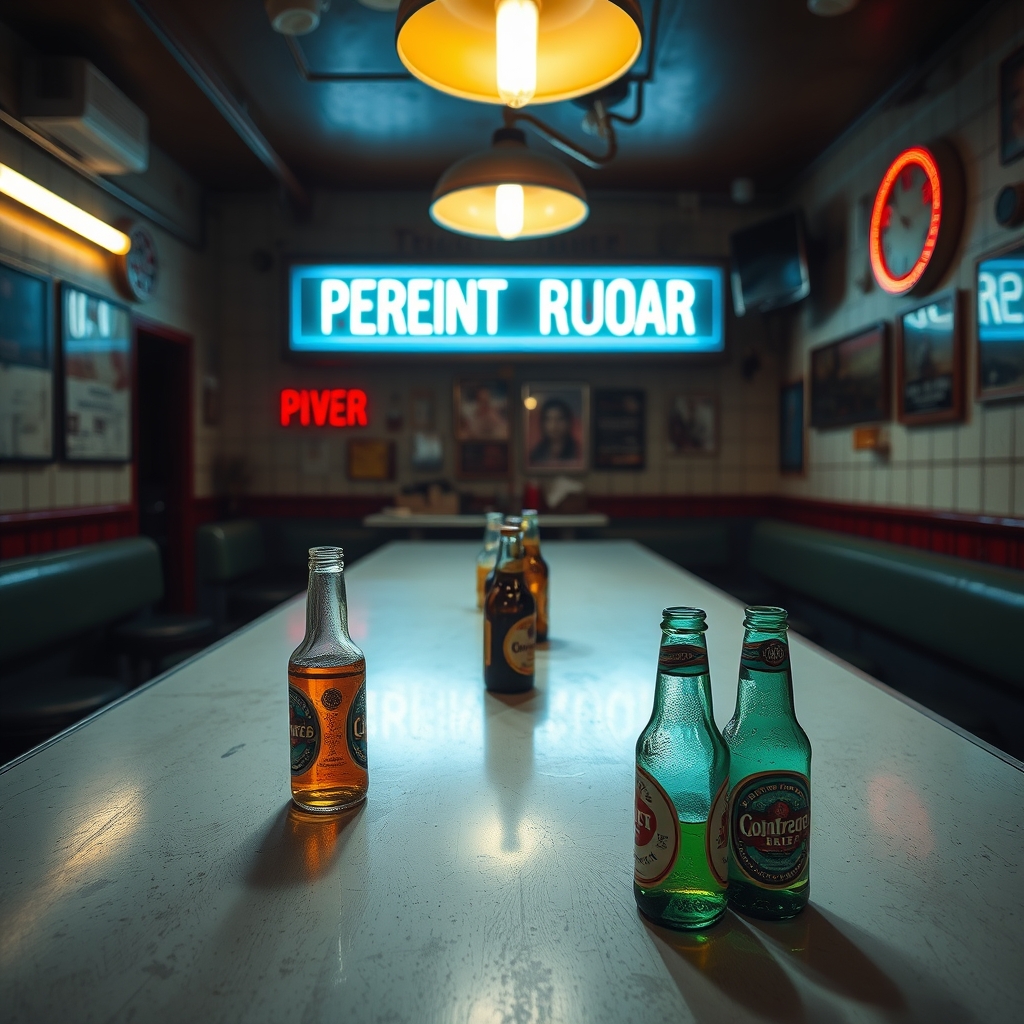
Every city has its temples of expensive drinking, and Mumbai has plenty. But the bars I keep going back to are the other kind: low-ceilinged, strip-lit rooms where a cold beer costs less than a cab across town, the tablecloths are patterned plastic, and nobody has ever once asked what I do for a living. These are the permit rooms and dive bars — the working, unglamorous heart of how this city actually drinks. They are not secret and they are not new. Some have been pouring since before your grandparents were legal. What follows is a walk through the ones still standing, why they matter, and how to enjoy them without looking like you wandered in by mistake.
This is deliberately not a list of the city’s shiny newcomers. If you want a view and a cocktail menu, the rooftop bars and speakeasies and cocktail dens elsewhere on the site will serve you better. What you’ll find here is the opposite instinct: rooms built for the round, not the photograph.
The permit rooms at a glance
Prices below are rough, all-in figures for two people eating and drinking together — they move with what you order and how many rounds you go. Treat them as the shape of an evening, not a bill.
| Permit room | Area | Rough cost for two | Best for |
|---|---|---|---|
| Gokul | Colaba, behind the Taj | ₹1,200–1,400 | The definitive first-timer’s dive |
| Sunlight | Dhobi Talao / Kalbadevi | ₹1,200–1,600 | Jukebox and 1930s history |
| Cafe Mondegar | Colaba Causeway | Above dive rates | Mario Miranda murals, a polished beer hall |
| Janata | Pali Naka, Bandra | ₹1,200–1,500 | The suburbs’ shared-table institution |
| Toto’s Garage | Pali Naka, Bandra | ₹1,500–2,000 | Rock music and Bandra theatre |
| Yacht | Hill Road, Bandra | ₹1,000–1,500 | An unhurried afternoon session |
| Shankari | Andheri West | ₹1,300–1,600 | Late hours and honest value |
| 7 Hills | Juhu / JVPD | ₹1,200–1,400 | Cheap rounds in a pricey postcode |
| Akshaya | Lalbaug / Lower Parel | Drinks under ₹300 | Food-led, long, cheap evenings |
First, the “permit” in permit room
The name is a genuine legal relic, not a marketing flourish. Under the Bombay Prohibition Act of 1949, liquor in this state was — and technically still is — something you need a government permit to buy, possess and consume. Prohibition was first tried in the old Bombay Province in 1939, re-enacted after Independence, and enforced through the 1950s and into the 1960s, a stretch that quietly built the city’s bootlegging economy and the Goan-run “aunty bars” selling home-brewed hooch out of back rooms.
When the taps were allowed to flow again, the law kept its fig leaf: alcohol could be sold on “health grounds” to permit holders, in a designated part of the premises. That designated part was the permit room. The permit itself survives to this day — a licensed restaurant can issue you a one-day permit for around ₹5, a year for about ₹100, or a lifetime for roughly ₹1,000 — though in practice almost nobody is asked for one, and the excise department says it acts only on complaints. What endured far more strongly than the paperwork was the room itself: a particular kind of cheap, no-frills, everybody-welcome drinking den that is now as Bombay as the local train.
It helps to hold that history in mind, because it explains the atmosphere. A permit room was never meant to be a destination. It was meant to be a place you could afford to be ordinary in. That is still, more or less, the deal.
How to read a permit room
If you’ve only ever drunk in Mumbai’s newer bars, a real permit room can feel like walking into someone else’s living room mid-argument. A few things worth knowing before you push the door.
- The floor tells you the vibe. Many of these places are split over two levels, and the character changes as you climb. At the older rooms the ground floor is functional and a little grim; the upper floor is where the regulars, the noise and the actual evening live.
- Chakna is the point, not a side dish. “Chakna” is the catch-all for the salty, spicy little plates that exist to keep you drinking — masala peanuts, fried this-and-that, a plate of something hot. You order it in rounds alongside the beer, not as a separate meal.
- Tabs are informal but honest. Waiters keep a running count in their heads or on a scrap of paper. It almost always adds up correctly. Round off generously; these are low-margin rooms and the staff are usually lifers.
- Nobody is impressed, and that’s the gift. No one is watching what you drink, wear or earn. The social contract is simply that you don’t ruin it for the next table.
South Mumbai: where the map begins
Gokul Bar & Restaurant, Colaba
If you drink at one permit room in this city, make it Gokul. It sits on the Colaba stretch behind the Taj, sharing a lane with late-night legends like Bademiya, and it is the platonic ideal of the form: a dim, cramped room, wooden tables worn smooth by decades of elbows, a small television running old Hindi films or cricket, and booze sold at something close to retail. The crowd is gloriously mixed — law interns, backpackers, grizzled regulars, art-school kids — and it gets loud in the best way.
The prices are almost implausibly low for Colaba, which is precisely why the room is always full. That fullness is part of the deal: on a Friday you may wait, or share, or drink standing until a table clears. Go with it.
- Practical tip: Head upstairs — the ground floor is best skipped — and carry cash, because from Friday to Sunday they don’t take online payments. Expect roughly ₹1,200–1,400 for two with food. It runs 11am to midnight, which makes it as good for a stalled-afternoon beer as a late one. If you’ve spent the day working through Colaba Causeway’s shopping, this is the natural place to put your bags down.
Sunlight Bar & Restaurant, Dhobi Talao
Tucked into the bylanes of Kalbadevi near Marine Lines, Sunlight has been watering South Bombay since the 1930s, and generations of college students have done their formative drinking here. Its whole reputation rests on two things: cheap liquor and a jukebox that treats music as the main event rather than background hum. The furniture is plain wood, the lighting is honest, and the air-conditioned section fills up fast.
It’s one of the oldest surviving budget bars in town, and it wears its age with zero pretension. Come here when you want the room itself to be the entertainment — the songs, the arguments, the students discovering that a shared plate and two beers can carry a whole evening.
- Practical tip: Order the chicken 65 or a plate of peanut masala to go with your beer, get there before the evening rush for a seat in the cooled section, and reckon on about ₹1,200–1,600 for two. It sits within walking distance of the old-city food belts, so it pairs naturally with a wander through South Mumbai’s street food beforehand.
Cafe Mondegar, Colaba Causeway
“Mondy’s” is a slightly different beast — an Irani café from 1932 that grew into a beer hall — and it’s more polished and more touristy than a true dive. But it earns its place on any drinking map of the city for the Mario Miranda murals covering its walls, added in the 1990s, and for one of the last working coin-operated jukeboxes in Mumbai. Come for a cold beer or a shared tower, not for a bargain.
Few rooms in the city carry this much visual history, and the beer is properly chilled. Think of it as the gateway drug: a room that looks like a dive, prices that don’t quite behave like one, and enough character to forgive the difference. If the Irani-café lineage is what draws you, the city’s older Irani cafés are worth a separate morning of their own.
- Practical tip: It’s on the Causeway near the Regal cinema, so pair it with a Colaba wander; feed the jukebox rather than letting the room’s playlist run. Prices sit a clear notch above the true permit rooms, so treat it as the splurge on an otherwise cheap night.
Bandra and the western suburbs
The suburbs have their own version of this tradition, and it lives almost entirely around Pali Naka, in the middle of Bandra’s glossiest nightlife strip. For a fuller picture of that scene — the newer places included — the Bandra bars and nightlife guide covers the block end to end. The rooms below are the old guard that the block grew up around.
Janata Lunch Home, Pali Naka
Bandra’s Pali Naka is now ringed with high-gloss clubs, and squarely in the middle sits Janata, gloriously indifferent to all of them. It has stayed cheap through every boom and bust, which is exactly why suburbanites treat it as an institution. The great social feature is the shared table: arrive as a two or a three and you’ll likely be seated with strangers, and nobody minds — that’s rather the point.
Reliable, unpretentious and consistently affordable, it’s the suburbs’ answer to Gokul. On a match night it becomes something close to a public living room, everyone half-watching the same screen and pretending not to.
- Practical tip: Order the bombil (Bombay duck) fry and the chicken sukka. The first-floor section is livelier during a cricket match. Around ₹1,200–1,500 for two; it stays open late, well past its official 1am. If the bombil converts you, the city’s proper seafood restaurants are the next step up.
Toto’s Garage, Pali Naka
Open since 1992 and impossible to mistake, Toto’s is a bar built inside a garage conceit: a Volkswagen Beetle suspended overhead, number plates and engine parts on the walls, waiters in mechanic’s overalls, and a DJ booth wedged into an old car. The soundtrack is rock and only rock, the lighting is a velvety red, and the whole place feels like a garage party that started three decades ago and never wound down.
It’s a genuine Bandra rite of passage, and the bartenders treat regulars like family. It’s louder and a touch pricier than a pure permit room, but the theatre earns it — this is where you take an out-of-town friend to prove Bandra isn’t all velvet ropes.
- Practical tip: Go early — it’s shoulder-to-shoulder by mid-evening, especially at weekends. The kheema pav and chicken wontons soak up the beer nicely. Budget roughly ₹1,500–2,000 for two. If it’s live music rather than a DJ you’re after, the city’s live-music bars sit a short hop away.
Yacht Resto Bar, Hill Road
On Hill Road, Yacht is the sort of dim, low-key room where loud laughter is not just tolerated but expected, and the regulars are known by face rather than name. There’s nothing swanky about it — the whole enterprise is aimed at turning an evening into a night — and the old-school chakna does its job.
A no-nonsense neighbourhood bar that opens from mid-morning, it’s handy for an unhurried afternoon session, the kind that begins with “just one” and ends somewhere near dinner. It’s the antidote to Pali Naka’s crush a few minutes away.
- Practical tip: Try the schezwan chakna or keema masala; expect about ₹1,000–1,500 for two. Its mid-morning opening makes it a rare daytime option when most of the city’s bars are still shuttered.
Further out: the suburban survivors
Head past Bandra and the permit rooms thin out but don’t disappear. These are working bars for working neighbourhoods — less scene, more service — and they reward you with the cheapest rounds and the latest hours.
Shankari Bar & Restaurant, Andheri West
Out on the Juhu-Versova Link Road, Shankari is a utilitarian, zero-judgement dive beloved for one near-mythical service: a very-late delivery run that keeps the after-hours crowd going long after the city has gone quiet. Order the sukka chicken or a tandoori plate and settle in.
- Practical tip: It’s a working suburban bar, not a scene — come for the value and the late hours, not the décor. Around ₹1,300–1,600 for two. When it does eventually wind down, Andheri’s late-night food picks up where it leaves off.
7 Hills, Juhu
An affordable outlier in an expensive postcode, 7 Hills near JVPD keeps things clean, basic and focused on classic chakna and cheap rounds. It opens till the small hours and does exactly what a permit room should — hold the line on price in a neighbourhood that has forgotten how.
- Practical tip: The chakli with schezwan chutney is a reliable order; reckon on ₹1,200–1,400 for two. In a stretch of Juhu where a single cocktail can cost what a whole evening costs here, that’s the entire appeal.
Akshaya Bar, Lalbaug
In the mill-land belt near Lower Parel, Akshaya pairs genuinely good food — a menu that wanders from Thai to Maharashtrian — with drinks that stay under about ₹300, all wrapped in cheerful ’90s décor and a nostalgia-heavy playlist. It’s the kind of place you settle into with old friends for a long, cheap evening.
- Practical tip: Come hungry; the kitchen is the draw here as much as the bar. It’s a useful reminder that the mill district’s transformation into towers and malls hasn’t quite erased its older, cheaper self.
What to order, and what it costs
The economics are the whole point. A chilled beer — Kingfisher, Budweiser and the like — runs somewhere around ₹150–250 in most of these rooms, a large peg of local spirits often less, and two people can eat and drink comfortably for well under ₹1,500. The food is unfussy but consistent: chicken lollipops, chicken 65, sukka and tandoori plates, bombil fry, kheema pav, and endless variations on masala peanuts and schezwan chakna. Nobody comes for the wine list. You come for the round that doesn’t dent your week.
A useful way to think about it: in a rooftop bar or a craft-beer taproom, the drink is the product and the room is the sell. In a permit room it’s inverted — the room is free, the company is the point, and the drink is simply cheap enough to keep the evening going. If you want to see the other end of that spectrum on the same night, the city’s microbreweries and craft-beer halls make the contrast plain, and your wallet will feel every rupee of the difference.
Timing, seasons and the practical stuff
When to go. Early evening, roughly 6 to 8, buys you a seat and a conversation. Later buys you the full shoulder-to-shoulder crush that these rooms are famous for. Weeknights are calmer than Friday and Saturday by a wide margin, and a Tuesday at Gokul or Janata is a genuinely relaxed thing. Several of these bars open by late morning, which makes an idle afternoon session — a fading tradition worth reviving — entirely possible.
Cash, always. Carry it. Several of these places — Gokul over the weekend, notably — either prefer or insist on cash, and the card machine has a reliable habit of being “not working” at exactly the wrong moment. An ATM run before you settle in saves a scramble later.
The monsoon question. Between June and September, the permit room quietly becomes the ideal Mumbai institution. When the rain has cancelled your outdoor plans and shut the rooftops, a dry, warm, strip-lit room with cold beer and hot chakna is precisely where you want to be — and half the city has the same idea, so the older rooms fill early. A permit room is one of the few nightlife options the weather can’t take away from you.
Getting home. Most of these bars sit close to a station or a busy main road, so an auto or a cab is rarely far. If you’ve been drinking, don’t drive — Mumbai’s traffic police run late-night checks, and the local train, where it’s still running, is often the faster bet anyway.
A note on caveats and comfort
Be honest with yourself about which room suits the night you want. The older, well-known places — Gokul, Sunlight, Janata, Toto’s — draw broad, mixed crowds and are comfortable for women and solo drinkers, especially earlier in the evening. The deeper-suburb, late-night dives are more male-heavy and more functional; there’s nothing wrong with them, but they ask for the same street sense you’d use anywhere in the city after dark. Trust the crowd you can see from the doorway.
And be clear-eyed about what these places are and aren’t. A wave of upmarket bars now borrows the “permit room” name and the retro nostalgia — patterned tiles, Irani-café fonts, a curated soundtrack — and many of them are genuinely lovely. But they aren’t these. The originals are cheaper, plainer and considerably more honest, and no amount of designed nostalgia quite replaces a room that has simply been doing this, unglamorously, for eighty years.
The bottom line
Mumbai’s dive bars and permit rooms are not a bucket-list novelty; they’re living infrastructure, the places where the city has always come to unwind on an ordinary budget. Start with Gokul in Colaba, add Sunlight and Janata, and let Toto’s supply the theatre. Bring cash, bring an appetite for chicken lollipops, and bring the willingness to share your table. Do that, and you’ll have drunk in the real Bombay — the one that was here long before the rooftops arrived, and will very likely outlast them.
Frequently Asked Questions
What is a permit room in Mumbai?
A permit room is a legacy of the Bombay Prohibition Act of 1949, which required a government permit to buy and drink alcohol. When liquor sales resumed, they were confined to a designated 'permit room' on the premises, sold on nominal 'health grounds' to permit holders. Over time the paperwork faded but the room stuck — today the term means a cheap, no-frills, everybody-welcome drinking den rather than anything you need special documents to enter.
Do I actually need a liquor permit to drink in Mumbai?
By the letter of the 1949 Act, yes, but in practice you'll almost never be asked for one. A licensed bar can issue a one-day permit for around ₹5, a year for about ₹100, or a lifetime for roughly ₹1,000 if you want to be scrupulous. The excise department generally acts only when there is a specific complaint, so most drinkers never encounter the requirement at all.
Which are the best dive bars and permit rooms in Mumbai?
In South Mumbai, start with Gokul in Colaba, the definitive first-timer's dive, then add Sunlight near Dhobi Talao for its 1930s history and jukebox. In the suburbs, Janata and Toto's Garage at Bandra's Pali Naka are the institutions, backed up by Yacht on Hill Road. Further out, Shankari in Andheri West, 7 Hills in Juhu and Akshaya in Lalbaug carry the tradition with the cheapest rounds and latest hours.
How much does it cost to drink at a Mumbai permit room?
These rooms are built on value. A chilled beer typically runs around ₹150–250, and two people can eat and drink comfortably for well under ₹1,500 at most places. As a rough all-in guide for two, budget about ₹1,200–1,400 at Gokul, ₹1,200–1,600 at Sunlight, ₹1,200–1,500 at Janata and ₹1,500–2,000 at the pricier Toto's — moving up or down with how many rounds you order.
Are Mumbai's dive bars safe for women and solo drinkers?
The older, well-known rooms — Gokul, Sunlight, Janata and Toto's — draw broad, mixed crowds and are comfortable for women and solo drinkers, especially earlier in the evening. The deeper-suburb, late-night dives tend to be more male-heavy and functional, so use the same street sense you would anywhere in the city after dark. A quick look at the crowd from the doorway usually tells you everything you need to know.
What should I order at a Mumbai permit room?
Stick to beer or a peg of local spirits alongside the chakna — the salty, spicy plates that keep you drinking. Reliable orders include chicken lollipops, chicken 65, sukka and tandoori plates, masala peanuts and schezwan chakna. At Janata try the bombil (Bombay duck) fry, at Toto's the kheema pav, and at Sunlight a plate of chicken 65 with your beer. Nobody comes for the wine list; the food is unfussy but consistently good.