
Flamingo Watching at Sewri: Mumbai's Seasonal Pink Spectacle
Local's guide to flamingo watching at Sewri & Thane Creek, Mumbai (Nov–May): tides, timings, the Airoli boat safari, prices, access and what to carry.
'%3E%3Crect%20width%3D'96'%20height%3D'96'%20fill%3D'%23E65100'%2F%3E%3Ccircle%20cx%3D'30'%20cy%3D'24'%20r%3D'44'%20fill%3D'%23fff'%20opacity%3D'.12'%2F%3E%3Ccircle%20cx%3D'60'%20cy%3D'74'%20r%3D'40'%20fill%3D'%23000'%20opacity%3D'.10'%2F%3E%3C%2Fg%3E%3Cg%3E%3Ccircle%20cx%3D'48'%20cy%3D'48'%20r%3D'15'%20fill%3D'none'%20stroke%3D'%23fff'%20stroke-width%3D'3'%2F%3E%3Cpath%20fill%3D'%23fff'%20d%3D'M48%2037%20l3.5%2011%20-3.5%2011%20-3.5%20-11%20z'%2F%3E%3Ccircle%20cx%3D'48'%20cy%3D'48'%20r%3D'2.2'%20fill%3D'%23fff'%2F%3E%3C%2Fg%3E%3C%2Fsvg%3E)
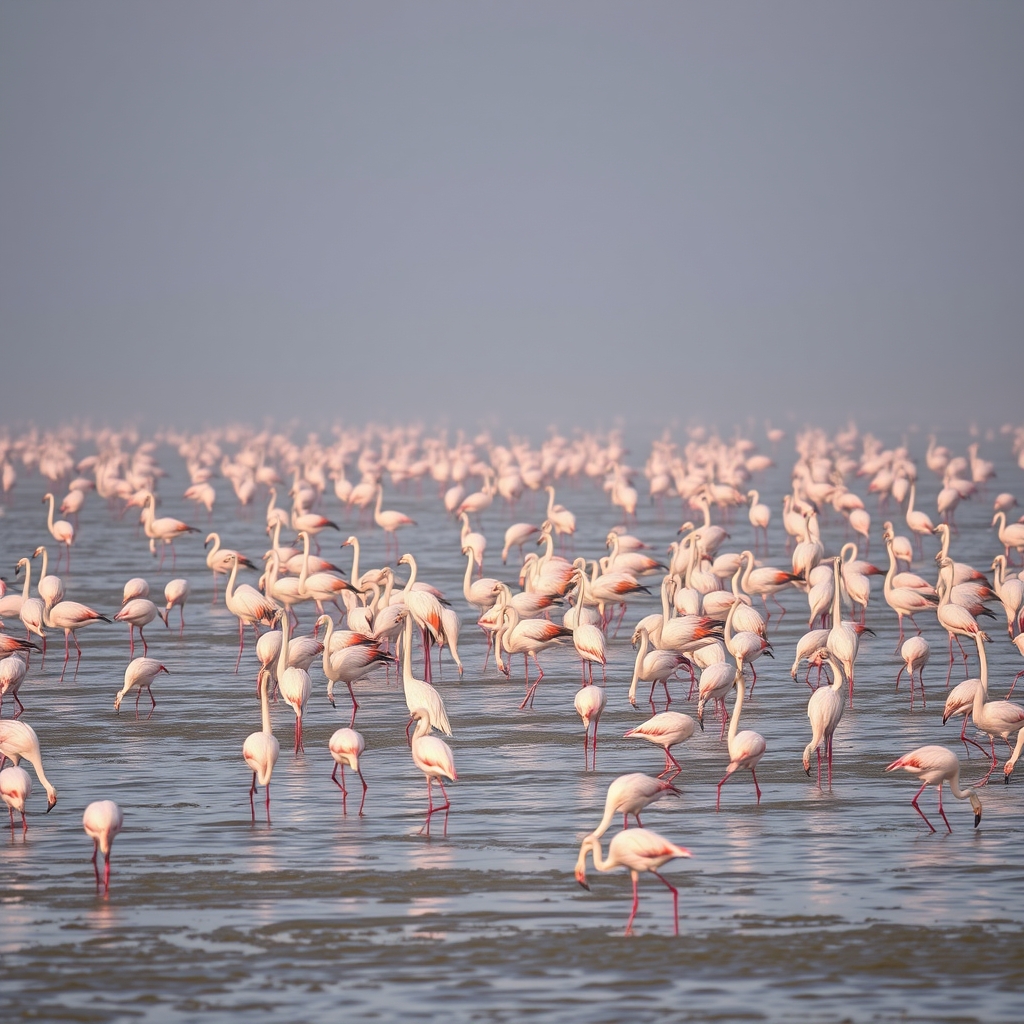
Photo: Bendale.kaustubh · CC BY-SA 3.0 · via Wikimedia Commons
For a few months each winter, the drab grey mudflats east of Sewri do something quietly extraordinary: they turn pink. Tens of thousands of flamingos — most of them lesser flamingos, smaller and more vividly rose-coloured than their greater cousins — drop down onto the tidal flats of the eastern seaboard to feed on the algae and tiny crustaceans that give their feathers that colour. They arrive with the cool weather, spread out from the Sewri–Mahul flats across Thane Creek towards Airoli, and then lift off again before the monsoon. It is one of the strangest, most rewarding mornings out the city offers, and you can see it on a tank of petrol or a single train ticket. This guide walks you through the season, the all-important tide, the three main places to stand, and the small things that separate a pink-haze morning from a stretch of empty mud.
At a glance: the three main spots
Before the detail, here is the shape of your options. All three sit on the same Thane Creek–Sewri wetland system; they differ mainly in how close you get, how much you pay, and how much organising is done for you.
| Spot | Area & access | Cost | Best for |
|---|---|---|---|
| Sewri Jetty & Sewri–Mahul mudflats | Sewri, South Mumbai (Harbour Line); short auto/cab to the jetty | Free | Free, self-guided mornings; big distant flocks; photographers with a long lens |
| Thane Creek Flamingo Sanctuary (CMBC), Airoli | Airoli, Navi Mumbai; ~4–5km from Airoli station by auto | ~₹50 entry + ~₹400–650 boat (weekends dearer) | Close-up views, first-timers, families who want it organised |
| Bhandup Pumping Station wetlands | Bhandup, north-east Mumbai; creekside salt pans & mangroves | Free (guided-walk fees vary) | Keen birders after waders, herons and migrants, not just flamingos |
Keep this in mind as you read on: Sewri is the free, romantic, do-it-yourself option; Airoli is the reliable close-up; Bhandup is the birder’s patch. None is “best” in the abstract — the right one depends on the tide, your budget, and whether you are carrying a toddler or a tripod.
When to go: the season and the tide
Two things decide whether you see a pink haze or an empty stretch of mud — the calendar and the tide. Get both right and it is hard to miss. Get either wrong and you can stand on a perfectly good jetty and see almost nothing. This is the single most important section of the guide, so it is worth reading slowly.
The season: November to May
The season runs roughly from November to May. The birds trickle in from around October–November, having flown down largely from the Rann of Kutch in Gujarat and other breeding grounds to the north-west, and the numbers build steadily through the winter as more flocks arrive and settle. The sweet spot most regulars swear by is late January through April, when flocks are at their fullest, the weather is still kind, and the birds have fanned out across the whole creek. By May the heat is building and the first pre-monsoon disturbances begin nudging them back north; by June the show is comprehensively over and the flats are given over to the rains. If you are planning weeks ahead, aim for a February or March morning and you give yourself the best odds.
There is a rhythm worth understanding here. Early season (November–December) can be hit or miss — the birds are present but thinner, and cool morning haze can sit low over the water. Peak season (late January to April) is when you get the great restless rafts of thousands. If a first attempt disappoints in December, do not write the spectacle off; come back in February and it can be a different world.
The tide: the detail nobody tells first-timers
The tide matters just as much as the season, and this is where most first-timers come unstuck. Flamingos feed on the mudflats, so you need two things at once: enough water to have concentrated the birds, and enough exposed flat close to shore to actually see them on. Turn up at the wrong point in the cycle and the birds are either invisibly far out or floated off entirely.
The rule of thumb is to aim for a rising tide — a couple of hours either side of high tide. At Sewri specifically, locals talk about turning up around two hours after low tide: as the water creeps back in, it pushes the birds off the far flats and towards the banks, and within a couple of hours they are gathered close in, in their thousands. At dead low tide they are specks on the horizon, feeding far out where the water has drained away. At full high tide the flats vanish under the water and the birds lift off with them. The window you want is the incoming middle of that cycle.
So the single most useful thing you can do before setting out is check a Mumbai tide chart — any tide app or a quick search for the day’s Mumbai high/low times will do — and time your arrival to a rising tide, ideally early. The first light between about 6am and 10am is kindest: cooler, softer for photographs, the sun behind you rather than in your lens, and the birds active and feeding rather than hunkered down against the midday heat. If the tide table hands you a high tide at, say, 9am on a Sunday, that is close to a perfect card — plan to be standing on the mud by around 7.30am.
A note for anyone travelling in by train: the Harbour Line puts you within an auto ride of Sewri, and understanding its timings helps you hit that early window. If you are new to the system, our local train guide for Mumbai covers how the lines and early services work, and the broader getting around Mumbai primer is worth a glance for autos and app cabs at that hour.
Where to see them
Sewri Jetty and the Sewri–Mahul mudflats (South Mumbai)
Area: Sewri, eastern South Mumbai, on the Harbour Line.
This is the classic, free, do-it-yourself spot and the one the whole phenomenon is named after. The mudflats stretch out below the old Sewri Fort and along towards Mahul, and in season they hold enormous numbers of birds. Getting there is easy and cheap: take the Harbour Line to Sewri station and a short auto or cab to the jetty. There is no ticket, no gate and no guide — you simply walk out towards the water and look. That freedom is the charm of Sewri and also its catch: nobody is managing your morning, so the tide is entirely your responsibility.
A word on the elephant in the harbour, or rather the bridge over it. The Atal Setu (Mumbai Trans Harbour Link) — India’s longest sea bridge at nearly 22km — now launches out over the water from exactly here. During its construction years, sightings at Sewri became patchy and some tour operators quietly shifted their trips to Airoli. The good news is that the bridge is finished and open, and its Sewri end was built with a roughly 2km “silent zone” of noise and sight barriers specifically to shield the flamingo flats. The birds still come. That said, Sewri is now a working, changing waterfront rather than a pristine reserve, and on a given morning the flock may be further out than you would like, or shifted along the shore. Read it as an atmospheric, unmanaged wild spot — because that is exactly what it is.
Practical tip: Bring binoculars or a zoom lens — this is non-negotiable at Sewri. The birds are often too far for the naked eye to resolve as flamingos rather than a pale smudge on the mud. A basic pair of binoculars transforms the morning; a phone camera alone will leave you underwhelmed. Carry water, a hat and some cash, wear shoes you do not mind getting muddy, and go with the tide, not against your convenience. Sewri sits close to some of the city’s other under-visited corners, so if you have the appetite it pairs naturally with a wider wander through Mumbai’s hidden gems.
Thane Creek Flamingo Sanctuary — Coastal & Marine Biodiversity Centre, Airoli (Navi Mumbai)
Area: Airoli, Navi Mumbai, on the far side of Thane Creek.
If you want the birds up close and the morning organised for you, this is the better bet — and it is why many Mumbaikars now head here rather than to Sewri. The Coastal & Marine Biodiversity Centre (CMBC) at Airoli is run by the Mangrove Cell / Mangrove Foundation of the Maharashtra Forest Department, and it sits inside the protected Thane Creek Flamingo Sanctuary, a designated wetland threaded with mangroves. It runs proper boat safaris out into the creek among the mangroves and the flocks, so instead of squinting across a mudflat you are gliding within photographable distance of the birds. There is also an indoor exhibition on the ecosystem — the mangroves, the tidal cycle, the migratory birds — worth twenty quiet minutes before or after your ride, especially if you have children with you.
- Season and timings: Safaris run in the flamingo months (roughly November to May), and the daily slots shift with the high tide — there are usually three rides a day. For the 2026 season, boat safaris began on 17 January 2026. The office runs about 10am–6pm; rides fall somewhere between 8am and 5pm depending on the water, so the exact ride time moves day to day.
- Cost: Sanctuary entry is around ₹50 for adults and ₹25 for children. The boat ride is roughly ₹400–650 per person depending on the day, with weekends at the top of that range (figures are revised season to season, and there are usually separate charges for still and video cameras — always confirm when booking). Reckon on something like ₹1,000–1,400 for two all in.
- Booking: These slots fill up, especially at weekends and in peak season, so book ahead — a week is sensible. You can WhatsApp or call the centre on 9987673737 for the current monthly schedule and tide-linked timings, and to confirm your slot.
- Getting there: The centre is at Sector 10, Diva Nagar Road, in the mangrove forest at Airoli, about 4–5km from Airoli railway station (take an auto). By road, cross the Airoli bridge off the Eastern Express Highway near the Bhandup pumping station.
Practical tip: Book for a weekday morning if you can — it is cheaper, quieter, the boats are less rushed, and the light is better. Confirm the exact ride time the day before, because it moves with the tide and a slot that was 9am last week may be 10.30am today. If you are building a family day around it, the sanctuary’s calm, contained format makes it one of the gentler outdoor outings in the region; see our wider list of family and kids things to do in Mumbai for what else to fold in.
Bhandup Pumping Station and the Thane Creek shoreline
Area: Bhandup, north-east Mumbai, along the western edge of Thane Creek.
For keen birders who like to walk, the wetlands around the Bhandup Pumping Station — the salt pans and creekside mangroves on the Mumbai side of the water — are a long-loved spot, not just for flamingos but for a huge cast of migratory waders, herons, egrets, sandpipers and the occasional raptor. It is rougher and less signposted than the other two, more a birdwatcher’s patch than a family outing, and worth doing with someone who knows the ground the first time. Expect to walk, expect mud, and expect to work a little harder for your sightings — the reward is a far broader bird list than flamingos alone. The Bombay Natural History Society (BNHS) and other nature groups periodically run guided walks and flamingo outings across these creek habitats, which are a gentle, well-informed way in if it is your first time and you would rather not navigate the salt pans alone.
If Bhandup gives you a taste for the city’s greener edges, Mumbai has more than its industrial reputation suggests — the forest trails of Sanjay Gandhi National Park and the quieter parks and gardens around the city are natural next outings for anyone who enjoys a morning with binoculars.
What you will actually see
Two species share the flats, and it is worth knowing which is which. The lesser flamingo is the star of the Mumbai show — smaller, a deeper rose-pink, with a dark, almost black-looking bill, and present in the vast, restless rafts that make the water look tie-dyed. The taller, paler greater flamingo turns up too, in smaller numbers, standing a clear head above the lessers with a pink-and-black bill and a whiter body. Once you have the difference in your eye, you will start sorting the flock automatically.
Watch long enough and you will see them do the odd synchronised shuffle, heads down, filtering the shallows for the algae and crustaceans that keep them pink — the colour literally comes from their diet. Then, for reasons that are never quite clear from the bank, a patch of the flock ripples up into flight, black-tipped wings flashing against the pink, and resettles a little further along the mud. Around them, if you have the patience and the binoculars, is a whole supporting cast of shorebirds: stilts, sandpipers, egrets, gulls and herons all working the same rich tidal edge. The flamingos are the headline, but a slow, quiet hour rewards you with far more than the headline.
Photographing the pink
You do not need professional gear, but you do need reach. The birds are almost always further away than they look, so a telephoto lens (think 200mm and up) or a superzoom is what turns a distant smudge into a picture; at Sewri especially, a phone alone will disappoint. The 6–10am light is your friend — low, warm, and coming from behind you if you position with the sun at your back, which keeps the pink glowing rather than flat. Shoot in bursts to catch the moment a section of the flock lifts off, keep your shutter speed up for those wingbeats, and be patient: the best frames come when you have stood still long enough that the birds settle and behave normally. From the Airoli boat you will get genuinely close, but the platform moves, so brace your elbows and keep shooting. And whatever you carry, keep it in a bag until you need it — the mud and salt spray are unkind to lenses.
Etiquette, mud and staying comfortable
A few honest caveats will make the morning better for you and for the birds. Keep your distance and keep quiet. Flamingos are skittish; a sudden approach or a raised voice can put a whole section of the flock to flight, which spoils it for everyone and stresses the birds needlessly. Do not try to walk out onto the soft flats to get closer — the mud is deeper and stickier than it looks, and the tide you have carefully timed is, by design, coming in. Stay on firm ground.
Dress for what it is: an exposed, muddy, sun-struck waterfront. Wear shoes you can rinse, carry water, a hat and sunscreen, and bring some cash for autos and entry fees. There is little in the way of shade or shops at the Sewri flats, so treat it as a self-contained early-morning mission — be there for first light, give it a good hour or two, and be heading home for breakfast before the heat sets in. Because the flamingo season ends precisely when the rains arrive, none of this overlaps with the wet months; if you are reading this in the grey of July, bookmark it for winter and turn instead to our guide on Mumbai in the monsoon.
Making a morning of it
The beauty of a flamingo morning is that it ends early, leaving the rest of the day open. From Sewri you are close to South Mumbai’s heart; from Airoli you are set up for a Navi Mumbai day. Because the birds are best at first light, treat the sighting as the opening act and build outward — a heritage wander, a long breakfast, or a museum once the heat arrives. For ideas on how to structure the rest of the day, our roundup of things to do in Mumbai and the list of Mumbai’s best sunset viewpoints — for those who want to bookend the day with a second slice of sky — both pair naturally with a dawn on the flats.
The bottom line
Flamingos are Mumbai’s most improbable wildlife spectacle — a Rann-of-Kutch migration that lands, of all places, on the industrial mudflats of the eastern shore. For a free, self-guided morning, take the Harbour Line to Sewri and go with the tide, binoculars in hand. For a closer, organised look, book a boat safari from the Airoli Coastal & Marine Biodiversity Centre a week ahead and pick a weekday. For a broader bird list, walk the Bhandup salt pans with someone who knows them. Either way, the formula is the same: get the tide right, go early, and give it time. The mud does not look like much when you arrive — flat, grey, ordinary — and then, as the water pushes in and the light comes up, it turns pink.
Frequently Asked Questions
When is the best time to see flamingos at Sewri, Mumbai?
The flamingo season at Sewri and Thane Creek runs roughly from November to May, with late January through April as the peak. Numbers build through the cool winter months and drop off before the monsoon arrives. Aim for a February or March morning for the fullest flocks.
What tide is best for flamingo watching at Sewri?
Aim for a rising tide — a couple of hours either side of high tide. At Sewri, regulars suggest arriving about two hours after low tide, as the incoming water pushes the birds off the far flats and in towards the banks. At dead low tide they are distant specks, and at full high tide the flats disappear, so check a Mumbai tide chart before you set out.
Is Sewri Jetty still worth visiting after the Atal Setu bridge was built?
Yes. Sightings dipped during the bridge's construction years, but the Atal Setu (Mumbai Trans Harbour Link) is now complete, and its Sewri end was built with a roughly 2km "silent zone" of barriers specifically to shield the flamingo flats. The birds still gather in large numbers. For a guaranteed close view, though, the Airoli boat safari is more reliable.
How much does the Airoli flamingo boat safari cost and do I need to book?
Sanctuary entry at the Coastal & Marine Biodiversity Centre is around ₹50 for adults and ₹25 for children, and the boat ride is roughly ₹400–650 per person depending on the day (weekends cost more) — very roughly ₹1,000–1,400 for two all in. Rates are revised from season to season, so confirm the current price when you book. You must book ahead, because slots are tide-linked and limited; call or WhatsApp the centre on 9987673737 about a week in advance.
What should I carry for flamingo watching in Mumbai?
Binoculars or a zoom lens above all — the birds are usually too far to resolve with the naked eye, especially at Sewri. Also bring water, a hat, sunscreen, some cash for autos and entry fees, and shoes that can take mud. A tide chart on your phone is the quiet essential that decides whether you see the flock at all.
Which flamingo species will I see near Mumbai?
Two species share the flats. The lesser flamingo is the star of the Mumbai show — smaller, a deeper rose-pink, with a dark bill, and present in vast restless rafts. The taller, paler greater flamingo also turns up in smaller numbers, standing a head above the lessers. Around them you will often spot stilts, sandpipers, egrets, herons and gulls working the same tidal edge.