
Getting Around Mumbai: Taxis, Autos, Buses and the Metro
Getting around Mumbai like a local: kaali-peeli taxis, autos, BEST buses, the Aqua Line Metro and app-cabs, with 2025 fares and the south-Mumbai no-auto rule.
'%3E%3Crect%20width%3D'96'%20height%3D'96'%20fill%3D'%23E65100'%2F%3E%3Ccircle%20cx%3D'30'%20cy%3D'24'%20r%3D'44'%20fill%3D'%23fff'%20opacity%3D'.12'%2F%3E%3Ccircle%20cx%3D'60'%20cy%3D'74'%20r%3D'40'%20fill%3D'%23000'%20opacity%3D'.10'%2F%3E%3C%2Fg%3E%3Cg%3E%3Ccircle%20cx%3D'48'%20cy%3D'48'%20r%3D'15'%20fill%3D'none'%20stroke%3D'%23fff'%20stroke-width%3D'3'%2F%3E%3Cpath%20fill%3D'%23fff'%20d%3D'M48%2037%20l3.5%2011%20-3.5%2011%20-3.5%20-11%20z'%2F%3E%3Ccircle%20cx%3D'48'%20cy%3D'48'%20r%3D'2.2'%20fill%3D'%23fff'%2F%3E%3C%2Fg%3E%3C%2Fsvg%3E)
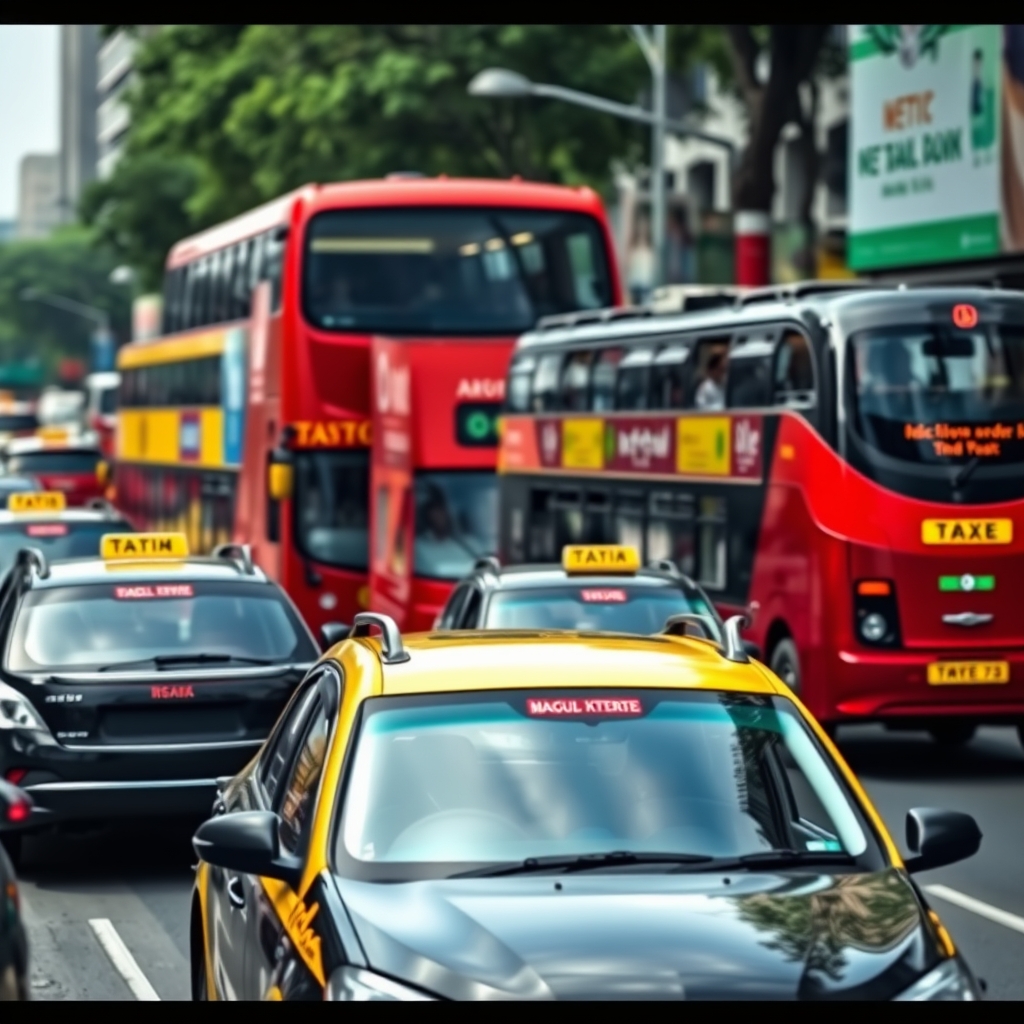
Photo: Shishirdasika · CC BY-SA 4.0 · via Wikimedia Commons
Nobody hands you a map of how Mumbai actually moves. You learn it the hard way — waving down a taxi that won’t go south, waiting for an auto at Bandra that legally can’t cross the flyover, or standing at a BEST bus stop wondering if the number on the front means anything. The good news is that the logic underneath is simple once someone lays it out, and in the last two years the city has quietly rewired itself: a fully underground Metro now runs from Cuffe Parade to the airport, and app-cabs, buses and the old kaali-peeli all live on the same few rules. Here is how a local decides, trip by trip.
The one rule that decides everything
The single most useful thing to hold in your head is the north–south divide. Mumbai splits into the “island city” — everything south of Mahim and Sion, the old town people call SoBo — and the suburbs stretching north through Bandra, Andheri, Borivali and beyond. Autos live in the suburbs. Taxis, buses and the Metro cover the south. Get that one distinction right and most of your decisions make themselves. If you are still building a mental picture of where these areas sit relative to each other, our neighbourhood-by-neighbourhood guide is worth a read alongside this one.
Everything below is really a set of answers to a single question you’ll ask a dozen times a day: given where I am and where I’m going, which mode is fastest, cheapest and least aggravating right now? Use this quick-reference as your cheat sheet, then read on for the detail that keeps you from being overcharged or stranded.
| Mode | Where it works | Fare band (2025) | Best for |
|---|---|---|---|
| Kaali-peeli taxi | South Mumbai (island city) | ₹31 min, ~₹20.66/km | Short SoBo hops, no app needed |
| Cool Cab (AC) | South Mumbai | ₹48 min, ~₹32/km | Hot afternoons, longer SoBo rides |
| Auto-rickshaw | Suburbs only (north of Bandra/Sion) | ₹26 min, ~₹17.14/km | Last mile from a suburban station |
| BEST bus | Island city + main arterials | ₹10–60 non-AC, ₹12–65 AC | Cheapest short hops, slow sightseeing |
| Metro | Aqua Line + western/central suburbs | ₹10–80 | Airport↔town, BKC, skipping traffic |
| Local train | North–south across the whole city | a few ₹ up to low ₹100s (first class) | Long north–south trips, fastest overall |
| App cab / app auto | Citywide | Metered + surge capped at 1.5× | Rain, night, no-haggle door-to-door |
| Bike taxi | Citywide (availability varies) | from ₹15 | Solo riders beating a jam |
The black-and-yellow taxi (kaali-peeli)
The kaali-peeli is the workhorse of South Mumbai, where autos are banned. The romantic Premier Padmini finally left the roads on 30 October 2023, retired under a rule that deregisters cabs over twenty years old, so today’s fleet is boxy CNG hatchbacks — Wagon Rs, Altos, Eecos — still painted the same cheerful black and yellow. You’ll find them idling outside stations, hotels and markets across the island city, and unlike an app cab there is no wait: you raise a hand, it stops, you’re moving.
Reading the meter, and the fares that matter
They run on a digital meter, and as of the fare revision on 1 February 2025 the minimum is ₹31 for the first 1.5 km, then roughly ₹20.66 per km. In real terms, a short hop across Colaba or Fort — say from the Gateway of India to a lunch spot in Fort or Kala Ghoda — runs ₹40–80. A longer crawl from Nariman Point up to Bandra is more like ₹350–450 depending on how the traffic is behaving. Between midnight and 5am a 25% night surcharge applies, and it is legitimate: the driver carries a laminated fare card that converts the meter reading into the amount owed, and you’re entitled to ask for it.
The one non-negotiable: insist the meter is running from the moment you pull away. If a driver quotes a flat number instead — “hundred rupees, Fort” — that’s your cue to shut the door and find another. Meters are the law here, refusal to use them is an offence, and there is almost always another empty cab thirty seconds behind. Keep small notes handy; drivers rarely have change for a ₹500, and rounding up the odd ₹10 as a tip is normal but never expected.
Cool Cabs: the air-conditioned cousin
The blue-and-silver Cool Cabs are the air-conditioned relatives, and in a Mumbai May — when the afternoon sits at a humid 34°C and the sea breeze gives up — they earn their premium. They start higher, around ₹48 for the first 1.5 km and about ₹32 per km after the same February 2025 revision, so you pay noticeably more than a regular kaali-peeli. On a short hop it isn’t worth it; on a long, sweaty crawl with luggage, the sealed cabin and cold air can be exactly what you want. They’re fewer in number, so you’ll more often phone-book one than flag it down.
Autos: the suburbs’ workhorse
North of the divide, the auto-rickshaw rules everything. It is nimble, cheap, and genuinely everywhere — you’re never more than a minute from one in Andheri, Bandra, Malad or Ghatkopar. The meter minimum is ₹26 for the first 1.5 km and about ₹17.14 per km, with the same 25% night surcharge after midnight. Most suburban trips — a station to your flat, a dinner two neighbourhoods over — land between ₹30 and ₹120. As with taxis, the meter is the rule; a driver who won’t run it is one you walk away from.
The no-auto line: where three-wheelers stop
Here is the rule newcomers trip over most: autos cannot cross into the island city. On the western side they stop at the Bandra fire station; on the central side, at the Sion depot. Below those points — from Dharavi’s edge down through Dadar, Byculla and on to Colaba — it is illegal for a three-wheeler to ply, because the older southern roads are simply too narrow to absorb them. So if you auto in from the suburbs, expect to be turned out at the boundary and to switch to a taxi, bus or the Metro for the last leg. This catches out a lot of first-timers staying in Bandra who assume they can ride straight through to Colaba: you can’t, and knowing it in advance saves an argument at a flyover.
Shared autos: the cheapest last mile
Within the suburbs, look for shared-auto stands near stations, where a fixed short route is split three ways for a few rupees a head. They queue in a marked bay, wait until three passengers fill the seat, and run a set loop — station to a market, a housing colony, a corporate park. It’s the fastest cheap way to cover a station’s last mile, and once you know your regular route it becomes second nature. You won’t find these for one-off cross-town trips; they exist precisely on the busy, repeated feeder routes.
BEST buses: the island city’s backbone
The red BEST buses are how South Mumbai does the job autos do up north, and they are absurdly cheap. After the May 2025 revision — the first big one since 2019 — non-AC fares start at ₹10 (up to 5 km) and top out at ₹60; the air-conditioned buses start at ₹12 and reach ₹65. For a little more than the price of a walk, a bus down Marine Drive, along the Fort seafront, or up through Colaba costs less than a bottle of water. They’re also an underrated way to see the city slowly — the top-deck window on a double-decker route past the Gateway and the museum district is a better introduction to the island city than any air-conditioned tour.
The Chalo app changed everything
The thing that transformed BEST for outsiders is the Chalo app. It tracks buses live, so you know whether the number you want is two minutes or twenty away, sells mobile tickets and passes, and even shows how crowded the approaching bus is before you commit. Buy tickets on the app or pay the conductor cash; either way, hold on to the ticket until you step off, as inspectors do check. The routes are dense and the numbering can look opaque, but with live tracking on your phone the guesswork disappears — you stop treating the bus as a mystery and start using it like a local.
The Metro: the map just changed
For years the Metro was one east–west line that missed most of the places visitors go. That is over, and the change is dramatic enough that advice more than a year old is now simply wrong.
Line 3, the Aqua Line
The Aqua Line (Line 3) — Mumbai’s first fully underground metro — has been running end to end since 8 October 2025, covering 33.5 km and 27 stations from Cuffe Parade to Aarey. Crucially, it threads through the exact spine visitors and commuters use: CSMT, Churchgate, Mumbai Central, Dadar, BKC, and both airport terminals, T1 and T2. Fares run ₹10–80, with trains from roughly 6am to 10.30pm and a slightly later start on Sundays. If you’re going airport-to-town, town-to-BKC, or anywhere along that corridor, this is now almost always faster and cheaper than a cab stuck in traffic — and it’s the single biggest reason to rethink the old “just take a taxi” instinct. For the airport run specifically, weigh it against the prepaid-taxi option in our airport-to-city transport guide.
Lines 1, 2A and 7
The elevated Line 1 (Blue) still does the original Versova–Andheri–Ghatkopar run — the quickest way across the western-to-central suburbs, with fares ₹10–40. The Yellow (2A) and Red (7) lines run up the western suburbs from Dahisar, the Red Line now stretching toward Mira–Bhayandar, at ₹10–50. They’re elevated and breezy, they skip the road entirely, and on a route they cover they’ll beat a car every time. Where they don’t reach, you’ll pair them with an auto or a shared-auto for the last stretch — which is exactly how residents string a suburban journey together.
One card for all of it: Mumbai 1
Rather than queue for a token each time, pick up a Mumbai 1 card — the National Common Mobility Card. It is contactless, currently issued free at station counters, recharges from ₹100, and works as pay-as-you-go across Metro Lines 1, 2A, 7 and 3 and on BEST buses. One tap, one card, most of the city. If you’re here for more than a couple of days, it pays for itself in saved queuing alone; top it up when it dips below a ride or two so you’re never caught short at a barrier.
Ride-hailing: Uber, Ola, Rapido
Uber and Ola work exactly as you’d expect, and both also let you book an auto in the app (Uber Auto, Ola Auto), which sidesteps the “meter or no meter” haggle entirely — the fare is fixed before you get in. Under Maharashtra’s 2025 aggregator policy, surge is capped at 1.5 times the base fare and rates are pegged to the official RTA fares, so app-cabs no longer spike to absurd multiples in the rain — though in practice a monsoon evening in Andheri will still test that cap, and you may wait. Rapido is the third major app, strong on autos and bikes and often the quickest to find you a three-wheeler in the suburbs. For late nights, for door-to-door with luggage, and for anywhere you don’t want to negotiate, the apps are the low-stress default.
Bike taxis: fast, cheap, and not always there
Bike taxis were formally licensed in Maharashtra in 2025 — Ola, Uber and Rapido all secured provisional approvals — with fares from ₹15 for the first 1.5 km, comfortably under half a cab. Solo and travelling light, there’s nothing faster for threading a jam. But be aware the licensing has been contested and repeatedly challenged, so availability can flicker on and off from one month to the next. Treat them as a handy option rather than a guaranteed one, wear the helmet you’re handed, and skip them altogether if you’re not comfortable riding pillion through Mumbai traffic.
The local train: the city’s real bloodstream
The suburban rail — Western (to Churchgate), Central and Harbour (both from CSMT) — is the true circulatory system, and for any long north–south trip it beats everything on time and price. Nothing else moves you from Borivali to Churchgate in under an hour for the cost of a snack. As a newcomer, though, respect it: avoid the crush hours (roughly 8.30–11am towards town, 5.30–8.30pm away), ride first class or the calmer ladies’ compartment, and learn the platform markings — first-class coaches halt at red-and-yellow striped pillars, ladies’ at green-and-yellow. Keep the M-Indicator app open for platforms, timings and fares. It is not a gentle introduction, and it rewards a practice run in off-peak hours before you attempt it loaded with bags; our dedicated local train guide walks through the etiquette and the coach system in full. Once it clicks, nothing in the city moves you faster.
When the monsoon changes the maths
From June to September the rules bend. Waterlogging on low-lying stretches — around Hindmata, Andheri Subway, Milan Subway and King’s Circle — can halt buses and taxis and back up the roads for hours, while the underground Aqua Line and the elevated Metro lines keep running above or below the flood. On a heavy-rain day the smart move is often to switch a road trip onto rail or Metro entirely, and to build in a generous time buffer rather than trust a cab to get through. App-cab surge will hit its 1.5× ceiling and cars will still be scarce; a train you can walk to may simply be the only thing moving. Before you set out on a wet morning, it’s worth checking our monsoon commute guide and the broader monsoon survival notes for which routes flood first.
Putting it together
Match the mode to the map. In South Mumbai, think taxi, bus or Metro; in the suburbs, think auto, Metro or local train; for anything long and north–south, the train wins. Keep a Mumbai 1 card topped up, M-Indicator and Chalo on your phone, and an app-cab as backup for the rain. Where you base yourself shapes all of this too — a stay near a Metro or Western Line station changes your daily commute completely, which is worth factoring into where you choose to stay. Do that, and the city that looks like pure chaos from the pavement turns out to run on a handful of simple, learnable rules.
Frequently Asked Questions
Can auto-rickshaws go to South Mumbai?
No. Autos are licensed only for the suburbs and are banned from the island city, so they stop at the Bandra fire station on the western side and the Sion depot on the central side. Below that line, from Dharavi's edge down to Colaba, it is illegal for a three-wheeler to ply because the older southern roads are too narrow. If you auto in from the suburbs, expect to be turned out at the boundary and to finish the trip by taxi, BEST bus or Metro.
What is the cheapest way from Mumbai airport into the city?
The Aqua Line Metro (Line 3) now runs from both T1 and T2 into South Mumbai for roughly ₹10–80, which usually beats a cab on both time and cost in traffic. If you land late or have heavy luggage, use the prepaid taxi counter inside the terminal instead — it fixes the fare in advance and sidesteps surge and negotiation. App-cabs work too, but their pickup zones at the airport can involve a walk and a wait.
Is there a night surcharge on Mumbai taxis and autos?
Yes. A 25% surcharge applies on metered kaali-peeli taxis, Cool Cabs and auto-rickshaws between midnight and 5am. It is entirely legitimate and printed on the fare card the driver is required to carry, so ask to see the card rather than accepting a random flat number. App-cabs fold any night pricing into the quote you see before you confirm the ride.
Which single card works on both the Mumbai Metro and BEST buses?
The Mumbai 1 card, which is the National Common Mobility Card (NCMC). It is contactless, currently issued free at Metro station counters, and recharges from ₹100. One card works as pay-as-you-go across Metro Lines 1, 2A, 7 and 3, and also on BEST buses, so you can tap through most of the city without queuing for tokens or juggling change.
Which apps should a first-time visitor to Mumbai download?
Three cover almost everything: M-Indicator for suburban train timings, platforms and fares; Chalo for live BEST bus tracking and mobile tickets; and Uber or Ola for cabs and autos. Between them you can plan a train journey, know exactly when your bus arrives, and book a no-haggle ride door to door. Keep a little cash on hand as well for street autos and kaali-peelis.
Are bike taxis legal in Mumbai, and can I rely on them?
Bike taxis were formally licensed in Maharashtra in 2025, with Ola, Uber and Rapido all receiving provisional approvals and fares starting around ₹15 for the first 1.5 km. That makes them the cheapest motorised option and brilliant for beating a jam solo. However, the licensing has been contested and repeatedly challenged in the courts, so availability can flicker on and off — treat them as a handy bonus rather than a guaranteed ride, and skip them if you aren't comfortable riding pillion in city traffic.