
Monsoon Getaways Near Mumbai: The Best Weekend Escapes in the Rain
Overnight monsoon escapes near Mumbai — Lonavala, Malshej Ghat, Bhandardara, Igatpuri & Matheran — with distances, drive times, stay prices and safety notes.
'%3E%3Crect%20width%3D'96'%20height%3D'96'%20fill%3D'%23E65100'%2F%3E%3Ccircle%20cx%3D'30'%20cy%3D'24'%20r%3D'44'%20fill%3D'%23fff'%20opacity%3D'.12'%2F%3E%3Ccircle%20cx%3D'60'%20cy%3D'74'%20r%3D'40'%20fill%3D'%23000'%20opacity%3D'.10'%2F%3E%3C%2Fg%3E%3Cg%3E%3Ccircle%20cx%3D'48'%20cy%3D'48'%20r%3D'15'%20fill%3D'none'%20stroke%3D'%23fff'%20stroke-width%3D'3'%2F%3E%3Cpath%20fill%3D'%23fff'%20d%3D'M48%2037%20l3.5%2011%20-3.5%2011%20-3.5%20-11%20z'%2F%3E%3Ccircle%20cx%3D'48'%20cy%3D'48'%20r%3D'2.2'%20fill%3D'%23fff'%2F%3E%3C%2Fg%3E%3C%2Fsvg%3E)
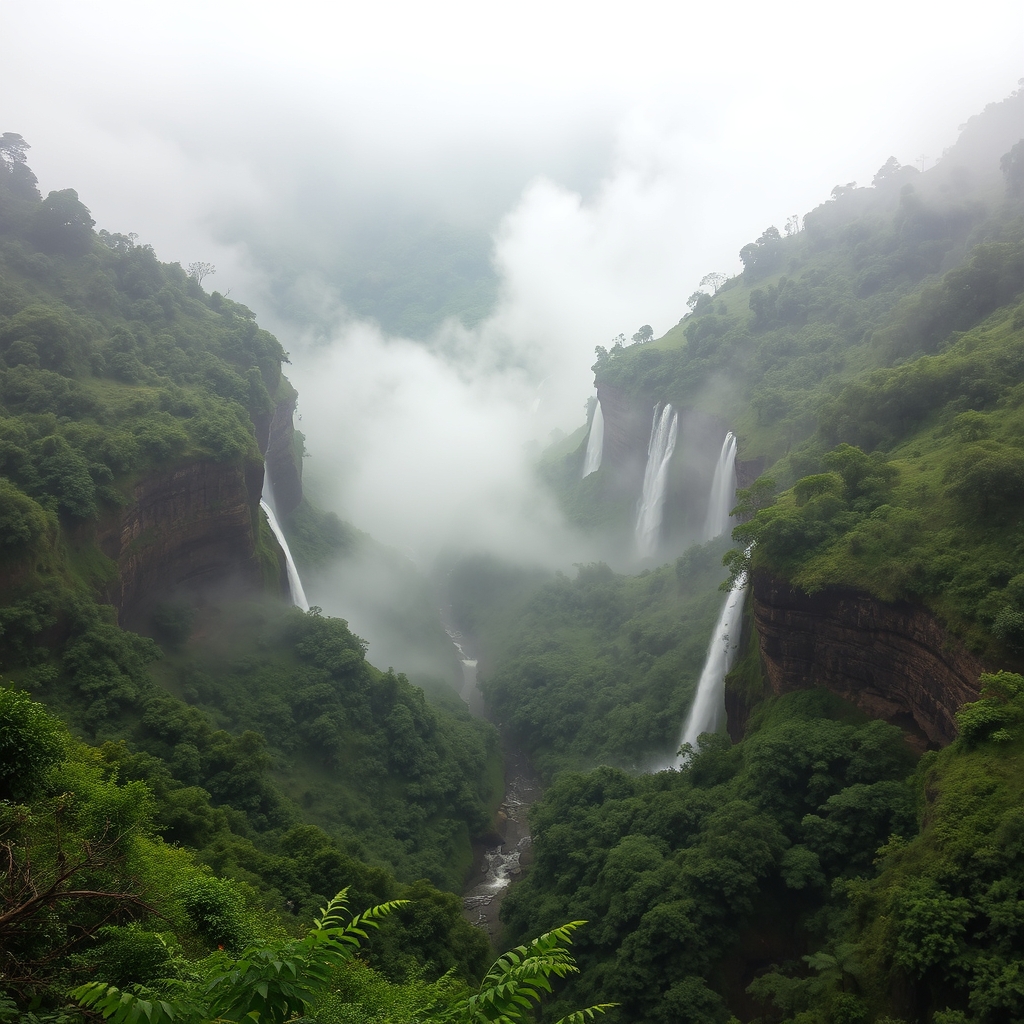
There is a particular kind of Mumbai restlessness that sets in around the third week of heavy rain — windows fogged, trains running late, the same grey view over the same wet street. The cure is not to escape the monsoon but to drive straight into a better version of it. An hour or three out of the city, the Sahyadris turn a green so violent it looks fake, waterfalls appear where there was bare rock in April, and the clouds come down to eye level. These are the overnight escapes worth booking a Friday-evening tank of petrol for.
A word before you pack. The monsoon that makes these hills beautiful is the same monsoon that makes the roads to them treacherous. In early July 2026 a landslide near the Missing Link section of the Mumbai–Pune Expressway, close to the Khandala exit, shut a stretch of the Mumbai-bound carriageway and triggered a traffic advisory. That is normal for the season, not a freak event. Check live traffic before you leave, keep your plans flexible, and never treat a monsoon waterfall as a swimming pool — more on that below.
Monsoon getaways at a glance
| Getaway | Distance from Mumbai | Drive time | Best for | Rough stay/night |
|---|---|---|---|---|
| Lonavala–Khandala | ~90 km | ~2 hrs | Easy first escape, caves, falls | Camps ₹900–1,500 pp |
| Malshej Ghat | ~130 km | ~3 hrs | Dramatic ghat-road waterfalls | MTDC ₹2,200–4,100 |
| Bhandardara | ~154 km | ~4 hrs | Fullest falls, least crowded | MTDC + private resorts |
| Igatpuri | ~120 km | ~2.5 hrs (or train) | Mist, stillness, car-free option | Resorts vary widely |
| Matheran | ~110 km (Neral ~90 km) | Train + walk | Vehicle-free hill station | Heritage stays vary |
Lonavala and Khandala: the easy first escape
Distance: roughly 90 km via the Mumbai–Pune Expressway, about two hours in fair traffic.
This is the one everyone does first, and for good reason — it is the shortest committed drive out of the city that genuinely feels like the hills. The twin towns sit at the top of the Bhor Ghat, wrapped in mist through July and August, and the plateau is dotted with seasonal cascades. Kune Falls, about 3.5 km from town, drops in three tiers and is at its loudest right now. Tiger Point (also called Tiger’s Leap) gives you a sheer valley edge with clouds boiling up from below, when the visibility allows. For something with more purpose in your legs, the ancient Buddhist rock-cut Karla and Bhaja Caves are a short drive apart and stay dry inside while it pours outside.
Why it’s worth it: minimum drive, maximum green, and enough to fill a lazy two days without over-planning.
Practical tip — respect Bhushi Dam. It is the town’s most popular monsoon hangout, but it has also been the site of a fatal flash surge, and the Pune administration has since imposed prohibitory orders at hazardous spots — no gathering in deep or fast water, no sitting under falls, no selfies or reels on slippery edges. Enjoy the view from firm ground and mean it.
If you would rather sleep by water than in a hotel, Pawna Lake camping is a short hop from Lonavala. Operators run all-inclusive lakeside tents from roughly ₹900 to ₹1,500 per person, usually covering evening snacks, a barbecue, dinner, bonfire and breakfast. In peak monsoon they swap watersports for indoor games when it buckets down, and swimming in the deep lake is discouraged without a lifeguard — go for the fireflies-and-drizzle atmosphere, not the swimming.
Malshej Ghat: waterfalls on your windscreen
Distance: about 130 km from Mumbai via the Kalyan–Ahmednagar highway; count on close to three hours.
Malshej is the connoisseur’s monsoon drive. The road climbs through a wall of the Sahyadris where dozens of unnamed seasonal waterfalls spill straight down onto the tarmac — you literally drive under the water. Thumb Point, minutes from the government resort, opens onto a valley that clouds pour through at eye level. Near the Pimpalgaon Joga Dam, the well-known Flamingo Point draws migratory flamingos in the monsoon and early winter, when the shallows fill up.
Why it’s worth it: fewer crowds than Lonavala, and the single most dramatic ghat-road driving experience within a half-day of Mumbai.
Practical tip. The MTDC Malshej Ghat resort has the best perch on the whole ghat, sitting right beside the cloud-filled valley, with a restaurant attached. Rooms run roughly ₹2,200 for a deluxe non-AC up to about ₹4,100 for a valley-view suite, but it books out early in season — reserve well ahead through the official MTDC channel rather than turning up hopeful.
For a proper leg-stretch, the nearby Naneghat pass — an old Satavahana-era trade route about 120 km from Mumbai — hides Maharashtra’s celebrated reverse waterfall, where updraft winds push the falling water back up the cliff. It is an easy but long trek, roughly 8 km on the Konkan side, best in the peak downpours of July and August. Go with a group and start early.
Bhandardara: dams, fireflies and the fullest falls
Distance: around 154 km from Mumbai, a solid four-hour drive.
Bhandardara is where you go when you want the monsoon at full volume and the crowds thinned out by distance. The centrepiece is Arthur Lake, formed by the backwaters of the Wilson Dam — one of India’s oldest, built in the early twentieth century. When the dam fills and starts to overflow, usually from July, it feeds the spectacular tiered Umbrella Falls right beside the road. About 10 km on, the Randha Falls send the Pravara river crashing some 170 feet into a gorge; in a good rain year the sound reaches you before the sight does.
Why it’s worth it: the least commercialised of the big four, with waterfalls at their absolute fullest in July and August.
Practical tip. For stays, the MTDC Holiday Resort sits closest to the lake, with private options nearby. If you can shift your trip earlier, the Kajwa (fireflies) festival transforms the forests around Samrad village, near Sandhan Valley, into a light show from roughly mid-May to late June, just before the rains take hold — camping operators build weekends around it. It is a pre-monsoon act, so it is the one thing on this list you plan for next May, not this week.
Igatpuri: mist, meditation and Camel Valley
Distance: about 120 km from Mumbai — roughly 2.5 hours by road, or a two-hour train from CSMT/Dadar on the Nashik line.
Igatpuri is the quietest of the group and the easiest to reach without a car. It sits high enough that the cloud rarely lifts in August, and the hills around it run emerald. Camel Valley gives you a deep, green gorge view with its own small waterfall and streams; Bhavali Waterfall, about 10 km from the railway station, is the pick of the cascades. The town is also home to Dhamma Giri, one of the world’s largest Vipassana meditation centres, its striking Myanmar Gate worth the short detour even if you are only passing.
Why it’s worth it: train-friendly, genuinely restful, and a good choice if someone in your group wants stillness rather than adventure.
Practical tip. Because you can take the train, Igatpuri is the safest bet on a weekend when the expressway is playing up. Trains keep running when ghat roads close.
One car-free wildcard: Matheran, with a caveat
Matheran, about 110 km out (Neral station is roughly 90 km), is Asia’s only vehicle-free hill station — cars stop at Dasturi Naka and everyone walks the red-earth paths from there. It is lovely in the drizzle, but note the season’s catch: the iconic Neral–Matheran toy train’s full-line service is suspended through the monsoon, roughly mid-June to mid-October, with only the short Aman Lodge–Matheran shuttle running. Plan to walk up from Dasturi, and wear grip you trust on wet laterite.
Getting there and staying sensible
The monsoon rewards the flexible traveller and punishes the rigid one. A few habits that make the difference:
- Check live traffic and weather the morning you leave, especially for anything through the Western Ghats — landslides and waterlogging close sections at short notice.
- Leave Friday night or very early Saturday. Day-trippers clog the Lonavala and Malshej roads by late morning.
- Book stays in advance. MTDC properties and lakeside camps fill weeks ahead in July and August.
- Respect the water. Admire from stable ground, never wade into fast or deep water, and treat every gentle-looking stream as capable of surging without warning.
- Pack for wet. A real rain jacket beats an umbrella on a windy ghat, and dry shoes plus a spare pair change the whole trip.
- Keep the tank full and the phone charged. Fuel stops and signal both thin out once you leave the expressway.
Which getaway suits which traveller
Match the escape to the group you’re travelling with:
- Couples or first-timers: Lonavala–Khandala for the short, low-stress drive and easy sightseeing.
- Photographers and driving enthusiasts: Malshej Ghat, for the road that runs under the waterfalls.
- Nature-first travellers wanting fewer crowds: Bhandardara, where the falls are fullest and the commercialisation thinnest.
- Anyone without a car, or seeking calm: Igatpuri by train — mist, meditation and no ghat driving.
- Families with young kids or trek-averse groups: Matheran’s gentle, car-free red-earth paths (walking up from Dasturi in the monsoon).
What to pack for a monsoon weekend
The right kit turns a soggy trip into a great one:
- A proper rain jacket, not just an umbrella — wind on an open ghat makes umbrellas useless.
- Grippy, quick-drying footwear and a spare pair; wet laterite and mossy steps are slippery.
- A dry bag or zip-locks for phones, chargers and documents.
- Warm layers — the higher hill stations get genuinely cool and damp after dark.
- Cash, since card machines and signal both falter once you leave the highway.
- A power bank and a full fuel tank before you hit the ghats.
Plan your visit: the insider wrap-up
Pick by how far you want to drive and what you want from the weekend. Lonavala for the easy, familiar first escape; Malshej Ghat for the most theatrical monsoon road; Bhandardara for the fullest waterfalls and the quiet; Igatpuri for mist, meditation and a train ticket instead of a steering wheel; Matheran for a car-free walk in the drizzle. All are within a Friday-evening reach, all peak in July and August, and all are best enjoyed by someone who checks the road report, books ahead, and keeps a healthy respect for the water. Do that, and the same rain that traps the city becomes the best reason to leave it.
Frequently Asked Questions
Which monsoon getaway near Mumbai is best for a first-timer with a car?
Lonavala. It is the shortest committed drive — around 90 km, roughly two hours via the Mumbai–Pune Expressway — the roads are the most familiar, and there is enough between Kune Falls, Tiger Point and the Karla-Bhaja caves to fill an easy two days without over-planning.
Where can I go for a monsoon trip near Mumbai without a car?
Igatpuri is the easiest, reachable by a roughly two-hour train from CSMT or Dadar on the Nashik line. Matheran works too, via a local train to Neral and then the hill walk up. Both spare you the ghat driving entirely, which matters when landslides close mountain roads.
Which place has the most dramatic monsoon waterfalls?
Bhandardara for sheer volume — Umbrella Falls and Randha Falls are at their fullest in July and August. Malshej Ghat is the pick for the experience of driving directly beneath dozens of seasonal waterfalls spilling onto the road.
Is it safe to travel to the hills near Mumbai during heavy rain?
Broadly yes, with care. Check for landslide and traffic advisories before you set off, avoid non-essential travel during intense downpours, and never enter waterfalls, dam spillways or fast-moving streams — sudden surges have caused fatalities. Admire water from stable ground only.