
Monsoon in Mumbai: What to Do When It Rains
A local's guide to monsoon Mumbai: what to do when it rains, Sahyadri waterfalls and day trips, sea-facing spots, rainy-day snacks, and how to stay safe.
'%3E%3Crect%20width%3D'96'%20height%3D'96'%20fill%3D'%23E65100'%2F%3E%3Ccircle%20cx%3D'30'%20cy%3D'24'%20r%3D'44'%20fill%3D'%23fff'%20opacity%3D'.12'%2F%3E%3Ccircle%20cx%3D'60'%20cy%3D'74'%20r%3D'40'%20fill%3D'%23000'%20opacity%3D'.10'%2F%3E%3C%2Fg%3E%3Cg%3E%3Ccircle%20cx%3D'48'%20cy%3D'48'%20r%3D'15'%20fill%3D'none'%20stroke%3D'%23fff'%20stroke-width%3D'3'%2F%3E%3Cpath%20fill%3D'%23fff'%20d%3D'M48%2037%20l3.5%2011%20-3.5%2011%20-3.5%20-11%20z'%2F%3E%3Ccircle%20cx%3D'48'%20cy%3D'48'%20r%3D'2.2'%20fill%3D'%23fff'%2F%3E%3C%2Fg%3E%3C%2Fsvg%3E)
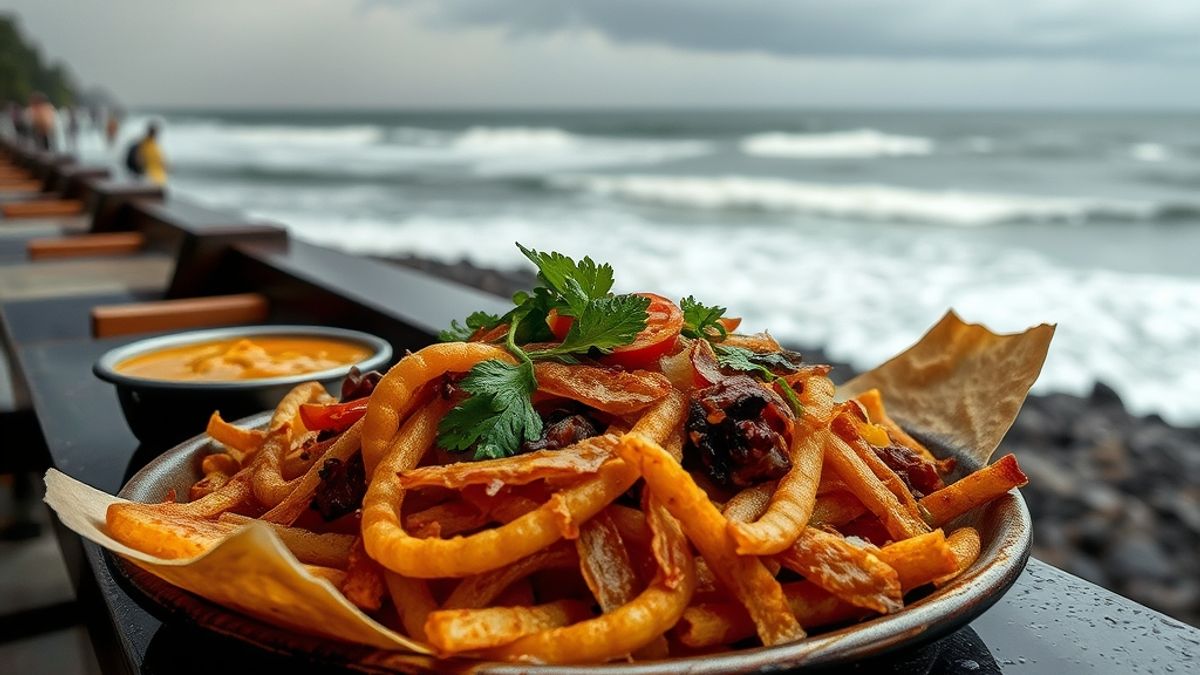
Photo: AroundTheGlobe · CC BY-SA 3.0 · via Wikimedia Commons
From roughly June to September, Mumbai belongs to the rain. The monsoon transforms the city — grey skies, flooded streets, tea and pakoras, and a green that bursts out of every crack. It can be chaotic and magical within the same hour. Locals live by a whole rainy-season rhythm, and this guide helps you lean into its pleasures while planning around its disruptions — and staying safe when the water turns dangerous.
Monsoon escapes near Mumbai at a glance
| Escape | Approx distance | Getting there | Best time | Watch out for |
|---|---|---|---|---|
| Lonavla & Khandala | 90–100 km | Expressway or Pune train | Jul–Sep, midweek | Bhushi Dam bans, wet rocks |
| Matheran | 90 km | Neral train + taxi to Dasturi | Jun–Sep | Slippery laterite paths |
| Malshej Ghat | 130 km | Car via Kalyan–Murbad | Jul–Sep | Landslides, near-zero visibility |
| Bhandardara | 115 km | Car via Igatpuri | Aug–Sep | Fast water below Randha Falls |
| Karjat | 65 km | Central line to Karjat | Jul–Sep | Sudden river currents |
| Lohagad Fort | 100 km | Train to Malavli + walk | Jun–Sep | Slippery steps, gusty ridge |
Prices for these are mostly fuel, tolls or train fare; individual entry and guide costs are noted below.
The mood of the monsoon
The rains bring a particular romance to Mumbai — the smell of first showers on dry earth, the sea whipped into drama along Marine Drive, the hills turning emerald. They also bring waterlogging, train delays and traffic snarls. The trick is simple: enjoy the season’s pleasures, and never take its water lightly.
In the city, in the rain
Watch the sea — from a safe distance. The seafronts are spectacular in the monsoon, with waves crashing over the promenades. Marine Drive, Worli Sea Face and Bandstand are dramatic to watch, but never venture onto the rocks or sea walls at high tide — every year the rough sea claims people who get too close. Check the tide timing, stand back from the parapet, and keep your phone tucked away.
Duck indoors. Rainy days are made for Mumbai’s indoor culture: the great museums (CSMVS, the Bhau Daji Lad), the Kala Ghoda galleries, cosy Irani cafés over chai and bun-maska, Bandra’s specialty coffee shops, and the city’s malls and cinemas. A long lunch or a museum afternoon is the classic wet-day plan.
Eat the season. Monsoon eating is its own pleasure — hot vada pav, bhajias and cutting chai are practically a rainy-day ritual. Duck into a café or a street stall as the rain comes down and settle in.
Into the hills: Sahyadri escapes within reach
When the rains settle in, the Sahyadris just east of the city turn emerald and loud with water, and half of Mumbai starts plotting a weekend out. Here are the escapes worth the drive — and how to enjoy them without taking the monsoon lightly.
- Lonavla & Khandala — the classic first run out of the city. The plateau goes green, Kune Falls drops in tiers, and Tiger’s Leap and Lion’s Point look over cloud-filled valleys; Bhushi Dam becomes a stepped waterfall. It’s the least secluded because everyone has the same idea, but midweek or before 10am it still delivers. After the 2024 tragedy, authorities impose prohibitory orders on Bhushi Dam, Tiger’s Point and Lion’s Point in heavy rain — access is often limited to 9am–5pm and wading into fast water is banned. Never climb onto wet rocks for a photo.
- Matheran — Asia’s only car-free hill station is at its moodiest in the rains, the whole plateau inside a cloud, Charlotte Lake spilling over its weir. Take a Central local to Neral, then a shared taxi to Dasturi car park (small entry ~Rs 50) and walk in about 3 km; the famous toy train’s full run is suspended through the monsoon. Wear shoes with real grip — the laterite paths are genuinely slick — and carry cash, as card payments are patchy up top.
- Malshej Ghat — a high, dramatic pass where dozens of seasonal waterfalls pour straight off the cliffs, some blowing back upward in the wind. There’s little to “do” beyond stand in the spray, which is the point. Best by car (3.5–4 hours); MTDC’s Flamingo Hill resort is the one reliable place to stay and eat. The ghat is landslide-prone and visibility can drop to near-zero — drive slowly and never park on blind bends.
- Bhandardara — quieter and greener than Lonavla: the 1910 Wilson Dam, Arthur Lake, and Randha Falls thundering into a gorge; when the dam fills, the tiered Umbrella Falls switches on. It’s far enough (4.5–5 hours) to work better as an overnight than a day dash. Treat the fast water below Randha Falls with real respect.
- Igatpuri — the first proper Sahyadri station on the Nashik road, wrapped in cloud all monsoon, with fort silhouettes, Camel Valley’s thousand-foot drop, and the Vipassana centre for stillness. Mumbai–Nashik trains stop here, or drive about 3 hours. Fog can swallow the ghat road with no warning — headlights on, speed low.
- Karjat — the closest and easiest to do on a whim, a riverside town on the Ulhas where the water runs fast enough for monsoon rafting (around Rs 1,000 per person). Central Railway locals run straight there in about 2 hours, and it’s stacked with riverside farm-stays. Waterfall pools look inviting but currents turn dangerous fast — swim only where locals do.
Chasing waterfalls: easy monsoon treks
When the rains turn the Sahyadris green, the hills an hour or two out of Mumbai fill with waterfalls and gentle trails you can do in a morning. But people get caught out here every single monsoon — read the safety notes, and respect every closure.
| Trek | Effort | Getting there | Open in peak monsoon? |
|---|---|---|---|
| Bhivpuri Waterfall | Easy 30–40 min | Bhivpuri Road (Karjat line) | Yes, with care |
| Kondana Caves | Easy ~1 hr | Karjat + auto to Kondane | Yes, with care |
| Lohagad Fort | Moderate 45–60 min | Malavli (Karjat–Lonavla line) | Yes, with care |
| Zenith Waterfall | Short walk | Khopoli station + auto | Often closed in heavy rain |
| Pandavkada Falls | Short but steep | Kharghar (Harbour line) | No — official ban |
| Devkund Waterfall | Hard 4.5–5 km one way | Road to Bhira village | Usually closed Aug–Sep |
- Bhivpuri is one of the friendliest walks — a 20–30 m cascade a short, signposted walk from the station, with weekend rope rappelling (roughly Rs 500–1,500). The rock shelf beside the pool turns glassy; don’t stand under the fall or wade into the plunge pool when the flow is heavy.
- Kondana Caves are a rare two-in-one: first-century-BC Buddhist rock-cut caves with a monsoon waterfall spilling across the entrance, so you stand behind a sheet of falling water. Gentle hour-long path from Kondane village; a local guide is optional (Rs 300–500). Don’t scramble up the wet waterfall face.
- Lohagad Fort is the pick of the beginner fort walks — four grand gateways to mist-wrapped ramparts, with the famous “reverse waterfall” blowing upward in strong wind. The old stone steps and the exposed Vinchu Kata ridge get treacherously slippery; skip the ridge if the wind is up, and wear grip shoes.
- Zenith Waterfall is powerful and beautiful, but one of the more dangerous spots on this list — heavy rain sends the level up suddenly, and rescues of 80–100+ stranded tourists in a single afternoon are a recurring headline. Treat it as a flash-flood spot: stay well below, keep out of the stream bed, and leave the moment the water rises or turns muddy.
- Pandavkada Falls (roughly 107 m, behind Kharghar) is genuinely spectacular but under a full monsoon ban after repeated rescues and deaths, with prohibitory signboards on the trail. Flash surges have trapped groups above the fall. Enjoy it from a distance, or save it for October–November.
- Devkund Waterfall — a tall plunge into a deep emerald pool, the biggest undertaking here at 4.5–5 km one way through forest. A Bhira village guide (Rs 100–200 per group) is compulsory, and the trail is routinely shut in August and September after drownings. Don’t attempt it against a closure.
Where to watch the rain come in off the sea
When the south-west monsoon is in full swing, half of Mumbai heads for the water to watch it. All the promenades below are free.
- Marine Drive (the Queen’s Necklace) — the city’s grandstand for a downpour. On a big tide the sea heaves over the tetrapods and the wall, and Mumbai turns out in raincoats to feel the spray. Five to ten minutes from Churchgate or Marine Lines. Stand back from the parapet at high tide.
- Worli Sea Face — takes the monsoon full in the face, the Bandra–Worli Sea Link strung across the bay; quieter and more of a local’s walk. Nearest rail is Mahalaxmi, then a short cab. The BMC sometimes barriers the wall in extreme weather — respect it.
- Bandstand Promenade — the sea turns properly wild against the boulders, with Bandra Fort at the far end giving a raised, partly covered vantage over the Sea Link and useful cover for a sudden squall. Autos from Bandra West.
- Carter Road — the city’s most sociable seafront, lined with cafés and food carts, with amphitheatre steps to sit and watch the grey sea. Chai or a snack from the stalls runs Rs 30–150.
For a table with a view, Pizza By The Bay on Marine Drive (roughly Rs 800–1,500 for two) has big windows onto the water and takes no bookings, so go early; The Bandstand Pantry is a snug sea-facing coffee stop (Rs 500–1,000 for two) right on the promenade.
The monsoon snack circuit
There’s a particular hunger the first heavy shower brings on, and the city answers it with hot oil, chutney and cutting chai.
- Aram Vada Pav (opposite CSMT, running since 1939) — the oldest vada pav counter in the area, single-fried in sunflower oil in an unusually large pav; the monsoon menu widens to sabudana vada and dahi misal. Roughly Rs 25–35 a vada pav, cash and standing only.
- Ashok Vada Pav (near Kirti College, Dadar) — a tiny, permanently mobbed stall since the early 1970s, fresh from the kadhai with a fiery garlic chutney; it holds a place on TasteAtlas’ list of the world’s most iconic sandwiches. Roughly Rs 20–30.
- Prakash (off Ranade Road, Dadar) — a half-century-old Maharashtrian canteen made for the rains: hot kanda bhaji, crisp sabudana vada, and thick saffron piyush. Cash only; snacks roughly Rs 80–160.
- Aaswad (Dadar West, since 1986) — kothimbir vadi, home-style thalipeeth with white loni, and a misal once voted the world’s tastiest vegetarian dish. Roughly Rs 100–250 a plate; there’s nearly always a wait.
- Kyani & Co (Dhobi Talao, since 1904) — when the rain is too heavy to stand at a stall, this is the shelter: bun maska and strong Irani chai by tall windows. Roughly Rs 60–120. A few minutes from Marine Lines.
- Bhutta stalls — from June to September the Marine Drive, Girgaon Chowpatty, Carter Road and Bandstand promenades fill with charcoal carts roasting corn, rubbed with lime, salt and chilli. Roughly Rs 40–60 a cob. Stay by the railings rather than on the flooding sand.
The monsoon’s own festival calendar
The rains set Mumbai’s ritual calendar in motion, in roughly this order:
- Prati Pandharpur, Wadala (Ashadhi Ekadashi, June/July) — those who can’t make the Wari to Pandharpur come to this Vitthal temple instead, more than 150 dindis converging with mridang and taal. Ten minutes’ walk from Wadala Road (Harbour line); come at dawn.
- Narali Purnima, Worli Koliwada (Shravan full moon, usually August) — the Koli fishing village offers coconuts to the sea to mark the safe return to fishing after the ban, with garlanded boats and Koli dance. Guided Koliwada walks run Rs 500–1,500; go with someone who knows the village.
- Dahi Handi, Thane & Worli (day after Janmashtami, August) — Govinda troupes build human pyramids to reach the buttermilk pot, the biggest crowds at Thane’s Sanskruti Yuva Pratishthan and Worli’s Sankalp Pratishthan. Stand well back from the base — the falls are real.
- Lalbaug idol workshops (July–August) — the karkhanas of Lalbaug and Parel fill with half-finished Ganpatis, home of Kambli Arts’ Lalbaugcha Raja. Wandering the sheds is a quieter sight than the festival queues; ask before photographing.
- GSB Seva Mandal, King’s Circle (Ganesh Chaturthi, late Aug/early Sep) — the eco-friendly clay idol dressed in tens of kilos of gold, often called Mumbai’s richest Ganpati, famously well organised. A few minutes from King’s Circle (Harbour) or Matunga (Central).
The commuter’s kit, and where not to wade
Gear up early. For a proper full-length umbrella on a steel frame that survives a squall, Ebrahim Currim & Sons (Stag Umbrellas) on Princess Street, trading since the 1860s, is the place (Rs 300–1,000+); ask specifically for a steel-shaft stick umbrella, not a folding one. La Judi Shoes on Bandra’s Hill Road reliably keeps gumboots (around Rs 650) through the season, and Crawford Market near CSMT is a one-stop for cheap ponchos (from ~Rs 150) and dry pouches (Rs 100–300) — pick up a roll-top pouch to keep your phone dry on a jammed local.
Know the flood traps and route around them:
| Flooding point | Where | Do this instead |
|---|---|---|
| Hindmata junction | Dr Ambedkar Rd, Dadar–Parel | Avoid entirely in heavy rain; worst at high tide |
| Andheri & Milan subways | Andheri; Santacruz | Cross by road-over-bridge or station skywalk |
| Sion–Kurla stretch | Central line, Matunga–Kurla | Favour the Western line; check live status |
Hindmata sits in a natural bowl and goes waist- to chest-deep within an hour of heavy rain despite the BMC’s holding tanks. The Andheri and Milan subways pool several feet deep and stall vehicles. The low-lying Central Railway around Matunga, Sion and Kurla (plus Chunabhatti and Wadala on the Harbour line) is the first to go under, and can suspend CSMT–Thane services altogether — the single biggest reason to plan a heavy-rain commute around the Western line. Never board a train heading into a section that’s already waterlogged; being stranded between stations is the worst place to be.
A serious word on monsoon safety
The Sahyadris are gorgeous but genuinely dangerous in heavy rain, and this cannot be overstated:
- Waterfalls and dams can be deadly. Authorities regularly impose temporary restrictions and outright bans at spots like Bhushi Dam, Tiger’s Point, Pandavkada, Zenith and Devkund during heavy-rain spells, and prohibit risky selfies. Always check current restrictions before you travel.
- Never enter or stand near fast-moving water, and never climb above a fall — flash floods and slippery rocks cause deaths every single monsoon.
- Ghat roads can close for landslides or zero visibility; build flexibility into your plans.
- In the city, avoid low-lying flood-prone junctions during heavy downpours, watch for open manholes in flooded streets, and expect train and traffic delays.
Insider tips for the Mumbai rains
- Carry a good full-length umbrella or light raincoat and quick-dry footwear — you will get wet, so plan for it rather than fighting it.
- Keep electronics in a zip-lock or dry pouch, and a power bank charged for the long, slow commutes.
- Build slack into your schedule. Trains and traffic slow dramatically; never plan tight connections, and keep cash for a share-cab when the network fails.
- Watch the forecast and civic alerts, especially on red-alert days when the city advises people to stay in.
- Embrace the flexibility. Some of the best monsoon days are unplanned — a café, a museum, a window seat watching the rain.
Monsoon Mumbai is a different city — greener, moodier, more romantic and more chaotic. Watch the drama of the sea from safe ground, take refuge in museums and cafés, eat vada pav and bhajias as the rain falls, and if you head for the hills, treat the water with real respect and check the restrictions first. Plan loosely, stay safe, and let the rains show you a side of the city most visitors never see.
Frequently Asked Questions
When is monsoon season in Mumbai?
The south-west monsoon runs roughly June to September, with the heaviest, most reliable rain usually in July and August. It arrives around the second week of June and tapers through September, and the greenery and waterfalls in the surrounding hills peak from July onwards.
What is there to do in Mumbai when it rains?
Watch the sea from safe ground at Marine Drive, Worli or Bandstand; duck into museums, Irani cafés and specialty coffee shops; eat vada pav and hot bhajias; and, on a clear weekend, take a day trip to the green Sahyadri hills at Lonavala, Matheran or Karjat. Always plan around train and traffic delays.
Is it safe to visit waterfalls near Mumbai during the monsoon?
Only with real caution. Flash floods and slippery rocks kill people every monsoon, and authorities impose bans and prohibitory orders at spots like Bhushi Dam, Pandavkada, Zenith and Devkund during heavy rain. Never enter fast-moving water, never climb above a fall, and always check current restrictions before you travel.
Which areas of Mumbai flood the most in the rains?
Hindmata junction between Dadar and Parel is the most notorious, along with the Andheri and Milan subways and the low-lying Central Railway stretch through Matunga, Sion and Kurla. Avoid these in heavy rain, especially when a downpour lines up with high tide.
What should I pack for the Mumbai monsoon?
A sturdy full-length umbrella or light raincoat, quick-dry footwear or gumboots, and zip-lock or dry pouches for your phone and documents. Add a power bank, keep some cash for share-cabs when trains fail, and watch the forecast and civic alerts on heavy-rain days.