
Best Mughlai & Kebab Restaurants in Mumbai
A local's guide to Mumbai's best Mughlai food, kebabs and biryani, from Mohammed Ali Road and Bhendi Bazaar to Bandra, with Ramzan tips and rough prices.
'%3E%3Crect%20width%3D'96'%20height%3D'96'%20fill%3D'%23E65100'%2F%3E%3Ccircle%20cx%3D'30'%20cy%3D'24'%20r%3D'44'%20fill%3D'%23fff'%20opacity%3D'.12'%2F%3E%3Ccircle%20cx%3D'60'%20cy%3D'74'%20r%3D'40'%20fill%3D'%23000'%20opacity%3D'.10'%2F%3E%3C%2Fg%3E%3Cg%3E%3Ccircle%20cx%3D'48'%20cy%3D'48'%20r%3D'15'%20fill%3D'none'%20stroke%3D'%23fff'%20stroke-width%3D'3'%2F%3E%3Cpath%20fill%3D'%23fff'%20d%3D'M48%2037%20l3.5%2011%20-3.5%2011%20-3.5%20-11%20z'%2F%3E%3Ccircle%20cx%3D'48'%20cy%3D'48'%20r%3D'2.2'%20fill%3D'%23fff'%2F%3E%3C%2Fg%3E%3C%2Fsvg%3E)
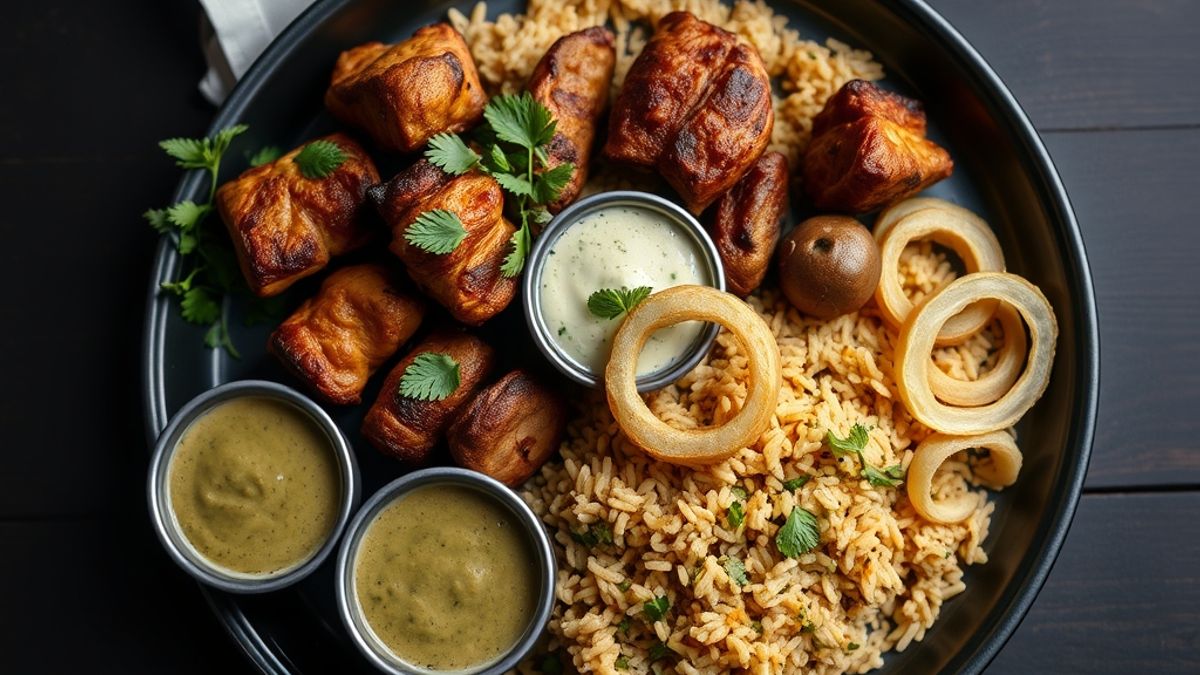
Ask any Mumbaikar where the city’s soul lives after dark and many will point you toward a lane thick with charcoal smoke, the clang of a seekh skewer against a tandoor, and the sweet smell of malai simmering somewhere close by. Mughlai food in Mumbai isn’t a cuisine you visit — it’s a ritual. It runs from century-old holes-in-the-wall to polished Bandra dining rooms, and every one of them has a queue for a reason. This is a been-there guide to eating kebabs, biryani and rich Mughlai gravies across the city, organised by neighbourhood so you can plan a whole evening around one pocket instead of fighting traffic.
Mughlai Mumbai at a glance
| Area | What to eat | Approx cost (₹/head) | Best time | Nearest station |
|---|---|---|---|---|
| Mohammed Ali Road | Seekh & boti kebabs, bara handi | 300–500 | After 9pm; Ramzan | Marine Lines / Sandhurst Road |
| Bhendi Bazaar | Bohri smoked mutton, kheema samosa | 250–450 | Evening | Sandhurst Road |
| Bandra & suburbs | Mutton biryani, reshmi kebab | 300–600 | 7–9pm | Bandra (Western) |
| Colaba | Late-night rolls, boti kebab | 200–400 | Post-midnight | CSMT / Churchgate |
| Nagpada & Byculla | Sarvi seekh, nalli nihari | 250–450 | Late night; winter mornings | Byculla / Grant Road |
Prices are per person unless noted and shift with the season, so treat them as a compass rather than a contract. Street stalls are largely cash-only; the suburban sit-down restaurants take cards.
Mohammed Ali Road: the beating heart
If you eat Mughlai in only one place in Mumbai, make it Mohammed Ali Road. This stretch near Crawford Market and Minara Masjid transforms after sunset into an open-air kitchen, and during Ramzan it becomes something close to a festival.
What to eat here
- Seekh and boti kebabs — minced and chunked meat grilled over open coals, served with raw onion and a squeeze of lime. Roughly ₹150–300 a plate.
- Bara handi — a legendary slow-cooked stew tradition where a dozen pots simmer overnight. Rich, deeply spiced and a glorious acquired taste.
- Malpua and firni — round off the meal with these sweets, especially in Ramzan when stalls stack malpua by the tray.
The institutions
- Noor Mohammadi Hotel — one of the oldest in the area, famous for its chicken and mutton dishes. The much-talked-about “Sanjay” chicken curry is the order to know; a full meal runs around ₹300–500.
- Shalimar (on the Bhendi Bazaar side) — a reliable, air-conditioned sit-down option for biryani and rich curries when the street gets overwhelming.
Practical tips
- Go after 8pm; the street truly comes alive around 9–10pm.
- Nearest stations are Marine Lines and Sandhurst Road; a cab or auto to Crawford Market drops you at the mouth of the lane.
- Carry cash and small change, and wear closed shoes — the lanes get slick.
Bhendi Bazaar: old-school comfort
A short walk from Mohammed Ali Road, Bhendi Bazaar has its own dense, lived-in food culture and names Mumbaikars have trusted for generations.
- Tawakkal Sweets — the address people whisper about for its “chocolate paan” and, in Ramzan, its dense, ghee-laden sweets. A perfect post-kebab sugar hit.
- Surti and Bohri specialities — the area’s Dawoodi Bohra community has left its mark. Look for smoked mutton (dhungar-style) preparations, kheema samosas and malai khaja. If you are ever invited to a Bohra thaal, say yes immediately.
Expect to eat very well here for ₹250–450. The area is walkable from Mohammed Ali Road, so many treat both as one long crawl.
Bandra and the western suburbs: Mughlai, refined
Cross into the western suburbs and the mood changes — more seating, air-conditioning, and a slightly higher bill, but the cooking can be every bit as serious.
Where to eat Mughlai in Bandra?
- Lucky Restaurant (near Bandra station) — a genuine institution for biryani. The mutton biryani is the classic order, and the place has fed film crews, cabbies and families alike for decades. Around ₹300–500 a head.
- Jaffer Bhai’s Delhi Darbar — a dependable name across the city for biryani and rich Mughlai gravies, and a solid choice for a proper sit-down meal.
- Bademiya offshoots — the famous Colaba brand has a suburban presence too, for late-night rolls and kebabs.
Central and other suburbs
- Persian Darbar (multiple locations) — big portions of biryani, tandoori and Mughlai curries in a family-friendly setting. Budget ₹350–600.
- Cafés around Mahim and Kurla — less famous but worth exploring for weekday kebab platters at gentler prices.
These places take reservations and cards, so they suit groups or a sit-down dinner. Weekends get packed after 8:30pm, so go earlier or expect a wait.
Colaba and South Mumbai: the late-night classics
South Mumbai’s Mughlai scene is defined by one legend and a cluster of dependable neighbours.
- Bademiya (behind the Taj, Colaba) — arguably Mumbai’s most famous late-night kebab stall. Roomali rolls, seekh kebabs and boti stuffed into hot rotis, eaten standing on the street near midnight. Around ₹200–400. Touristy, yes, but the buzz is real, and it is a post-party, second-dinner kind of place best experienced late.
- Delhi Darbar (Colaba) — a long-running sit-down spot for biryani, kebabs and thick, buttery curries.
Colaba is walkable from CSMT and Churchgate; take an auto or cab for the final stretch.
Byculla, Nagpada and Grant Road: the quiet heavyweights
Serious eaters often skip the tourist trail for these central pockets, where the food is unfussy and the flavours are big.
- Nagpada is kebab country — beef and mutton seekh grilled on the spot, plus nalli nihari in the mornings during winter and Ramzan. Nihari, a slow-cooked bone-marrow stew eaten with khameeri roti, is a breakfast worth setting an alarm for.
- Sarvi (Nagpada) — a heritage name famous for its seekh kebabs, run for generations. If you want to taste what “old Mumbai kebab” means, this is a strong candidate, at around ₹250–450.
- Grant Road and Byculla lanes hide tandoors turning out fresh naan, tandoori chicken and rich mutton gravies well into the night.
How to order like you mean it
Mughlai menus can overwhelm. Here is a shortlist that rarely disappoints:
- Seekh kebab — the benchmark. If a place gets this right, trust the rest.
- Mutton biryani — the true test of a Mughlai kitchen; look for long-grain rice, tender meat and restrained spicing rather than fire.
- Nihari or paya — for the adventurous; rich, gelatinous and best in the cooler months.
- Malai / reshmi kebab — creamy chicken skewers, a crowd-pleaser and great for first-timers.
- Khichda / haleem — a Ramzan speciality; slow-cooked wheat, lentils and meat pounded into a thick, comforting porridge.
- Firni and malpua — the traditional sweet close to any feast.
Eating during Ramzan
Ramzan is the peak season for Mughlai food in Mumbai, and genuinely one of the city’s great annual food experiences. After the day’s fast, the lanes around Mohammed Ali Road, Bhendi Bazaar, Bohri Mohalla and Nagpada explode with stalls selling everything from khichda and haleem to malpua, phirni and freshly fried jalebis.
How to do it well
- Go after 8pm, once iftar has passed and the stalls hit their rhythm. The energy peaks between 9pm and midnight.
- Bohri Mohalla, just off Mohammed Ali Road, is the spot for smoked and slow-cooked meats and Bohra sweets — many regulars rate it above the main road.
- Come with a group so you can share and taste more without over-ordering.
- Budget roughly ₹400–700 for a proper grazing crawl across several stalls.
- Be respectful: this is a religious month, so dress modestly and be patient with the crowds.
A perfect Mughlai crawl, hour by hour
If you want one great night rather than a scattershot of visits, build it around the old-city cluster and go on foot:
- 8.30pm — Mohammed Ali Road. Start with seekh and boti kebabs hot off the coals at a busy stall, with raw onion and lime. One plate each, no more; you are pacing.
- 9.15pm — a curry sit-down. Duck into Noor Mohammadi for the “Sanjay” chicken, or find a bara-handi stall for a bowl of slow-cooked stew with roti.
- 9.45pm — Bohri Mohalla. Walk five minutes off the main road for smoked, dhungar-style mutton and Bohra specialities the tourist crowd misses.
- 10.30pm — Bhendi Bazaar sweets. Finish at Tawakkal for malpua, malai khaja or a chocolate paan.
In Ramzan, shift everything an hour later and add more grazing stops. Off-season, the same crawl works but is quieter and closes earlier.
The dishes, decoded
- Seekh — spiced minced meat moulded on a skewer and grilled; boti — chunks of marinated meat given the same treatment.
- Nihari and paya — slow-cooked stews of shank and trotters, gelatinous and rich, a winter and early-morning food.
- Khichda and haleem — pounded wheat, lentils and meat cooked to a thick porridge; a Ramzan staple.
- Bara handi — literally “twelve pots”, each a different cut simmered overnight into a deep, layered stew.
- Reshmi and malai kebab — silky, mild cream-and-cheese chicken skewers, the gentlest entry point for first-timers.
- Roomali roti — a huge, tissue-thin handkerchief bread folded around kebabs into a roll, the classic Bademiya order.
Learn these few and you can walk into any Mughlai kitchen in the city and order with confidence.
Getting around and staying safe
- Transport: The harbour and central railway lines get you closest to the old-city clusters — Marine Lines, Sandhurst Road, Byculla and Grant Road are your friends. For Bandra and the suburbs, the Western line plus a short auto works best.
- Timing: Most of the magic happens between 8pm and 1am, latest during Ramzan and on weekends.
- Spice: Mumbai Mughlai leans rich rather than searingly hot, but ask if you are sensitive, and keep water handy.
Insider tips and the bottom line
- Start with the kebab, judge the kitchen, then commit. One plate of seekh tells you whether the biryani is worth ordering.
- Go late and go hungry. These lanes peak near midnight, and the food is built for grazing, not a single dish.
- Bring a group for the crawls. Mohammed Ali Road and Bohri Mohalla reward sharing across many stalls rather than filling up at one.
The beauty of Mumbai’s Mughlai scene is its range: a ₹200 plate of seekh on a Colaba pavement one night, a ₹600 sit-down biryani in Bandra the next, and both feel completely worth it. Start with Mohammed Ali Road as your first pilgrimage, let the smoke and the crowds do the rest, and the city will feed you like family.
Frequently Asked Questions
Where is the best Mughlai food in Mumbai?
Mohammed Ali Road near Crawford Market is the beating heart of Mumbai's Mughlai scene, especially after dark and during Ramzan. Institutions like Noor Mohammadi Hotel and nearby Bhendi Bazaar anchor it.
What should I order at a Mumbai Mughlai restaurant?
Start with seekh kebab, the benchmark of any kitchen, then a mutton biryani to test the rice and spicing. Add nihari or paya in winter, and creamy malai kebab if you like it mild.
What time do Mohammed Ali Road food stalls open?
Mughlai Mumbai is a night creature. Most stalls hit their stride between 8pm and 1am, and stay open latest during Ramzan and on weekends. Go after 8pm, and later during the fasting month.
How much does a Mughlai meal in Mumbai cost?
A street plate of seekh kebab runs about 150 to 300 rupees, a sit-down biryani meal 300 to 600 rupees a head, and a full Ramzan grazing crawl across stalls roughly 400 to 700 rupees per person.
Is Mumbai Mughlai food very spicy?
It leans rich rather than searingly hot, built on ghee, cream and warm spices more than raw chilli. If you are sensitive, ask, and keep water and maybe an antacid handy for an ambitious night.