
Sindhi Food in Mumbai: Dal Pakwan, Sai Bhaji & Koki
Where to eat Sindhi food in Mumbai — dal pakwan breakfast, sai bhaji, koki and Sindhi kadhi in Chembur, Sion and Ulhasnagar — what to order, ₹ prices and tips.
'%3E%3Crect%20width%3D'96'%20height%3D'96'%20fill%3D'%23E65100'%2F%3E%3Ccircle%20cx%3D'30'%20cy%3D'24'%20r%3D'44'%20fill%3D'%23fff'%20opacity%3D'.12'%2F%3E%3Ccircle%20cx%3D'60'%20cy%3D'74'%20r%3D'40'%20fill%3D'%23000'%20opacity%3D'.10'%2F%3E%3C%2Fg%3E%3Cg%3E%3Ccircle%20cx%3D'48'%20cy%3D'48'%20r%3D'15'%20fill%3D'none'%20stroke%3D'%23fff'%20stroke-width%3D'3'%2F%3E%3Cpath%20fill%3D'%23fff'%20d%3D'M48%2037%20l3.5%2011%20-3.5%2011%20-3.5%20-11%20z'%2F%3E%3Ccircle%20cx%3D'48'%20cy%3D'48'%20r%3D'2.2'%20fill%3D'%23fff'%2F%3E%3C%2Fg%3E%3C%2Fsvg%3E)
The Top 10
- 01
Kailash Parbat
Colaba approx ₹500–800 for twoGo for: The Sindhi-founded chaat institution running since 1952 - ragda pattice, dahi/papdi chaat, chole bhature and Sindhi sweets
Stick to the original Colaba branch for the old-school recipes; expect a queue at peak hours.
- 02
Sindhful
Khar West approx ₹700–1,200 for twoGo for: The city's go-to modern all-Sindhi restaurant - the full Sindhi thali (sai bhaji, aloo tuk, koki, dal pakwan, Sindhi curry-chawal)
Order the thali to sample many dishes at once; they also deliver across the western suburbs.
- 03
VIG Refreshments
Chembur (East) approx ₹200–350 for twoGo for: A no-frills Sindhi breakfast legend from the 1950s - dal pakwan, pattice chola and thick malai lassi
Go before noon - the crisp dal pakwan is famous for selling out by midday.
- 04
Duma Dum Mast Kalandar
Chembur (East) approx ₹1,000–1,600 for twoGo for: Sit-down Sindhi-Punjabi resto-bar with dishes cooked in earthen pots over coal - sai bhaji, sukho teevan, sanna pakora, kheema dabal roti
Best for a lively group dinner; the upper level has the bar and music.
- 05
Guru Kripa
Sion approx ₹200–400 for twoGo for: Running since 1975, famous for samosas and chole tikki, plus dal pakwan and sev barfi
Pair the samosa-chole with a piece of their sev barfi to finish.
- 06
Jhama Sweets
Chembur approx ₹200–400 for twoGo for: Iconic Sindhi mithai shop since 1950 - sev barfi and festival sweets, alongside dal pakwan and Sindhi pattice
Mostly takeaway; buy the sev barfi by the kilo to carry home.
- 07
Tharu Sweets
Chembur approx ₹200–400 for twoGo for: Family-run Sindhi sweet maker since 1968; also does Sindhi kadhi-chawal and dal pakwan
The Sindhi curry with dal pakwan is a Sunday-morning special - plan around it.
- 08
Mukesh Dal Pakwan
Sion Koliwada approx ₹100–250 for twoGo for: A tiny cult breakfast joint doing one thing brilliantly - dal pakwan served with tangy pickled green chillies
It's a small stall - go early morning for the freshest, crispest pakwan.
- 09
Doli Nasta House
Ulhasnagar approx ₹150–300 for twoGo for: Long-standing favourite in Mumbai's Sindhi heartland for tangy-spicy dal pakwan, dal moong and koki
Right by Ulhasnagar station - an easy weekend Sindhi-breakfast pilgrimage.
- 10
Hari Shankar Dal Pakwan Nashta House
Ulhasnagar approx ₹150–300 for twoGo for: Ulhasnagar breakfast staple for dal pakwan, dal moong and its signature dal sandwich
Try the dal sandwich - a local twist you won't easily find elsewhere.
Ranked by our Mumbai desk · prices are approximate — confirm before you go.
Mumbai’s best Sindhi food lives in Chembur — the community’s post-Partition heartland — where old-guard breakfast joints like VIG Refreshments serve crisp, morning-fresh dal pakwan. Come early for pakwan and koki, sit down for sai bhaji, Sindhi kadhi-chawal and tuk, and don’t skip Sion’s Guru Kripa or a trip to Ulhasnagar for the food at its most unfiltered.
Sindhi cooking is one of the great quiet cuisines of Mumbai — beloved, distinctive, and almost invisible unless you know where to look. It clusters mostly around the neighbourhoods where Sindhi families rebuilt their lives after 1947, and it peaks in the early morning, when the pakwan is fresh and the dal is just off the flame. This is a guide to finding it, ordering it right, and knowing roughly what it costs.
Quick reference: what to order and where
Prices are rough per-person bands, not fixed figures — many older rooms are cash-first. Go early for anything with pakwan in the name.
| Order this | What you get | Where | Rough price (₹) |
|---|---|---|---|
| Dal pakwan | Chana dal + crisp fried discs | VIG Refreshments, Chembur E | 100–250 pp |
| Kadhi-chawal + tuk | Tangy besan curry, rice, fried potato | Kailash Parbat / home kitchens | mid-range |
| Koki | Onion-chilli griddled flatbread | Chembur & Thane spots | 50–120 |
| Samosa-chola | Legendary samosas | Guru Kripa, Sion | student-priced |
| Sai bhaji + bugga chawal | Spinach-dal one-pot, caramelised rice | Sit-down Sindhi kitchens | mid-range |
A cuisine shaped by Partition
To understand Sindhi food in Mumbai, you have to understand how it got here. When the subcontinent was partitioned in 1947, Hindu Sindhis left the province of Sindh — now in Pakistan — with almost nothing, and many were settled in refugee colonies around Mumbai. Chembur became one of the first major resettlement areas, and its Sindhi Colony and “Sindhi Society” pockets still carry the community’s imprint today.
Food became a way of holding on to a homeland that no longer existed on the map. Dishes like dal pakwan, koki and Sindhi kadhi travelled across the border in memory and were recreated, generation after generation, in Bombay kitchens. That’s why the best Sindhi food here still feels homely rather than fancy — it was never restaurant food to begin with.
What Sindhi food actually is
If you only know Sindhi cooking by name, here are the dishes worth learning by heart:
- Dal pakwan — the signature Sindhi breakfast. Slow-cooked chana dal, tempered and spiced, served with pakwan: crisp, cracker-flat deep-fried maida discs seasoned with ajwain and pepper. You break the pakwan into the dal, add tangy tamarind and green chutney, and eat it with raw onion. Rich, savoury, addictive.
- Sai bhaji — a wholesome one-pot dish of spinach and other greens simmered with chana dal and vegetables. Nutritious, mildly spiced, and usually eaten with bugga chawal (a brown, caramelised rice). This is everyday Sindhi home cooking at its best.
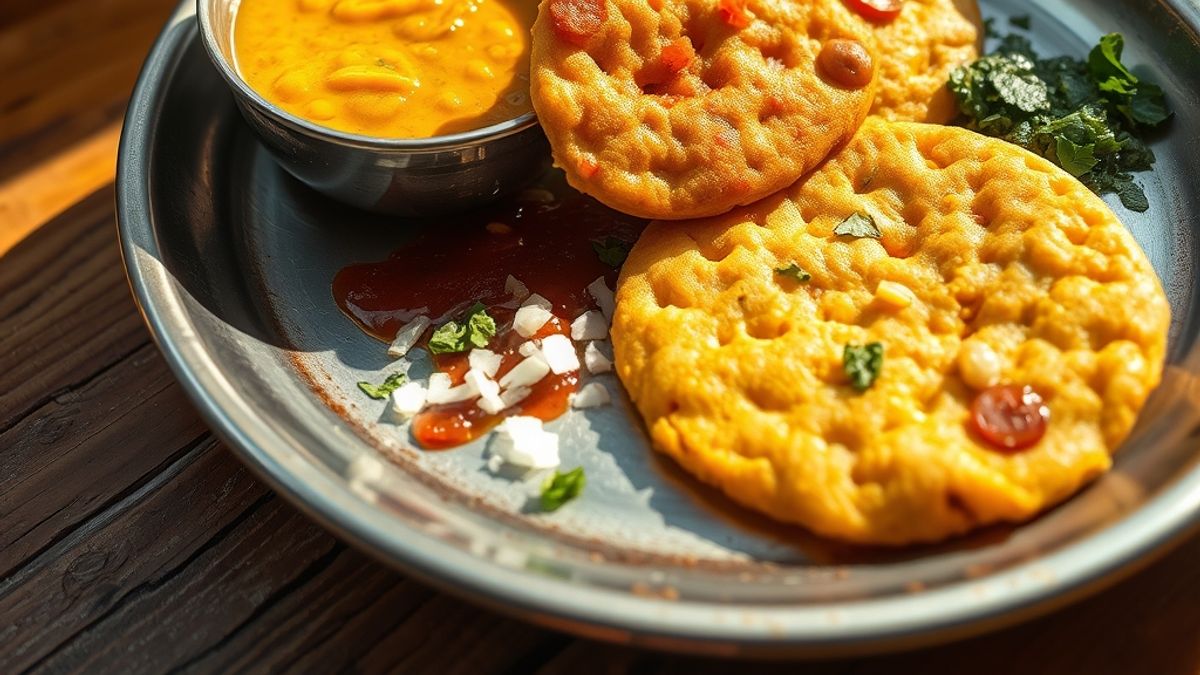
- Koki — a thick, hearty flatbread kneaded with onion, green chilli and spices, griddled slowly until crisp at the edges. A breakfast and tea-time staple, wonderful with curd or a cup of chai.
- Sindhi kadhi — nothing like the yoghurt kadhi of the north. This is a tangy, tomato-and-tamarind curry built on roasted gram flour (besan) and loaded with vegetables like drumstick, cluster beans, okra and potato. Eaten with rice — kadhi-chawal — it’s the Sunday lunch a lot of Sindhis grew up on.
- Tuk — twice-fried potato (aloo tuk) or arbi (colocasia), smashed and crisped, dusted with spice. The classic side to kadhi-chawal.
- Seyal — a moist, onion-tomato style of cooking applied to bread (seyal mani) or leftovers, and much-loved.
For a sweet finish, look for Sindhi-style sweets and mithai at the community’s older sweet shops — a good pairing with our Mumbai mithai and desserts guide.
Chembur: the Sindhi food heartland
If you visit one neighbourhood for Sindhi food, make it Chembur. Decades of Sindhi settlement have left it dotted with small, family-run breakfast joints and sweet shops that have been doing the same few things brilliantly for generations. This is where dal pakwan is a morning institution, not a novelty.
VIG Refreshments — Chembur East
The name most people will point you to. A long-running, no-frills Sindhi breakfast institution in Chembur East, now run by a later generation of the founding family, VIG is famous for its dal pakwan, pattice-chola, samosa-chola and thick, dhaba-style lassi. It’s an early-morning place — get there in the first half of the day for pakwan at its crispest. Expect breakfast-joint prices, roughly ₹100–250 a head; treat that as a rough band, not a fixed figure.
Jhama Sweets — Chembur
A well-known Sindhi sweet shop and snack counter in Chembur with a following across the city. Alongside its mithai, it’s a reliable stop for Sindhi snacks like pattice and dal pakwan. Good for a sit-down bite or to carry sweets home.
Sion, Thane and the wider suburbs
Chembur isn’t the only address. Sion is home to Guru Kripa, a decades-old eatery that’s a genuine Mumbai legend — mobbed by college students and locals for its samosas, and a solid bet for dal pakwan and chole-samosa too. It’s a stand-and-eat kind of place, priced for students, and worth the queue.
For a sit-down meal rather than a breakfast counter, Kailash Parbat — a long-established Sindhi name with roots in Colaba and outlets around the city and beyond — offers a more polished spread: sai bhaji, Sindhi kadhi, seyal preparations and Sindhi-style chaat in a proper restaurant setting. Budget higher here, more like a mid-range restaurant band.
In the northern suburbs, Thane has its own Sindhi spots (look for The Papad Co. and similar family kitchens) turning out dal pakwan, tuk, koki and Sindhi thalis. Names and outlets in this space shift, so check what’s currently open near you rather than travelling on faith.
A newer wave, too: modern Sindhi kitchens and cloud kitchens — the best-known being Sindhful, which grew from a delivery service into a restaurant — have made koki-with-chole, dal pakwan, arbi tuk and kadhi-chawal easy to order across the city. It’s often the simplest way to try the food if you’re nowhere near Chembur.
Ulhasnagar: the deep end
For the most unfiltered version of this cuisine, there’s Ulhasnagar, the large Sindhi-majority township on the far outskirts of the metropolitan region (on the Central Railway’s Karjat/Kasara-side network). Here dal pakwan and koki are everyday street food, sold from roadside stalls and small nashta houses to a crowd that grew up on it. It’s a longer haul from central Mumbai, but for anyone serious about Sindhi food it’s a rewarding pilgrimage — pair it with a wider day out using our day trips from Mumbai guide.
Sindhi sweets, snacks and festival food
The savoury breakfast is only half the story. Sindhi sweet counters — Jhama in Chembur chief among them — turn out treats worth carrying home:
- Sindhi mithai and mawa cake — the community’s sweet shops are known for rich, milky sweets and a dense, cardamom-scented mawa cake that pairs beautifully with cutting chai.
- Sev barfi and lolo — a sweet-savoury sev-based barfi, and lolo, a sweet, ghee-rich griddled bread made for festivals.
- Mitho lolo and gur-based sweets at Cheti Chand — the Sindhi new year (Cheti Chand, around March–April) is the calendar’s big food moment, when families cook special sweets and the community celebrates with fervour across Chembur, Ulhasnagar and Thane.
- Papad and snack pantry staples — Sindhi households are serious about papads, and shops like The Papad Co. in Thane double as a pantry stop.
If you’re building a food day around the cuisine, bookend a morning of dal pakwan with a box of mithai from a Chembur sweet shop — it’s the most authentic souvenir of the neighbourhood.
How to eat it well
- Go early for dal pakwan. It’s a breakfast dish, and the pakwan is at its crispest in the morning. Many joints wind down their Sindhi breakfast by late morning.
- Eat pakwan the right way — break it into the dal, spoon on both the tamarind and green chutneys, and eat with raw onion. Don’t be shy with the chutney.
- Order kadhi-chawal with tuk for a proper Sindhi lunch — the crisp fried potato against the tangy curry is the whole point.
- Try sai bhaji if you want the home-style side of the cuisine rather than the fried breakfast one; it’s lighter and greener than most people expect.
- Sundays are special. Several traditional spots do their fullest spreads — including kadhi and pakwan — on weekends, so a Sunday morning is a good time to go.
Getting there
Most of the action sits on Mumbai’s Central and Harbour lines. Chembur is on the Harbour Line (and the Monorail), with the breakfast joints a short walk or auto from the station. Sion is on the Central Line’s main corridor. Thane is a major Central Line junction further north. Ulhasnagar is well up the Central Line, roughly an hour-plus by fast train from the central suburbs — check timings before you set out. If you’d rather explore Chembur on foot as a neighbourhood, it slots neatly into a wider eastern-suburbs food wander.
Insider tips for a Sindhi food run
- Make it a breakfast plan, not a lunch one. The whole cuisine peaks before noon; a 9–10am start in Chembur gets you the freshest pakwan and the fullest counters.
- Come with cash. The best old-guard rooms are cash-first and priced in round numbers — don’t count on a card machine at a breakfast joint.
- Order across the table. Sindhi food is built for sharing — one dal pakwan, one koki, a kadhi-chawal and a tuk between two beats ordering a single plate each.
- Chase Sunday for the full spread, and if you’re truly hooked, plan the Ulhasnagar pilgrimage on a weekend when the street stalls are busiest.
Sindhi food rewards the effort of seeking it out. Point yourself at a plate of morning-fresh dal pakwan in Chembur, add a koki, and come back for kadhi-chawal with tuk and a bowl of sai bhaji — at VIG, Guru Kripa, Kailash Parbat or one of the newer kitchens. Do it early, do it with the chutney, and you’ll understand why a whole community has kept this food alive for three-quarters of a century.
Frequently Asked Questions
Where can I find the best dal pakwan in Mumbai?
Chembur is the heartland — VIG Refreshments in Chembur East is the classic morning spot for dal pakwan, and Jhama Sweets is another reliable option. Sion's Guru Kripa and various Thane and Ulhasnagar eateries also do it well. Go in the morning, when the pakwan is at its crispest.
What is the difference between Sindhi kadhi and regular kadhi?
Sindhi kadhi has no yoghurt. It's a tangy, tomato-and-tamarind curry thickened with roasted gram flour (besan) and packed with vegetables like drumstick, cluster beans and potato — quite different from the yoghurt-based kadhi found elsewhere in India. It's typically eaten with rice as kadhi-chawal.
Is Sindhi food vegetarian?
The most famous Sindhi dishes in Mumbai — dal pakwan, sai bhaji, koki, Sindhi kadhi and tuk — are all vegetarian, which is why the community's breakfast joints are largely veg. Sindhi cuisine does include meat dishes, but the everyday Mumbai repertoire you'll encounter is mostly vegetarian.
Which neighbourhood is the heart of Sindhi food in Mumbai?
Chembur, in the eastern suburbs on the Harbour Line. It became one of the first major Sindhi resettlement areas after Partition in 1947, and its Sindhi Colony and 'Sindhi Society' pockets still carry the community's imprint — dotted with old family-run breakfast joints and sweet shops.
What time should I go for Sindhi breakfast?
Early. Dal pakwan is a breakfast dish and the pakwan discs are crispest in the morning; many joints wind down their Sindhi breakfast by late morning. Sundays are special too, when several traditional spots lay out their fullest spreads including kadhi and pakwan.
How much does a Sindhi meal cost in Mumbai?
Breakfast joints like VIG Refreshments run roughly ₹100–250 a head for dal pakwan and snacks — treat that as a rough band, not a fixed figure. A sit-down restaurant such as Kailash Parbat costs more, in the mid-range restaurant band, and student spots like Guru Kripa in Sion are cheaper still.