
The Ultimate Mumbai Street Food Guide
A local's guide to Mumbai street food: vada pav, pav bhaji, bhel puri, frankies, chaat and kebabs, plus the best areas to eat, prices and hygiene tips.
'%3E%3Crect%20width%3D'96'%20height%3D'96'%20fill%3D'%23E65100'%2F%3E%3Ccircle%20cx%3D'30'%20cy%3D'24'%20r%3D'44'%20fill%3D'%23fff'%20opacity%3D'.12'%2F%3E%3Ccircle%20cx%3D'60'%20cy%3D'74'%20r%3D'40'%20fill%3D'%23000'%20opacity%3D'.10'%2F%3E%3C%2Fg%3E%3Cg%3E%3Ccircle%20cx%3D'48'%20cy%3D'48'%20r%3D'15'%20fill%3D'none'%20stroke%3D'%23fff'%20stroke-width%3D'3'%2F%3E%3Cpath%20fill%3D'%23fff'%20d%3D'M48%2037%20l3.5%2011%20-3.5%2011%20-3.5%20-11%20z'%2F%3E%3Ccircle%20cx%3D'48'%20cy%3D'48'%20r%3D'2.2'%20fill%3D'%23fff'%2F%3E%3C%2Fg%3E%3C%2Fsvg%3E)
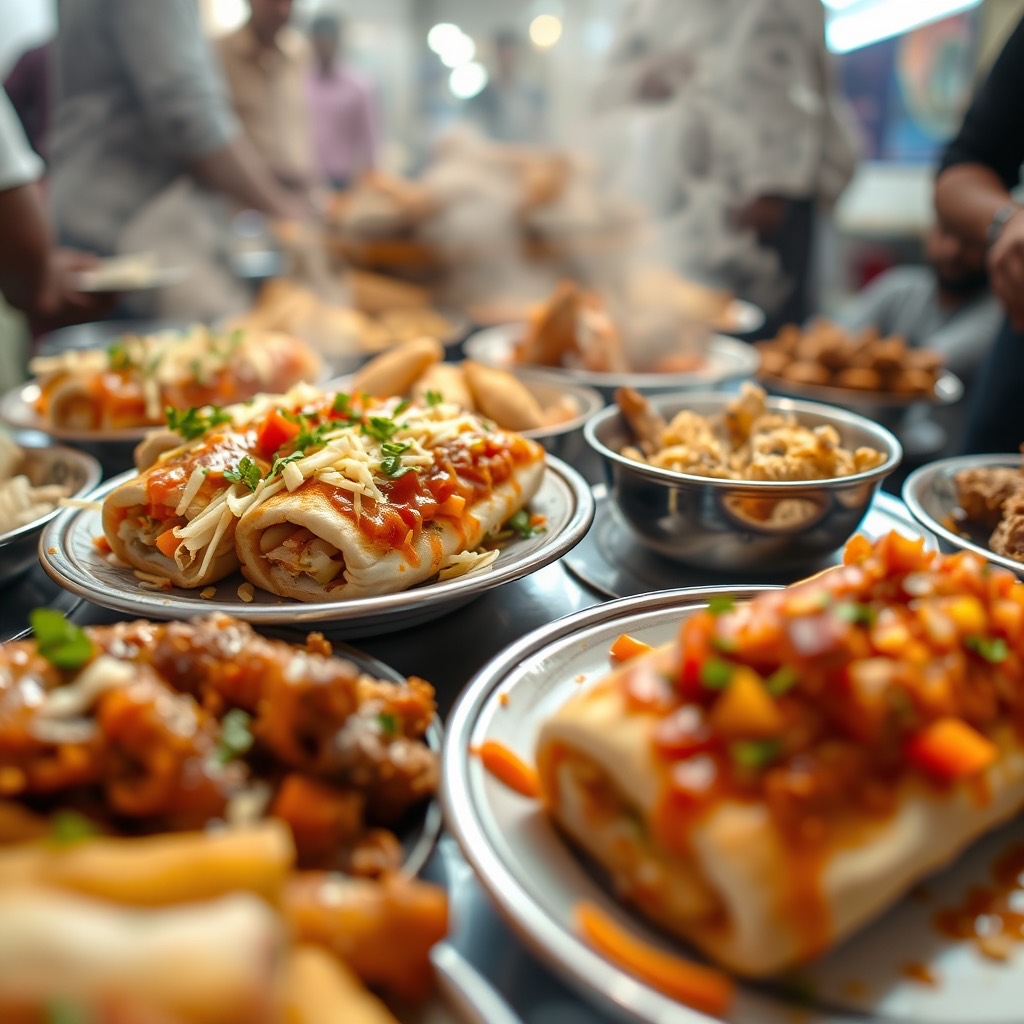
Mumbai eats on the move. Between local trains, double-shift jobs and monsoon downpours, this is a city that perfected the art of a hot, filling meal handed to you across a steel counter in ninety seconds flat. Street food here is not a novelty or a tourist checkbox — it is how millions actually eat, every single day. This guide hands you the real map: the dishes that matter, the neighbourhoods that do them best, roughly what you will pay, and how to eat well without spending your trip near a bathroom.
Quick reference: Mumbai street food essentials
| Dish | Rough price (₹) | Best area | Best time | Nearest station |
|---|---|---|---|---|
| Vada pav | 15–40 | Dadar / station stalls | Anytime | Dadar (WR/CR) |
| Pav bhaji | 80–180 | Juhu Beach / Tardeo | Evening | Vile Parle / Grant Road |
| Bhel & pani puri | 40–120 | Girgaon Chowpatty | Sunset | Charni Road (WR) |
| Frankie | 80–200 | Fort / Bandra | Lunch | CSMT / Bandra |
| Grilled chutney sandwich | 40–120 | Fort / Nariman Point | Lunch | Churchgate |
| Kebabs & rolls | 120–350 | Mohammed Ali Road | After dark | Marine Lines / Masjid Bunder |
The dishes you cannot leave without eating
Vada pav — the city in one bite
If Mumbai had an edible flag, it would be the vada pav. A spiced, mashed-potato dumpling (the vada) is dipped in gram-flour batter, deep-fried, and jammed into a soft bread roll (the pav) with dry garlic chutney, a smear of green chutney, and usually a fried green chilli on the side. It is cheap, hot, vegetarian and absurdly satisfying.
- Rough price: around ₹15–40 depending on the stall and area.
- What to ask for: more of the lasun (dry garlic) chutney if you like heat; “extra fried chilli” if you are brave.
- Where it shines: stalls clustered outside railway stations at rush hour, where turnover is high and everything is fresh. Dadar and the western-suburb lanes are reliably good.
Pav bhaji — griddle theatre
Watch a good pav bhaji vendor and you are watching a performance: a huge flat tawa piled with a thick, red-buttered mash of vegetables, tomatoes and secret spice, worked constantly with two metal spatulas, buttered pav toasting off to one side. It arrives with raw chopped onion, a wedge of lime and a shameless knob of butter melting on top.
- Rough price: roughly ₹80–180 a plate; “extra cheese” or “extra butter” versions cost more.
- Pro tip: eat it fresh off the tawa, not from a plate that has been sitting. The best stalls never stop cooking.
- Where to try: the Juhu Beach food stretch is the classic seaside version; Sardar in the Tardeo area is the legendary butter-heavy institution.
Bhel puri, sev puri, pani puri — the chaat trinity
Chaat is the umbrella term for Mumbai’s tangy-sweet-crunchy snacks, and the beach and market vendors are masters of it.
- Bhel puri: puffed rice tossed with onion, tomato, boiled potato, crunchy sev, and tamarind and green chutneys. Light, tangy, addictive.
- Sev puri: crisp flat puris topped with potato, chutneys and a snowfall of fine sev. Eaten in one messy bite.
- Pani puri (golgappa): hollow crisp shells filled with spiced water, tamarind and potato. You eat them one at a time, fast, before they go soggy.
Rough price: most chaat plates land around ₹40–120. Pani puri is usually sold per plate of six to eight. Girgaon Chowpatty and Juhu Beach are the spiritual home of Mumbai chaat, especially at sunset. For pani puri, hygiene matters more than anywhere else on this list — see the tips below.
Frankie — the Mumbai roll
A Frankie is a thin, egg-coated paratha wrapped around a filling — spiced potato, paneer, chicken or mutton — with onions and a sharp, vinegary masala that is the whole point. It is the original grab-and-go roll, portable and messy in the best way.
- Rough price: around ₹80–200 depending on veg, chicken or mutton.
- Order this: a chicken Frankie if you are new to it; ask them to go easy on the Frankie masala if you are heat-shy, because it packs a punch.
The Bombay sandwich — humble genius
Do not underestimate the vegetable sandwich. White bread, a slather of green chutney, thin slices of cucumber, tomato, boiled potato, beetroot and onion, a dusting of chaat masala — cut into triangles and, if you want, pressed into a grilled “toast sandwich” oozing cheese and butter.
- Rough price: roughly ₹40–120; grilled cheese versions cost more.
- Best version: the “grilled cheese chutney sandwich” from the carts outside office districts. Fort, Nariman Point and Bandra-Kurla are sandwich country at lunchtime.
Kebabs and rolls — the Mohammed Ali Road experience
For meat-forward street food, Mumbai’s Muslim food quarters are unbeatable — especially during Ramadan, when the streets around Mohammed Ali Road and Bohri Mohalla turn into an open-air feast after sunset.
- What to eat: seekh kebabs, boti and tikka off the coals, kheema pav and rich rolls. In dessert territory, look for malpua, phirni and the seasonal aflatoon.
- Rough price: kebab plates and rolls commonly run ₹120–350; whole-meal spreads cost more.
- When to go: evenings, and especially the Ramadan nights, when the variety and energy peak. Go hungry and patient.
The extras worth chasing
- Misal pav: a fiery sprouted-bean curry topped with farsan, onion and lime, served with pav. A proper Maharashtrian gut-punch, best in the mornings.
- Kanda poha and upma: soft, light breakfast plates sold from morning carts — the gentle counterpoint to everything deep-fried.
- Cutting chai: a small, strong, sweet glass of tea, the social glue of every street corner. A few rupees, and non-negotiable.
- Kulfi and falooda: dense, slow-frozen kulfi and rose-scented falooda to cool down after all that chilli.
Where to eat, by area
Girgaon Chowpatty (South Mumbai)
The original beachfront chaat scene. Come in the late afternoon and stay for sunset over the Arabian Sea. This is your spot for bhel, sev puri, pani puri and kulfi, eaten with the whole city out for a stroll. Charni Road station is a short walk away.
Juhu Beach (Western Suburbs)
The suburban cousin of Chowpatty, and arguably livelier. A long line of stalls does pav bhaji, chaat and grilled corn (bhutta) rubbed with lime and chilli. Sunsets here are spectacular and pair with a stroll along the sand. Best reached by taxi or auto from Vile Parle or Andheri.
Mohammed Ali Road and Bohri Mohalla (South Mumbai)
The carnivore’s pilgrimage, best after dark and unmissable during Ramadan. Kebabs, rolls, rich curries and old-school sweets. Come with an empty stomach and low fussiness about crowds. Nearest stations are Marine Lines and Masjid Bunder; an auto or cab saves confusion.
Khau gallis — the “eating lanes”
A khau galli is a lane packed wall-to-wall with food stalls, and several suburbs have famous ones.
- Ghatkopar (Central line) has one of the most beloved, Gujarati-leaning khau gallis — cheese-loaded everything, sandwiches, dosas and endless variations.
- Zaveri Bazaar / Kalbadevi lanes (South Mumbai) hide fantastic chaat and sweets between the jewellery shops.
- The lanes around colleges and stations everywhere — Vile Parle, Dadar, Andheri — reward a slow wander. Follow the longest local queue.
Dadar and the station clusters
Not a beach, not a lane — just honest, high-turnover stalls feeding commuters. This is where you get a textbook vada pav, a quick sandwich or a cutting chai between trains. High turnover is exactly what you want: nothing sits around long enough to go stale.
Beyond the classics: street eats worth chasing
The vada-pav-to-kebab canon is only the start. Mumbai’s carts also do a brisk trade in food that migrated here and became its own thing:
- Indo-Chinese — the veg and chicken “Manchurian”, schezwan noodles and fried rice fired out of roadside woks, a Mumbai obsession found in every khau galli and at station-side stalls. Order it hot off the flame.
- South Indian carts — dosa, idli and medu vada from morning and evening carts, especially strong around Matunga, King’s Circle and the suburbs; a crisp masala dosa off a street tawa is a proper meal.
- Egg bhurji-pav — spicy scrambled eggs cooked to order on a griddle and served with buttered pav, the classic late-evening and post-drink cart food.
- Dabeli — a Kutchi cousin of vada pav: a spiced potato mix with pomegranate, peanuts and chutneys in a pav, sweet-savoury and superb.
- Grilled bhutta — charcoal-roasted corn rubbed with lime, salt and chilli, the definitive monsoon and beach snack.
How to eat street food safely
Street food and stomach trouble are not inevitable partners. A little judgement goes a long way.
- Follow the crowd. A busy stall means fast turnover, fresh oil and fresh ingredients. An empty one is a warning.
- Eat it hot and fresh. Anything cooked to order in front of you — fried, griddled, grilled — is the safest bet. Watch it hit the pan.
- Be cautious with water and ice. For pani puri, the spiced water is the variable to watch; choose a busy, reputable vendor, and skip it entirely if your stomach is sensitive. Stick to sealed bottled water and be wary of loose ice.
- Mind the raw garnishes. Raw onion and coriander are usually fine at a busy stall, but if a place looks slow or the cut vegetables look tired, skip them.
- Carry cash and sanitiser. Most stalls are cash-first (though UPI is now common). Wet wipes and hand sanitiser are your friends — there are rarely sinks.
- Ease in. If you are not used to Indian street food, do not go from zero to a full Mohammed Ali Road crawl on night one. Start with fried, cooked-to-order items and build up over a few days.
- Watch the monsoon. During heavy monsoon months, be extra picky — waterlogging and humidity are hard on hygiene. Fried and freshly griddled items are safest then.
A quick word on timing
- Mornings are for misal, poha and the gentle stuff.
- Lunchtime in the business districts is peak sandwich, Frankie and vada pav.
- Late afternoon to sunset belongs to the beaches — Chowpatty and Juhu — for chaat and pav bhaji.
- After dark is when Mohammed Ali Road and the khau gallis come alive.
Plan your street-food day
Start with a vada pav and a cutting chai near any station, hit the business-district sandwich carts at lunch, then work your way through a beach chaat crawl at Chowpatty or Juhu as the sun goes down. Save an evening for kebabs on Mohammed Ali Road. Pick busy stalls, eat things hot and freshly made, be sensible about water, and carry a little cash and hand sanitiser. Do that, and the city will feed you brilliantly for the price of a coffee back home. Come hungry, pace yourself, and let the queues be your guide.
Frequently Asked Questions
What is the most famous Mumbai street food?
Vada pav is Mumbai's signature street food: a spiced, deep-fried potato dumpling in a soft bread roll with garlic and green chutney, for around ₹15–40. Pav bhaji, bhel puri and pani puri complete the essential list. Start with a vada pav and a cutting chai and build from there.
Where is the best area for street food in Mumbai?
Girgaon Chowpatty and Juhu Beach are the classic beachfront chaat and pav bhaji scenes, best at sunset. Mohammed Ali Road is the carnivore's quarter for kebabs after dark. The khau gallis of Ghatkopar and the station clusters at Dadar are where locals actually eat between trains.
Is Mumbai street food safe to eat?
Yes, if you use judgement. Follow the crowd — a busy stall means fast turnover and fresh oil. Eat things hot and cooked to order in front of you, be cautious with pani puri water and loose ice, carry hand sanitiser, and ease in over a few days rather than starting with the richest food on night one.
How much does street food cost in Mumbai?
Very little. A vada pav is around ₹15–40, most chaat plates ₹40–120, pav bhaji ₹80–180, a frankie ₹80–200 and kebab plates ₹120–350. You can eat like royalty for the price of a coffee back home. Most stalls are cash-first, though UPI is now widely accepted.
What street food should a first-timer try in Mumbai?
Start with fried, cooked-to-order items: vada pav, a hot pav bhaji off the tawa, and a grilled cheese chutney sandwich. Add a beach bhel puri at sunset. Leave pani puri and heavy Mohammed Ali Road kebabs until your stomach has adjusted over a couple of days.