
Momos & Tibetan Food in Mumbai: Thukpa to Laphing
Where to eat momos, thukpa, thenthuk and laphing in Mumbai — Himalayan kitchens and street carts in Andheri, Khar — by area, dish, ₹ budget and station.
'%3E%3Crect%20width%3D'96'%20height%3D'96'%20fill%3D'%23E65100'%2F%3E%3Ccircle%20cx%3D'30'%20cy%3D'24'%20r%3D'44'%20fill%3D'%23fff'%20opacity%3D'.12'%2F%3E%3Ccircle%20cx%3D'60'%20cy%3D'74'%20r%3D'40'%20fill%3D'%23000'%20opacity%3D'.10'%2F%3E%3C%2Fg%3E%3Cg%3E%3Ccircle%20cx%3D'48'%20cy%3D'48'%20r%3D'15'%20fill%3D'none'%20stroke%3D'%23fff'%20stroke-width%3D'3'%2F%3E%3Cpath%20fill%3D'%23fff'%20d%3D'M48%2037%20l3.5%2011%20-3.5%2011%20-3.5%20-11%20z'%2F%3E%3Ccircle%20cx%3D'48'%20cy%3D'48'%20r%3D'2.2'%20fill%3D'%23fff'%2F%3E%3C%2Fg%3E%3C%2Fsvg%3E)
The Top 8
- 01
Sernyaa Tibetan Kitchen
Oshiwara, Andheri West (also Malad) approx ₹700–900 for two (₹₹)Go for: Mumbai's landmark dedicated Tibetan restaurant (Tibetan-origin owner); go for steamed pork momos, then-thuk soup with hand-pulled noodles, and bamboo rice.
It's small and no-frills, so expect a wait at peak times; the pork momos are the must-order.
- 02
Yeti – The Himalayan Kitchen
Khar West (near Linking Road) approx ₹1,200–1,500 for two (₹₹–₹₹₹)Go for: Authentic Nepali/Bhutanese/Tibetan menu famous for jhol momos (dumplings in spicy sesame broth), Newari momos and sha phaley.
Order the jhol momo; it's cosy and popular, so book ahead on weekends.
- 03
Dumpling Khang
Vakola, Santacruz East (original) & Carter Road, Bandra West approx ₹500–700 for two (₹₹)Go for: Homestyle Himalayan spot with 12+ momo varieties, many thukpas, and even Nutella/dark-chocolate dessert momos.
Start with the steamed chicken momos and the in-house chutney; go when it's busy for the freshest batch.
- 04
The Darjeeling
Veera Desai, Andheri West (also Jogeshwari) approx ₹400–600 for two (₹)Go for: Pocket-friendly Tibetan/Nepali/Bhutanese kitchen; famous for kothey (pan-fried) momos, chicken thukpa and shapta with rice.
Great value — pair the kothey momos with a bowl of thukpa.
- 05
Dev's Momo Hut
Worli (opp. Flora Chinese) & Dadar West / Prabhadevi approx ₹150–300 for two (₹)Go for: Beloved street stall for ultra-thin-skin, juicy momos with a homemade tomato-garlic chilli sauce; steamed, fried or tandoori.
Evenings only (opens around 5pm) — go early as the crowd builds fast.
- 06
Suraj Lama Momos
7 Bungalows, Andheri West (dine-in also in Goregaon) approx ₹200–350 for two (₹)Go for: Cult cart-turned-eatery serving fresh North-Eastern-style steamed momos made daily by Suraj Lama and family.
Best fresh in the evening; the chicken plate with the fiery chutney is the pick.
- 07
Mountain Goat Cafe
Bandstand, Bandra West (also Andheri Lokhandwala) approx ₹800–1,000 for two (₹₹)Go for: Nepali/Himalayan street-food cafe best known for its jhol momos in a rich spicy broth.
Jhol momos are the reason to go — stick to freshly-made items and dine in.
- 08
Busago
BKC, Bandra East (multiple outlets) approx ₹1,200–1,600 for two (₹₹₹)Go for: Modern pan-Asian spot where dumplings/momos are rolled to order — chicken, prawn and veg steamed varieties.
Momos are cooked fresh, so allow 15–20 minutes; it's contemporary pan-Asian rather than traditional Tibetan.
Ranked by our Mumbai desk · prices are approximate — confirm before you go.
Mumbai’s momo obsession runs from ten-rupee steamed dumplings at a station cart to sit-down Himalayan kitchens plating thukpa, thenthuk and fiery cold laphing. Andheri West and Khar are the beating heart of it, but good momos now turn up in almost every suburb — and knowing your steamed from your jhol is half the fun.
For years, “Chinese” was the only Himalayan-adjacent food most Mumbaikars knew. Then the momo quietly took over. Today you’ll find dumplings steaming outside colleges, office lanes and railway stations, while a small but serious set of Tibetan and Nepali kitchens serve the real thing: broths pulled by hand, mustard-yellow potato curries, and that jelly-cold laphing that makes first-timers gasp. This guide walks you through what to order, where the genuine kitchens are, and how to eat it all like you know the difference.
Quick reference: where to eat, by budget
Price bands are rough per-person or per-two figures. Cash and small change help at the carts, and evenings after 7pm are when the woks and steamers are properly going.
| Spot | Area | Best for | Rough price (₹) | Nearest station |
|---|---|---|---|---|
| Sernyaa / The Darjeeling | Andheri West (Lokhandwala) | Homestyle momos, thukpa | 150–350 pp | Andheri (W) |
| Yeti – The Himalayan Kitchen | Khar / Colaba | Sit-down thenthuk, thakali thali | 1,500–2,000 for two | Khar Road |
| Street carts | Versova, Ghatkopar, station exits | Cheap steamed/fried momos | 40–120 a plate | Various |
| Laphing specialists | Andheri West / Lokhandwala | Cold, fiery laphing | 100–250 | Andheri (W) |
First, know your dishes
Getting the vocabulary right is half the fun, and it stops you ordering the same thing twice:
- Momo — the dumpling everyone knows. Steamed (soft, pleated, the purist’s choice), fried (crisp-bottomed), or pan-fried “kothey”. Fillings run from minced chicken and buffalo to vegetables, paneer and cheese-corn. Jhol momo arrives swimming in a tangy sesame-tomato soup, while tandoori and gravy momos are the Indianised crowd-pleasers.
- Thukpa — a warming noodle soup with long, slender noodles in a clear, ginger-and-garlic broth, topped with vegetables or meat. Peak monsoon comfort food.
- Thenthuk — thukpa’s chewier cousin, made with flat hand-pulled dough torn straight into the pot. The noodles are irregular and satisfying, and the broth clings to them.
- Laphing — the wildcard. A cold, slippery noodle made from mung-bean or potato starch, doused in soy, vinegar, garlic and a heavy hit of chilli. Order it “white” (soft rolls) or dry, and be ready for the heat.
- Shapta, choila and thakali thali — beyond dumplings: shapta is a stir-fried meat dish, Nepali choila is smoky spiced meat, and a thakali thali is the Nepali hill answer to a full meal.
Andheri West: the momo capital
If Mumbai has a Himalayan food headquarters, it’s the Lokhandwala–Oshiwara belt in Andheri West:
- Sernyaa (New Sernyaa) on the Oshiwara Link Road is the name locals drop first. It’s a tiny, unflashy room that’s easy to walk past, but the momos, thukpa and homestyle Tibetan plates have a devoted following, and prices are gentle.
- The Darjeeling around the Veera Desai/Lokhandwala area is a friendly, pocket-friendly kitchen doing Tibetan, Nepali and Bhutanese food, from thukpa to Bhutanese ema datshi (chilli-cheese).
Both lean casual and homestyle rather than fancy. Price band: roughly ₹150–350 per person for momos and a soup; a fuller meal for two lands around ₹600–900. Getting there: Andheri is a major stop on the Western Line and the Metro; from the station it’s a short auto ride into the Lokhandwala lanes.
Khar and Colaba: sit-down Himalayan
For a proper table, drinks and a menu that ranges across the Himalayas, head to Yeti – The Himalayan Kitchen, which has run popular Mumbai outlets in the Khar and Colaba areas. Expect thukpa and thenthuk done with care, a broad momo selection, Nepali choila and gyuma, and a full thakali thali when you want more than dumplings. It’s the most “restaurant” experience on this list.
Price band: this is the splurge end, roughly ₹1,500–2,000 for two with drinks. Best for: a monsoon evening when you want a hot bowl of thenthuk and somewhere comfortable to linger. Khar is on the Western Line; Colaba is a taxi or bus ride from Churchgate/CSMT.
The street-cart circuit
Most Mumbaikars meet the momo not in a restaurant but at a cart, and this is where the city’s dumpling culture really lives:
- Versova has long-running small stalls run by folks from Darjeeling doing honest paneer and chicken momos near the beach end of the neighbourhood.
- Ghatkopar’s khau galli in the eastern suburbs is a street-food playground where momos share space with everything from cheese dosas to tandoori experiments, packed with a young, college-and-office crowd after sundown.
- College gates and station exits citywide — Dadar, Andheri, Ghatkopar, Malad — put out steaming momo carts by late afternoon.
What to order: a plate of steamed momos with the red chilli-garlic chutney, or fried if you want crunch. Price band: roughly ₹40–120 a plate. Tip: pick the cart with the fastest-moving queue and the most steam — freshness beats signage every time.
Where to find laphing
Laphing is still the hardest of these dishes to find well made, because it’s fussy and unapologetically spicy. Your best bets are the dedicated Tibetan and Nepali kitchens in Andheri West and the specialist momo-and-laphing joints that have popped up around Lokhandwala. If a menu lists it, order it — especially the white rolled version — and ask them to go easy on the chilli oil if you’re new to it. It’s meant to be eaten cold and slurped, not chewed politely.
Who cooks Mumbai’s momos
The dumpling didn’t arrive by accident. Mumbai’s Himalayan food is cooked, in the main, by three overlapping communities: Tibetan refugees and their Mumbai-born children, Nepali migrants who came for work, and families from Darjeeling, Kalimpong and the Northeast. Many of the small kitchens in the Lokhandwala–Oshiwara lanes are run by exactly these families, which is why the homestyle menu — the off-card thukpa, the properly fermented laphing, the ema datshi — tends to be truer there than at a glossy “pan-Asian” restaurant that treats momos as one line item.
It also explains the split you’ll notice across the city. The authentic kitchens cook for a homesick Himalayan crowd first and everyone else second, so the broths are clean and the chilli is real. The street carts, often run by cooks from Darjeeling and Nepal, deliver the fast, cheap, chutney-slicked version that most Mumbaikars grew up calling “momos”. And the Indianised gravy-and-tandoori momo is a Mumbai invention entirely — delicious in its own right, but a different animal from a steamed Tibetan dumpling. Knowing which you’re eating is the difference between judging a kitchen fairly and missing the point.
How to spot a great plate of momos
A few tells separate a good momo from a soggy one:
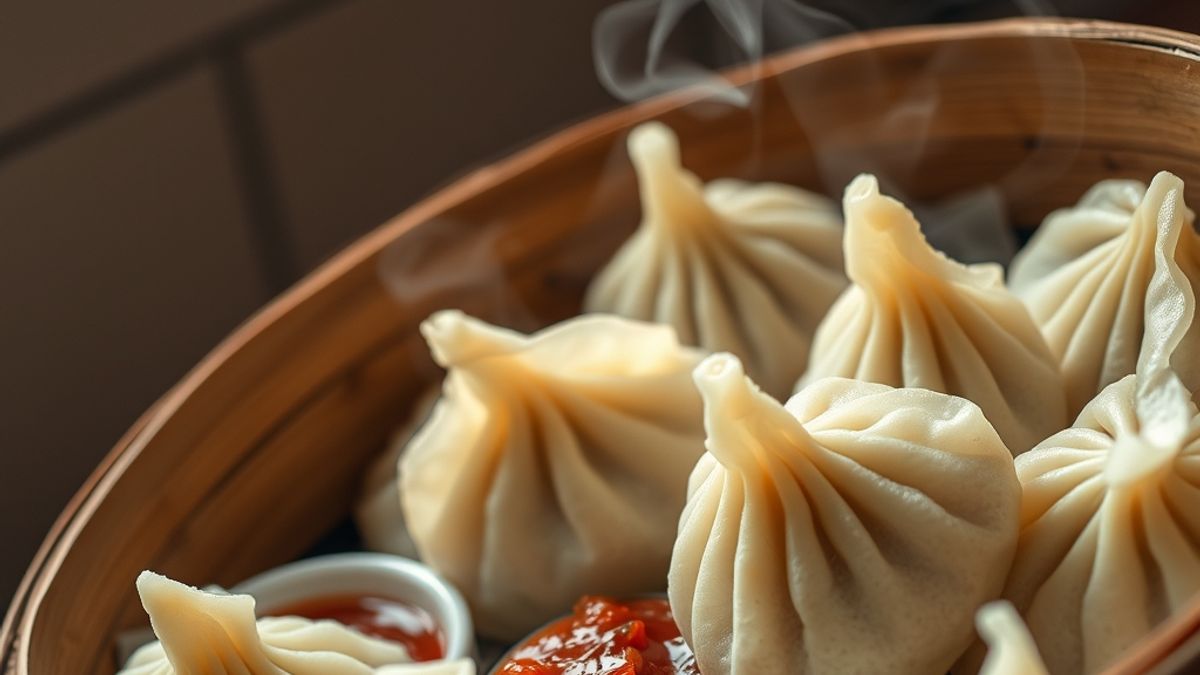
- The dough. A good steamed momo has a thin, translucent-at-the-pleats skin that holds its shape without tearing or turning gummy. Thick, doughy wrappers mean a kitchen padding out cheap filling.
- The pleats. Hand-pleated momos (you’ll see the fan of folds) are almost always made fresh on site; perfectly uniform ones can be factory-frozen.
- The steam and the queue. At a cart, follow the steam and the fastest-moving line — turnover is everything, and a momo that’s been sitting in a cold steamer is a wasted plate.
- The chutney. The red chilli-garlic chutney is a kitchen’s signature. A bright, fresh, genuinely hot chutney usually signals someone who cares; a dull, ketchup-y one is a warning.
Veg, vegan and spice notes
- Vegetarians are well looked after: veg momos, veg thukpa and jhol momo are on nearly every menu, and Bhutanese cheese-and-potato dishes are naturally meat-free.
- Vegans should ask about cheese and butter, which sneak into Bhutanese datshi dishes; plain steamed veg momos and clear veg thukpa are safer.
- Spice is real here. The chilli-garlic chutney and laphing dressing are genuinely hot, so pace yourself and keep water close.
How to eat momos through the Mumbai year
The city’s weather quietly shapes what to order:
- Monsoon (June–September): prime time for soup. A bowl of thukpa or thenthuk on a wet Andheri evening is transcendent, and the steamer’s warmth is exactly what a rained-out day wants.
- Summer (March–May): go for cold laphing and steamed momos over heavy gravy versions — the broths can feel leaden in the heat.
- Winter (November–February): the sweet spot for a full Himalayan spread — thakali thali, shapta and a stack of kothey momos without breaking a sweat.
A one-evening momo crawl in Andheri West
If you want the whole spectrum in a single evening, base yourself in Andheri West and work outward from Lokhandwala:
- Start homestyle at Sernyaa or The Darjeeling (around 6.30–7pm) with a plate of plain steamed momos and a bowl of thukpa to set your baseline for good dough and clean broth.
- Chase laphing at a nearby Lokhandwala specialist while you still have an appetite for cold, fiery noodles — order the white rolled version, chilli on the side.
- Finish at a street cart near the station or in a khau galli for the fast, chutney-slicked, ₹60 version that most Mumbaikars actually mean when they say “momos”.
That sequence — authentic first, street last — lets you taste why the two worlds coexist without one making the other look bad.
Insider tips for a great momo run
- Go hungry and go steamed first. A plate of plain steamed momos tells you everything about a kitchen’s dough and filling before you branch into fried or gravy versions.
- Save soup for the rain. Thukpa and thenthuk are at their best on a wet evening; order them then, not on a sweltering afternoon.
- Carry small change for the carts, and time your visit after 7pm when the steamers and woks are fully fired.
- Ask for the homestyle menu at Sernyaa or The Darjeeling — the off-card Tibetan plates are where the real cooking hides.
- Pace the chilli. Start mild with the chutney and laphing dressing; you can always add heat, but you can’t take it back.
There’s a whole Himalayan city hiding inside Mumbai’s momo habit — from a ₹50 station plate to a proper thakali thali. Learn the words, eat the steamed dumpling first, chase laphing when you’re feeling brave, and save the soup for the monsoon. Do that, and you’ll never look at a “Chinese-and-momos” cart the same way again.
Frequently Asked Questions
Where can I find the best momos in Mumbai?
Andheri West, especially the Lokhandwala–Oshiwara belt, is the city's momo heartland, with spots like Sernyaa and The Darjeeling. Yeti in Khar/Colaba offers a fuller sit-down Himalayan meal, while street carts near stations and Ghatkopar's khau galli are great cheaper options.
What is the difference between thukpa and thenthuk?
Thukpa uses long, slender noodles in a clear ginger-garlic broth, while thenthuk uses flat, hand-pulled dough torn straight into the soup, giving it a chewier, more rustic texture. Both are warming noodle soups and peak monsoon comfort food.
Is laphing very spicy, and is it easy to find in Mumbai?
Yes, laphing is genuinely fiery — a cold, slippery mung-bean or potato-starch noodle doused in soy, vinegar, garlic and heavy chilli oil. It's less common than momos, so look for it at dedicated Tibetan and Nepali kitchens in Andheri West. Ask them to go easy on the chilli if you're new to it.
What types of momos can I order in Mumbai?
Steamed (soft, pleated, the purist's choice), fried (crisp-bottomed), and pan-fried 'kothey'. Fillings run from minced chicken and buffalo to vegetables, paneer and cheese-corn. Jhol momo comes swimming in a tangy sesame-tomato soup, while tandoori and gravy momos are the Indianised crowd-pleasers.
How much do momos cost in Mumbai?
At a street cart, a plate of steamed or fried momos runs roughly ₹40–120. At a casual Himalayan kitchen in Andheri, momos plus a soup land around ₹150–350 per person; a fuller meal for two is ₹600–900. A sit-down restaurant like Yeti is the splurge end, around ₹1,500–2,000 for two with drinks.
Is there good vegetarian and vegan Tibetan food in Mumbai?
Yes for vegetarians — veg momos, veg thukpa and jhol momo are on nearly every menu, and Bhutanese cheese-and-potato dishes are naturally meat-free. Vegans should ask about cheese and butter, which sneak into Bhutanese datshi dishes; plain steamed veg momos and clear veg thukpa are the safest bets.