
Best Treks Near Mumbai: Sahyadri Trails for Every Level
A local's graded guide to five Sahyadri treks near Mumbai — Lohagad, Karnala, Rajmachi, Peb and Kalsubai — with difficulty, seasons, train access and kit.
'%3E%3Crect%20width%3D'96'%20height%3D'96'%20fill%3D'%23E65100'%2F%3E%3Ccircle%20cx%3D'30'%20cy%3D'24'%20r%3D'44'%20fill%3D'%23fff'%20opacity%3D'.12'%2F%3E%3Ccircle%20cx%3D'60'%20cy%3D'74'%20r%3D'40'%20fill%3D'%23000'%20opacity%3D'.10'%2F%3E%3C%2Fg%3E%3Cg%3E%3Ccircle%20cx%3D'48'%20cy%3D'48'%20r%3D'15'%20fill%3D'none'%20stroke%3D'%23fff'%20stroke-width%3D'3'%2F%3E%3Cpath%20fill%3D'%23fff'%20d%3D'M48%2037%20l3.5%2011%20-3.5%2011%20-3.5%20-11%20z'%2F%3E%3Ccircle%20cx%3D'48'%20cy%3D'48'%20r%3D'2.2'%20fill%3D'%23fff'%2F%3E%3C%2Fg%3E%3C%2Fsvg%3E)
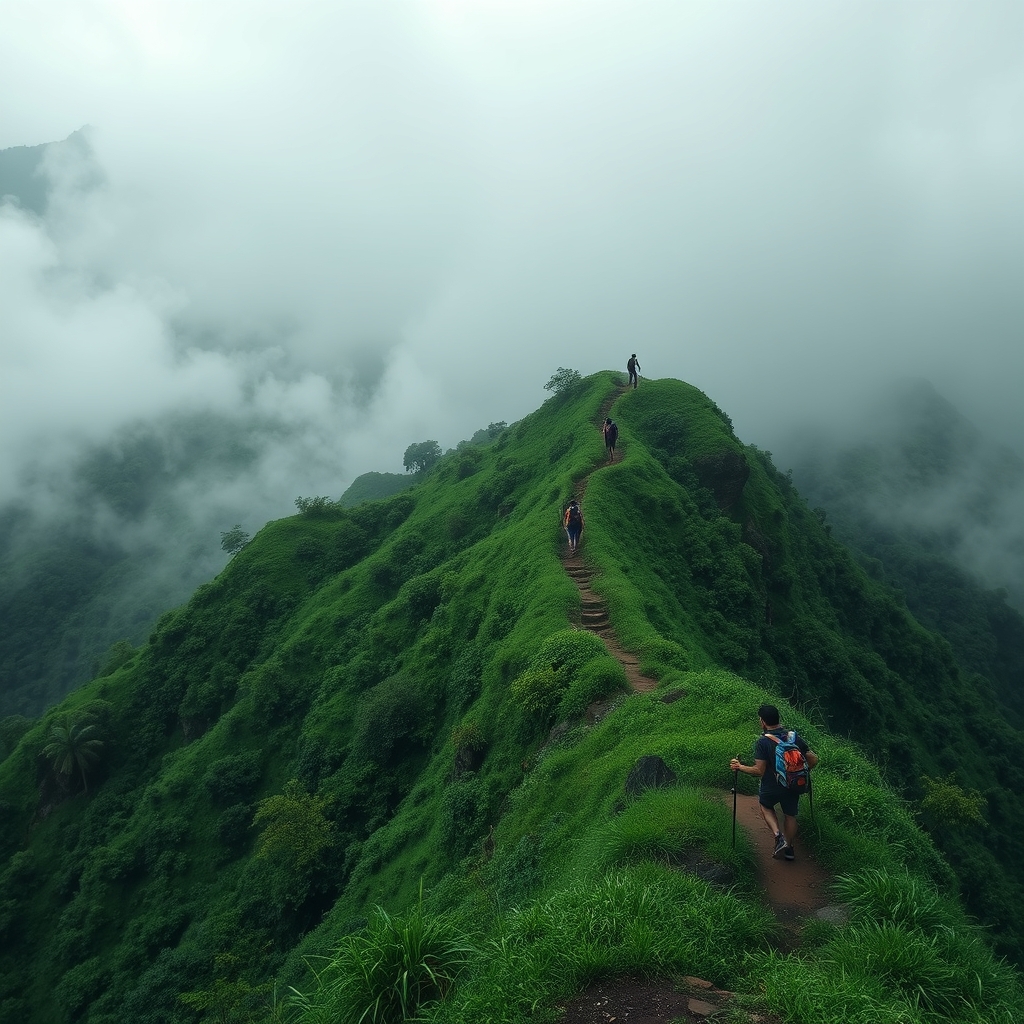
The Sahyadris — the basalt spine of the Western Ghats — begin barely two hours out of Mumbai, and for anyone willing to catch an early local, they turn a weekend into something that feels far further from the city than it actually is. I have walked all five of these forts more than once, in slush and in sun, and between them they cover the whole range: a paved amble a child can manage, right up to a lung-burning haul with iron ladders bolted to a cliff. Here is how to pick the trek that suits your legs, the season that suits the trek, and how to actually get there by train and road.
The five treks compared
| Trek | Base / station | Grade | Best season | Highlight |
|---|---|---|---|---|
| Lohagad Fort | Malavli (Central line) | Easy | Monsoon & winter | Vinchu Kata “scorpion’s sting” spur |
| Karnala Fort | Panvel + bus | Easy–moderate | Oct–April | Bird sanctuary, thumb-rock pinnacle |
| Rajmachi | Lonavala / Karjat | Easy but long | Monsoon & winter | Twin forts, Kataldhar waterfall |
| Peb (Vikatgad) | Neral (Central line) | Moderate | Post-monsoon, winter | Iron ladders, meditation caves |
| Kalsubai | Kasara + jeep to Bari | Hard | Oct–Feb | Highest point in Maharashtra |
First, pick your season
There are two sensible windows, and they give you two completely different mountains.
Monsoon (roughly late June to September) is when these hills go electric green, waterfalls appear on every slope, and cloud sits right at fort level. It is glorious — and it is when the rock turns treacherous. Deccan basalt is lethally slippery when wet, leeches arrive from July, and streams swell fast. Keep the rains for the gentler forts. If you are a beginner, late June and September tend to be kinder than the peak-rain weeks, and you should go with an organised group or a local guide who knows the current state of the trail.
Winter and post-monsoon (October to February) gives you dry rock, long clear views, cool mornings and, at Karnala, migratory birds. It is the only sane window for the exposed, ladder-heavy climbs. Summits get genuinely cold at dawn, so carry a layer. Give the exposed rock a miss in the midday heat of April and May.
The five, easiest to hardest
Lohagad Fort — the gentle first trek (near Lonavala)
Grade: easy. This is the one I send absolute beginners and families to. Broad stone steps carry you up in about 30 to 45 minutes, the plateau on top is flat and easy to wander, and the famous Vinchu Kata — the “scorpion’s sting”, a long fortified spur — curls dramatically out into the valley. In the monsoon it is all cloud and green.
- Getting there: Malavli station on the Mumbai–Pune Central line (the stop just past Lonavala, heading towards Pune). From Malavli it is around 5 to 6 km to the Lohagadwadi base — walk it in about 1.5 to 2 hours, or take a shared jeep or auto. By road it is roughly 95 to 100 km via the old Mumbai–Pune highway/NH48. Entry is nominal, about ₹25 for Indians (more for foreign nationals).
- Tip: get there before the Lonavala day-crowd. If you have the full day, pair it with the neighbouring Visapur fort or the Bhaja and Karla caves nearby.
Karnala Fort — short, steep and full of birdsong (near Panvel)
Grade: easy to moderate. Karnala is the closest of the lot and a sharp little climb — about 1.5 to 2 hours — that ends beneath a distinctive thumb-like rock pinnacle. The whole thing sits inside the Karnala Bird Sanctuary, so in winter the forest is loud with song.
- Getting there: Panvel (Harbour line or mainline), then a bus or auto about 12 km down the Mumbai–Goa highway (NH66) to Karnala. Entry to the sanctuary is around ₹60 an adult, with parking charged separately.
- Timing: best from October to April, when the rock is dry and the migratory birds are in. The forest is at its most vocal in the rains — paradise flycatchers, Malabar whistling thrushes — but the trail turns greasy then, so monsoon visitors tend to come for the birding rather than the summit.
- Tip: carry binoculars and start early, both for the birds and for the shade.
Rajmachi — the long, easy walk to twin forts (from Lonavala or Karjat)
Grade: easy underfoot but long; moderate from the Karjat side. Rajmachi is really two forts — Shrivardhan and Manaranjan — standing over the base hamlet of Udhewadi on one of the greenest plateaus near Mumbai. From the top of Shrivardhan in the monsoon you look straight across at the Kataldhar waterfall in full flow.
- Getting there: there are two ways in. From Lonavala it is a long, mostly gentle track of about 15 km to Udhewadi (4 to 5 hours on foot one way) — the grade is easy but the distance is real, which is why many people camp overnight. From Karjat, the Kondhane route is shorter but steeper and climbs past the Kondhane Buddhist caves, cut in the first century BC. Nearest stations are Lonavala or Karjat on the Central line.
- Timing: stunning in the rains, but expect slush, stream crossings and leeches — leech socks are non-negotiable. Winter is easier and far better for camping.
- Tip: if you want the forts without the slog, hire a jeep from Lonavala up to Udhewadi and walk only the last stretch.
Peb Fort (Vikatgad) — ladders, caves and a ridge (near Matheran)
Grade: moderate. This is where a beginner starts to feel like a trekker. At about 2,050 ft, below Matheran, Peb serves up rock patches, a couple of iron ladders, some ridge walking and rock-cut meditation caves kept by the disciples of Swami Samarth — a proper small adventure, with Matheran’s toy-train line threading the hills alongside.
- Getting there: Neral station on the Central line (the Karjat–Neral stretch). From there you can walk up via the base village of Anandwadi — the steeper, fuller trek — or take a shared taxi toward Matheran and pick up the easier trail near the toy-train track. Reckon on a full 6 to 7 hour day.
- Timing: post-monsoon into winter is ideal; the ladders and rock want dry conditions and a cool head.
- Tip: with several different trails on this hill it is genuinely easy to lose the route — go with someone who knows it, or a registered group, your first time.
Kalsubai — the highest, and the hardest (near Bari, Kasara)
Grade: hard, by the standards of this region. At 1,646 m — about 5,400 ft — Kalsubai is the highest point in Maharashtra. It is a real outing: roughly a 13 km round trip with some 800 m of climb, four steep iron ladders near the top, and the small Kalsubai Devi temple at the summit. On a clear winter dawn the view runs across half the Sahyadris.
- Getting there: Kasara station on the Central line, then a shared jeep about 50 km (roughly 1.5 hours) to Bari village, the base; Igatpuri is an alternative railhead. Budget 3 to 4 hours up and 2 to 3 down. The base is around 150 km from the city.
- Timing: October to February, really. Skip it in the monsoon — those near-vertical ladders are dangerous when wet, and cloud kills the view anyway. Winter summit mornings are cold, into single digits at dawn, so carry a layer.
- Tip: start before first light. The sunrise from the top is the entire point of coming.
Which trek should you pick?
- First time out, or with kids: Lohagad. Short, paved, forgiving, with a flat top and a dramatic spur.
- Birdwatching and a quick half-day: Karnala, October to April, binoculars in the bag.
- A big green day with camping: Rajmachi from Lonavala — long, gentle miles and an overnight under the forts.
- Ready for a small adventure: Peb, for ladders, caves and ridge-walking with a guide who knows the route.
- Chasing the roof of Maharashtra: Kalsubai, on a clear winter dawn, once you have a few treks in your legs.
Match that to the forecast and the calendar and you rarely put a foot wrong. When in doubt, drop a grade and enjoy the walk.
What to pack
Year round, treat these as non-negotiable: trekking shoes with a genuine grip sole (basalt is treacherous when damp), at least two litres of water, some food, a basic first-aid kit and a headtorch.
- Monsoon: a rain cover for the bag, a dry set of clothes sealed in a plastic bag, long socks with trousers tucked in against leeches (carry salt or a repellent to detach any that latch on), and your phone in a zip-lock.
- Winter: a warm layer and a cap for exposed summits like Kalsubai and Peb, plus a sun cap and extra water for the brighter, drier days.
And carry your rubbish back down. These are living forts and a working bird sanctuary, not dumping grounds.
Insider tips for treks near Mumbai
- Catch the earliest local you can. Dawn departures beat both the heat and the day-crowds to the trailhead.
- Match the trek to your legs and the season to the trek — save the ladder climbs for dry post-monsoon rock.
- Split a shared jeep from the railhead with other trekkers to keep costs to a few hundred rupees.
- Go with a registered group for Peb and Kalsubai your first time; the route-finding and exposure reward local knowledge.
- Carry all your water and snacks in. Village stalls exist at some bases but cannot be relied on, especially early or off-season.
The bottom line
Start with Lohagad or Karnala to find your feet, graduate to the long green miles of Rajmachi, test yourself on Peb’s ladders, and save Kalsubai for a clear winter morning when you are ready to earn the highest view in the state. Match the trek to your legs and the season to the trek, wear the right shoes and catch the early local — the Sahyadris will do the rest.
Frequently Asked Questions
Which trek near Mumbai is best for beginners or children?
Lohagad, comfortably — broad stone steps, a short 30-to-45-minute climb and a flat top to explore. Karnala is a good second: short, though a little steeper, and set inside a bird sanctuary.
Can I do these treks as a day trip from Mumbai by train?
Yes, all five. Lohagad (Malavli), Rajmachi (Lonavala or Karjat), Karnala (Panvel), Peb (Neral) and Kalsubai (Kasara) are reachable on the Central line — though Kalsubai and the full Lonavala route to Rajmachi make for very long days, so start at dawn.
Are treks near Mumbai safe in the monsoon?
The gentle ones — Lohagad and the lower reaches of Rajmachi — are fine with care and grippy shoes. Give Kalsubai's iron ladders a miss and go carefully on Peb's rock; wet basalt and metal are a dangerous combination, so go with a group.
Do I need a guide for treks near Mumbai?
Not for Lohagad or Karnala, which are straightforward. For Peb, with its confusing trails, and Kalsubai, with real exposure — or for anything in the rains — a registered trek group or local guide is money well spent.
How much do treks near Mumbai cost?
Very little. Entry is nominal where it exists — about ₹25 at Lohagad, around ₹60 at Karnala — and Kalsubai, Rajmachi and Peb are free. Your real outlay is the train ticket and a shared jeep, a few hundred rupees when split.