
Waterfalls Near Mumbai: The Best Monsoon Day Trips
A monsoon guide to the best waterfalls a day-trip from Mumbai: Pandavkada, Bhivpuri, Vihigaon, Zenith and Tansa, with train routes, timings and safety.
'%3E%3Crect%20width%3D'96'%20height%3D'96'%20fill%3D'%23E65100'%2F%3E%3Ccircle%20cx%3D'30'%20cy%3D'24'%20r%3D'44'%20fill%3D'%23fff'%20opacity%3D'.12'%2F%3E%3Ccircle%20cx%3D'60'%20cy%3D'74'%20r%3D'40'%20fill%3D'%23000'%20opacity%3D'.10'%2F%3E%3C%2Fg%3E%3Cg%3E%3Ccircle%20cx%3D'48'%20cy%3D'48'%20r%3D'15'%20fill%3D'none'%20stroke%3D'%23fff'%20stroke-width%3D'3'%2F%3E%3Cpath%20fill%3D'%23fff'%20d%3D'M48%2037%20l3.5%2011%20-3.5%2011%20-3.5%20-11%20z'%2F%3E%3Ccircle%20cx%3D'48'%20cy%3D'48'%20r%3D'2.2'%20fill%3D'%23fff'%2F%3E%3C%2Fg%3E%3C%2Fsvg%3E)
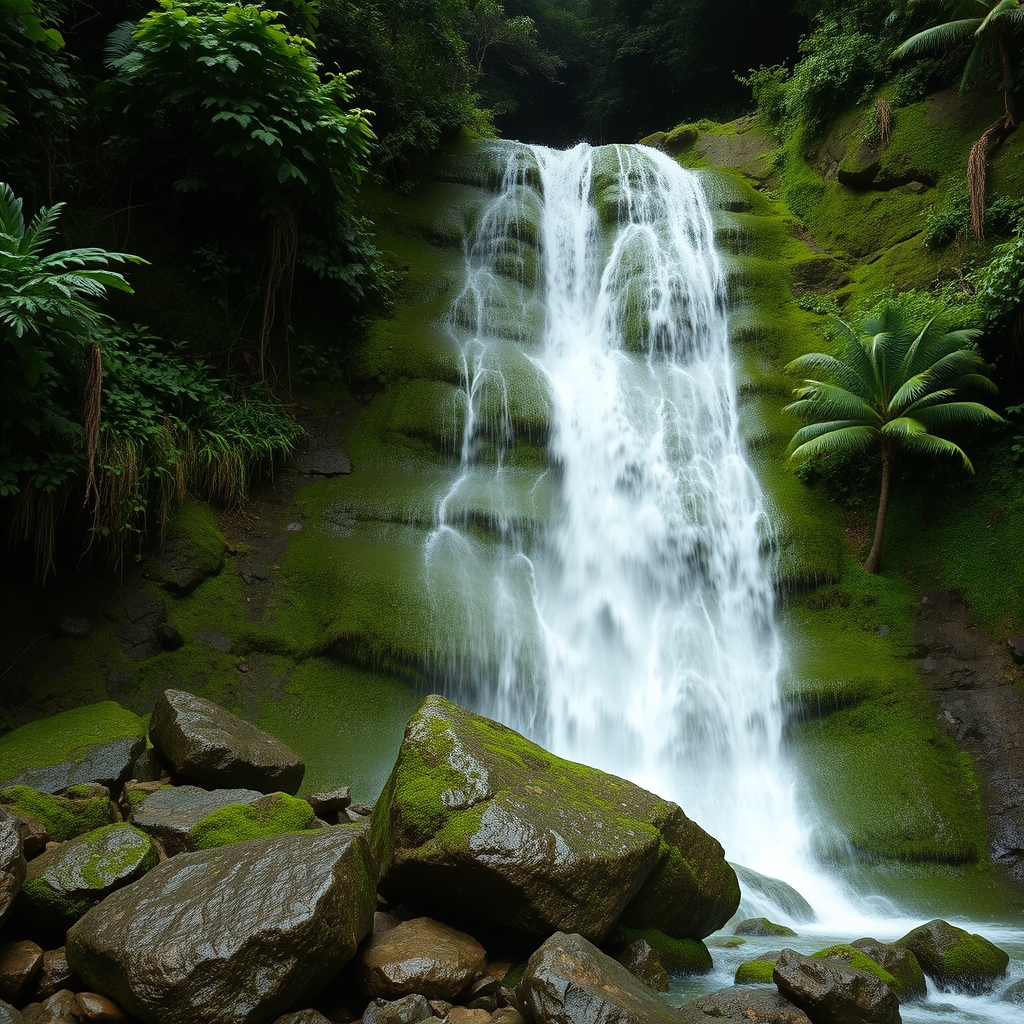
Every year, around the third or fourth day of proper rain, something shifts in Mumbai. The Western Ghats an hour or two east stop being brown ridges on the horizon and start leaking water from every seam: thin silver threads at first, then roaring white curtains. For a few short months the hills around the city hold some of the finest waterfalls in the country, close enough to reach on a suburban train ticket. This is a guide to five of the best, with the honest bit most listicles skip: these places drown people every single monsoon, and getting home safely matters more than any photograph.
I’ve been chasing these falls for the better part of a decade, mostly by train with a rucksack and a change of clothes in a plastic bag. What follows is where I actually send friends, how to get there, when they are at their best, and where you genuinely need to keep your wits about you.
The five falls at a glance
| Waterfall | Area / line | Getting there | Rough drop | Notes |
|---|---|---|---|---|
| Pandavkada | Kharghar (Harbour) | Kharghar stn + short auto | ~107 m | Often barricaded in peak rain |
| Bhivpuri | Karjat belt (Central) | Bhivpuri Road stn + 3 km | ~100 ft | Easiest; rappelling hub |
| Vihigaon (Ashoka) | Kasara ghat (Central) | Kasara stn + 13 km shared auto | ~120 ft | Best rappelling; build a day around it |
| Zenith | Khopoli (Central) | Khopoli stn + 2–2.5 km | Multi-tier | Family-friendly lower tiers |
| Tansa | Shahapur (Central) | Khardi/Atgaon; permit needed | Seasonal | Nature over spectacle |
Before you set off: timing and a serious word
The waterfalls run from roughly mid-June, once the ground is saturated, through September, with July and August the peak. A good rule: go two or three days after heavy rain, not during a red-alert downpour, when streams turn into flash floods without warning.
That warning is not decorative. Water levels at these spots rise in minutes, not hours. Pandavkada alone has claimed lives repeatedly over the years; in June 2024 five members of one family drowned at Bhushi Dam near Lonavala, and Devkund in Raigad now sits under a prohibitory order (Section 163 BNSS, the old Section 144) from mid-June to end-September precisely because of drownings in 2024 and 2025. The police appeal every year is blunt and correct: do not step into streams, pools or the mouth of a fall in spate. Treat every one of these places as beautiful and genuinely dangerous at once.
The five falls worth the journey
Pandavkada Falls, Kharghar
The closest of the lot, and the most bittersweet. Pandavkada is a 107-metre (about 350 ft) plunge in the hills behind Kharghar in Navi Mumbai, roughly a few kilometres from Kharghar station on the Harbour line, near Sector 35. On a good monsoon morning it is a genuinely huge fall for something so close to the city.
The catch: it has a grim accident record (four students drowned in 2005, around a dozen more in the years after, four young people swept away crossing a stream near the base in 2019) and so CIDCO and the forest department routinely restrict or barricade it during the heaviest rain. That is the irony of Pandavkada: it is most closed exactly when it is most spectacular.
- Why it’s worth it: the sheer scale, reachable in an hour from town. Lovely from the viewing area even when you can’t go to the base.
- Practical tip: go on a weekday morning (roughly 9 am–1 pm), when it is quieter and access is more likely to be open. Check for entry restrictions first, keep to the marked path, and do not climb past barricades to reach the pool. That is exactly where people have died.
Bhivpuri Falls, near Karjat
Bhivpuri is my pick for a first waterfall day out. It sits near Umbroli village outside Karjat, about 70 km from CSMT, and the beauty of it is the door-to-door logistics: take a Karjat- or Khopoli-bound Central line train to Bhivpuri Road station (about 1.5–2 hours), then it is roughly 3 km to the base, followed by an easy 15–20 minute walk from the village.
- Area: Karjat belt, Central line, proper Sahyadri country of paddy fields and low green hills.
- Why it’s worth it: a friendly, roughly 100-ft fall with several smaller cascades around it, and one of the main hubs for waterfall rappelling near Mumbai if you fancy the organised-adventure version (operators run fixed-rope descents through the season).
- Practical tip: the path is well-marked but greasy underfoot in the rain, so wear proper grippy shoes, not flip-flops. If you want to rappel, book with an established Karjat operator rather than turning up hoping to join.
Vihigaon (Ashoka) Falls, near Kasara
Vihigaon, better known as Ashoka Falls after the Shah Rukh Khan film that shot a song here, is the one that feels like a proper expedition without being one. It is in Vihigaon village in the Kasara ghats, Nashik district, about 116 km and 2.5–3 hours by road from Mumbai. By train, take a Kasara local on the Central line to the very last station, then a shared auto or taxi for the final 13 km (around Rs 100–150 a head).
- Area: Kasara ghat, where the Central line climbs into the hills, cooler, mistier and greener than anything closer in.
- Why it’s worth it: a clean, roughly 120-ft drop into a pool, and the single best-known spot for waterfall rappelling in the region (expect around Rs 1,000–1,200 per person with a group, gear and guides included).
- Practical tip: only get into the water with an organised rappelling outfit and their safety kit; the base pool and rocks are slippery and the current stronger than it looks. Start early, as Kasara-line locals thin out by afternoon.
Zenith Falls, Khopoli
Zenith is the multi-tiered one, water stepping down a series of ledges rather than a single sheet, and it is an easy win because the walk in is part of the fun. Khopoli is the end of a Central line branch, and the fall is only about 2–2.5 km from Khopoli station: a Rs 50–70 auto, or a 30-odd minute walk out of the western side of the station, across a bridge and through a small industrial patch before the hills open up.
- Area: Khopoli, on the old Mumbai–Pune road, at the foot of the Sahyadris.
- Why it’s worth it: the layered cascades and the sheer ease of reaching them make it a great family or first-timer outing on a day when you don’t want a long trek.
- Practical tip: forest officers often close Zenith outright during very heavy rain, for good reason, so have a Plan B. Keep to the lower, gentler tiers; people get into trouble scrambling up the wet upper rocks.
Tansa, Shahapur — the quiet one
Tansa is the wild card, and I include it honestly: it is less a single dramatic drop and more a landscape. The Tansa Wildlife Sanctuary spreads across the Shahapur and Wada belt of Thane district, about 90–100 km out, built around the old Tansa Lake that helps supply Mumbai’s water. Reach it via Khardi or Atgaon on the Kasara line, or by road via Shahapur on the Mumbai–Nashik highway. In the monsoon the surrounding forest throws up seasonal falls and the lake brims over.
- Area: Shahapur/Khardi, Central line, forested, birdy, far quieter than the rappelling-crowd spots.
- Why it’s worth it: for nature over spectacle, greenery, birdlife and calm, with the falls a bonus rather than the whole show. Good if you have done the busier five and want somewhere peaceful.
- Practical tip: much of the sanctuary needs prior permission from the Forest Department (and BMC for certain areas), there are no shops inside, and it isn’t a turn-up-and-swim spot. Plan it as a slower, arranged outing.
What to pack for a waterfall day
Keep it light but deliberate:
- Grippy shoes with real tread; wet basalt is like ice, and flip-flops are how ankles break.
- A dry bag or double plastic bag for your phone, cash and a change of clothes.
- Cash in small notes for shared autos and village stalls; UPI signal is patchy in the ghats.
- Water and snacks; many spots have little more than a chai stall, if that.
- A charged phone, ideally with an offline map, plus someone back home who knows your plan.
Staying safe in the water
The same handful of rules keep people alive out here. Never wade into or stand under a fall in full flow. Don’t cross swollen streams on foot, however shallow they look; that is the single most common way people are swept away. Go in a group, tell someone your plan, and carry a charged phone, though signal is patchy. Wear shoes with real grip. Watch the sky, and the moment the rain turns torrential, start walking out. And if a spot is officially barricaded or banned, take it as information, not a challenge.
Insider picks
- Zero-effort day: Zenith’s lower tiers or a viewing visit to Bhivpuri, both a short walk from a station.
- Adventure day: rappelling at Vihigaon with a booked operator, started early.
- Crowd-free day: Tansa, arranged in advance, for birds and calm over a big drop.
- On your doorstep: Pandavkada for the scale, viewed from the safe path, access permitting.
You don’t need to leave the city’s own train map to stand in front of a proper Sahyadri waterfall. Bhivpuri and Zenith are the low-effort joys, Vihigaon the one to build a full day around, Pandavkada the giant on your doorstep, and Tansa the quiet escape for when you’ve had enough of crowds. Pick your day by the rain, go early, keep your feet on solid ground, and come home to tell the tale. That last part is the only rule that really matters.
Frequently Asked Questions
Which waterfall near Mumbai is easiest to reach without a car?
Bhivpuri and Zenith. Both are a short hop from a Central line station (Bhivpuri Road and Khopoli respectively) with only a rickshaw or short walk at the end, so you can do either on a train ticket.
When is the best time to visit waterfalls near Mumbai?
July and August, two to three days after heavy rain rather than during a downpour, when streams turn into flash floods. Weekday mornings are quieter and safer everywhere.
Can you actually swim under these waterfalls?
Only where an organised rappelling or trek operator is running the site with safety gear, as at Vihigaon. Free-swimming in the pools is how most drownings happen; water levels rise in minutes.
Do I need permission for any of these waterfalls?
Tansa, being a wildlife sanctuary, needs Forest Department (and in places BMC) permission in advance. The others are open access, subject to seasonal police or forest closures during the heaviest rain.