
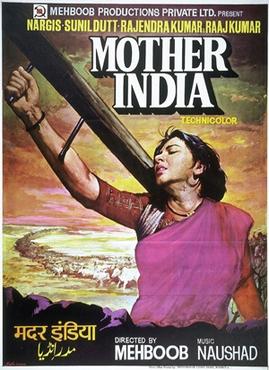
Starring
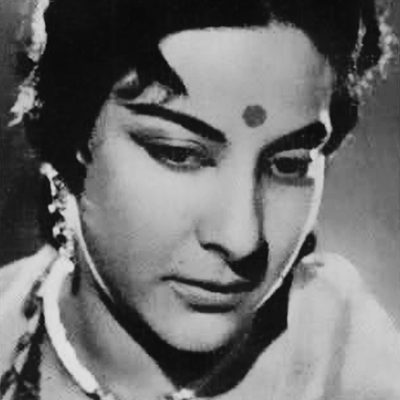
The story
Mother India opens with an elderly Radha (Nargis) being asked to inaugurate a new village canal. As the water flows, her mind flows back across a lifetime of hardship, and the film becomes an extended flashback. A young bride married into debt to the smiling, predatory moneylender Sukhilala, Radha watches her family sink under an impossible loan. When her husband Shamu (Raaj Kumar) loses both arms in a farming accident and, broken by shame, abandons the family, she is left to raise her sons alone through flood, famine and grinding poverty.
Her two boys grow into opposites: the steady, dutiful Ramu (Rajendra Kumar) and the hot-blooded, rebellious Birju (Sunil Dutt), whose fury at the village's exploitation curdles into outlawry. The film builds toward an agonising climax in which Radha, the embodiment of maternal love, must weigh that love against her duty to her community's honour. It is a melodrama on an epic scale — one woman's endurance standing in for the suffering and resilience of the newly independent Indian nation.
Making of the film
Mother India was written, produced and directed by Mehboob Khan as a lavish colour remake of his own 1940 black-and-white film Aurat ("Woman"). Shot in Technicolor by cinematographer Faredoon A. Irani, it was one of the most expensive Indian productions of its era, with the budget reportedly ballooning from around ₹25 lakh to ₹60 lakh during the long shoot. The sweeping rural imagery — ploughed fields, floods, harvests and the famous silhouette of Radha bent under a plough — gave Hindi cinema a new visual grandeur.
The production is inseparable from a real-life drama. During a fire scene on 1 March 1957, the wind shifted and the flames raged out of control, trapping Nargis on the set. Co-star Sunil Dutt rushed in and pulled her to safety, both suffering burns. The on-screen mother and son fell in love off-screen and married in 1958; their son is the actor Sanjay Dutt. Few films can claim that their leading lady married the young man cast as her own son.
The music
Naushad's score, with lyrics by Shakeel Badayuni, is one of the pillars of the film and a landmark in Hindi film music. Blending Indian folk and classical idioms with Western orchestration, Naushad matched the film's epic sweep with songs that have outlived it. Numbers such as the lullaby-lament "O Mere Lal Aaja," the communal "Duniya Mein Hum Aaye Hain," and the exuberant "Holi Aayi Re Kanhai" move between despair, devotion and festivity.
The soundtrack, sung by playback artists including Lata Mangeshkar and Shamshad Begum, remains a staple of golden-age Bollywood compilations. The music does heavy narrative lifting, carrying the passage of years and seasons and turning Radha's private grief into something choral and national.
Performances
The film belongs to Nargis. Ageing on screen from radiant young bride to weathered matriarch, she delivers what is widely considered the finest performance of her career and one of the greatest in Indian cinema — a portrait of dignity, exhaustion and unbreakable will. The role won her the Filmfare Award for Best Actress and cemented her as an icon of the Hindi screen.
Sunil Dutt is electric as the doomed, defiant Birju, a performance that launched him to stardom, while Rajendra Kumar and Raaj Kumar provide steady support and Kanhaiya Lal makes the moneylender Sukhilala memorably loathsome. Mehboob Khan's direction earned him the Filmfare Award for Best Director, and the film also took the Filmfare Best Film honour and the National Film Award for Best Feature Film in Hindi.
Box office and legacy
Mother India was a colossal commercial success, earning the highest revenue of any Indian film of its time and holding that record until Mughal-e-Azam in 1960. Reported gross figures run to roughly ₹80 million, and the film famously ran continuously at Mumbai's Liberty Cinema for over a year, staying in distribution for decades afterward.
Its crowning distinction — and the reason it looms so large in Indian film history — is that it became India's first-ever nominee for the Academy Award for Best Foreign Language Film, at the 30th Academy Awards. It reportedly lost to Federico Fellini's Nights of Cabiria by a single vote, a near-miss that has passed into legend. Decades on, Mother India remains a fixture on lists of essential world cinema and a touchstone of the Bollywood epic, its central image of the mother-as-nation still instantly recognisable.
Key details
| Release year | 1957 |
|---|---|
| Language | Hindi |
| Director | Mehboob Khan |
| Genre | Epic Drama |
| Music | Naushad |
| Starring | Nargis, Sunil Dutt, Rajendra Kumar |
Did you know?
- Mother India was India's first-ever nominee for the Academy Award for Best Foreign Language Film (at the 1958 ceremony) and reportedly lost to Federico Fellini's Nights of Cabiria by a single vote.
- It is a colour remake of director Mehboob Khan's own 1940 black-and-white film Aurat ("Woman").
- During a fire scene on 1 March 1957, Nargis was trapped by out-of-control flames and rescued by co-star Sunil Dutt; the on-screen mother and son married in 1958, and their son is actor Sanjay Dutt.
- It earned the highest revenue of any Indian film of its era, holding that record until Mughal-e-Azam (1960), and reportedly ran at Mumbai's Liberty Cinema for over a year.
- The title is often read as a rebuttal to Katherine Mayo's 1927 book Mother India, a polemic that portrayed Indian society in a harshly negative light.
- The image of Nargis as Radha straining under a plough is one of the most iconic frames in all of Hindi cinema.
Frequently Asked Questions
Was Mother India really the first Indian film nominated for an Oscar?
Yes. Mother India was the first Indian film to be nominated for the Academy Award for Best Foreign Language Film, at the 30th Academy Awards held in 1958. Its selection marked a milestone for Indian cinema on the world stage and remains one of the film's proudest claims to fame.
Did Mother India win the Oscar?
No, it did not win. It lost to Federico Fellini's Italian film Nights of Cabiria, and it is widely reported that the margin was a single vote. The near-miss has become part of the film's legend, but it did not diminish its landmark status as India's first nominee.
Is Mother India based on a true story?
No, the story of Radha is fictional. The film is a colour remake of Mehboob Khan's own 1940 film Aurat and works as an allegory, using one village woman's suffering and endurance to symbolise the strength of the Indian nation. Its power comes from that mythic, larger-than-life quality rather than from real events.
How did Nargis and Sunil Dutt meet?
They met on the set of Mother India, where they played mother (Radha) and son (Birju). Their relationship reportedly deepened after Sunil Dutt rescued Nargis from a fire that broke out during shooting in March 1957. The couple married in 1958, and their son is the actor Sanjay Dutt.
Why is the ending of Mother India so famous?
The climax forces Radha to choose between her fierce love for her rebellious son Birju and her duty to protect her village's honour. That impossible moral choice — a mother turning against her own child for the sake of the community — gives the film its emotional and symbolic force. It is the scene most often cited when people call Mother India one of Indian cinema's defining films.
Why is the film called Mother India?
The title reflects the film's central idea of the self-sacrificing mother as a stand-in for the nation itself, a resonant theme in the years just after Indian independence. It is also frequently interpreted as a pointed answer to Katherine Mayo's 1927 book of the same name, which had cast Indian society in a deeply unflattering light.
Reference: Wikipedia
← Back to the Bollywood Hub