
'%3E%3Crect%20width%3D'96'%20height%3D'96'%20fill%3D'%231B5E20'%2F%3E%3Ccircle%20cx%3D'30'%20cy%3D'24'%20r%3D'44'%20fill%3D'%23fff'%20opacity%3D'.12'%2F%3E%3Ccircle%20cx%3D'60'%20cy%3D'74'%20r%3D'40'%20fill%3D'%23000'%20opacity%3D'.10'%2F%3E%3C%2Fg%3E%3Cg%3E%3Ccircle%20cx%3D'48'%20cy%3D'48'%20r%3D'15'%20fill%3D'%23fff'%2F%3E%3Cpath%20d%3D'M43%2034%20Q50%2048%2043%2062'%20fill%3D'none'%20stroke%3D'%238a94a6'%20stroke-width%3D'2.4'%2F%3E%3Cpath%20d%3D'M47%2033%20Q54%2048%2047%2063'%20fill%3D'none'%20stroke%3D'%238a94a6'%20stroke-width%3D'1.8'%20stroke-dasharray%3D'1.5%203'%2F%3E%3C%2Fg%3E%3C%2Fsvg%3E)
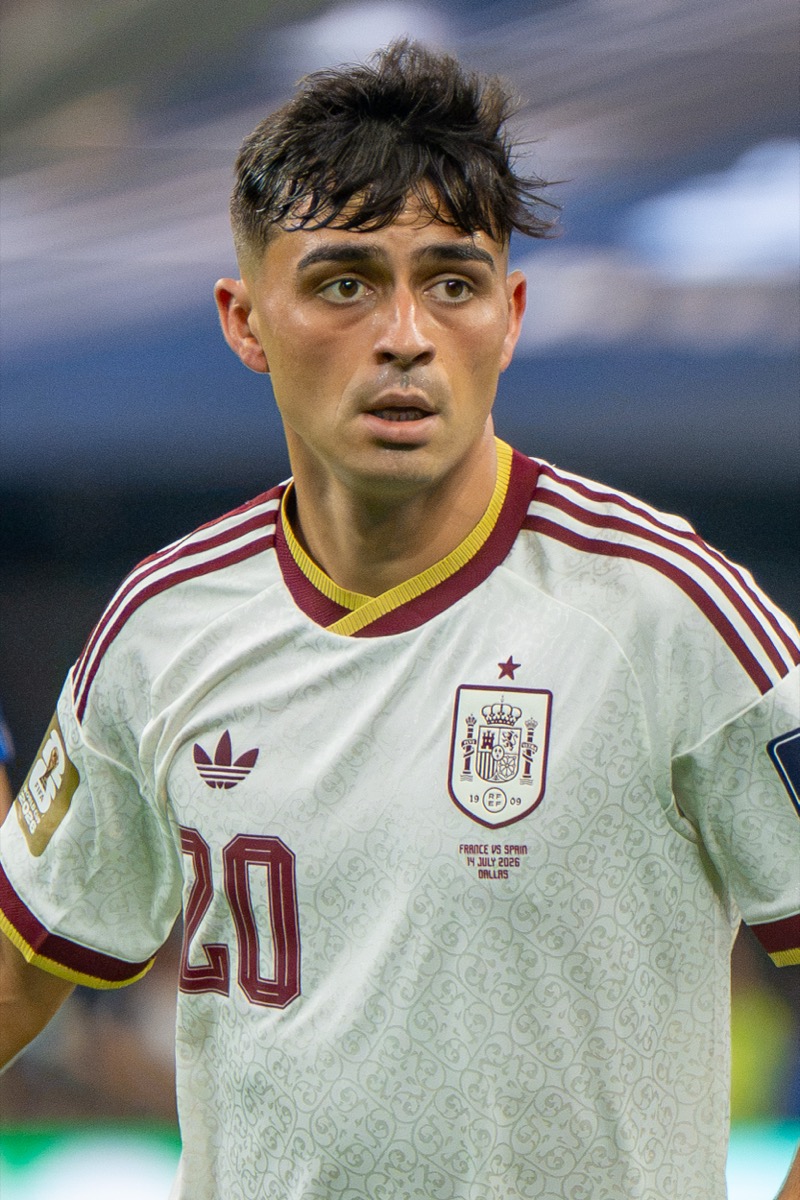
For long spells in New Jersey the World Cup final looked less like a contest and more like a rehearsal Spain were conducting at their own tempo. Argentina had the shirts, the history and Lionel Messi, but they could not get the one thing that mattered: the ball. Rodri and Pedri saw to that, and by the end La Roja had squeezed the life out of a final without ever needing to raise their voices.
The two men who owned the middle
Rodri played the whole thing at walking pace and still bent it to his will — 101 of 105 passes completed, close to 80% of his duels won, a holding midfielder operating like a chess player several moves ahead. Ahead of him, Pedri did the gliding: half-turns out of pressure, first touches that bought a yard, the constant short angle that kept the ball moving through Argentine legs rather than around them. Between them they built a wall you could pass through but never take from.
Starving Messi of the ball
You cannot hurt Spain if you never touch the ball, and Argentina spent the night chasing shadows. Rodri screened the pockets Messi wanted to drift into; Pedri denied the outlet that would have turned him. Enzo Fernández’s red card for a late lunge on Pau Cubarsí only thinned an already outnumbered midfield, and the flashpoint that followed — Messi trying to get Marc Cucurella sent off — spoke of frustration as much as fury.
By extra time the control had a scoreline to match it: Ferran Torres, off Luis de la Fuente’s bench, striking the winner. Unbeaten, seven clean sheets in eight, one goal conceded all tournament — Spain’s second star was won in the middle of the pitch.