Dogs Can Distinguish Fear From Sadness, Brain Scans Show
New research reveals dogs' brains process human emotions differently. Dogs can tell fear from sadness.
'%3E%3Crect%20width%3D'96'%20height%3D'96'%20fill%3D'%23B3261E'%2F%3E%3Ccircle%20cx%3D'30'%20cy%3D'24'%20r%3D'44'%20fill%3D'%23fff'%20opacity%3D'.12'%2F%3E%3Ccircle%20cx%3D'60'%20cy%3D'74'%20r%3D'40'%20fill%3D'%23000'%20opacity%3D'.10'%2F%3E%3C%2Fg%3E%3Cg%20fill%3D'%23fff'%3E%3Crect%20x%3D'29'%20y%3D'49'%20width%3D'8'%20height%3D'19'%20rx%3D'1'%2F%3E%3Crect%20x%3D'39'%20y%3D'40'%20width%3D'9'%20height%3D'28'%20rx%3D'1'%2F%3E%3Crect%20x%3D'50'%20y%3D'45'%20width%3D'8'%20height%3D'23'%20rx%3D'1'%2F%3E%3Crect%20x%3D'60'%20y%3D'53'%20width%3D'7'%20height%3D'15'%20rx%3D'1'%2F%3E%3Crect%20x%3D'41'%20y%3D'34'%20width%3D'5'%20height%3D'6'%2F%3E%3C%2Fg%3E%3C%2Fsvg%3E)
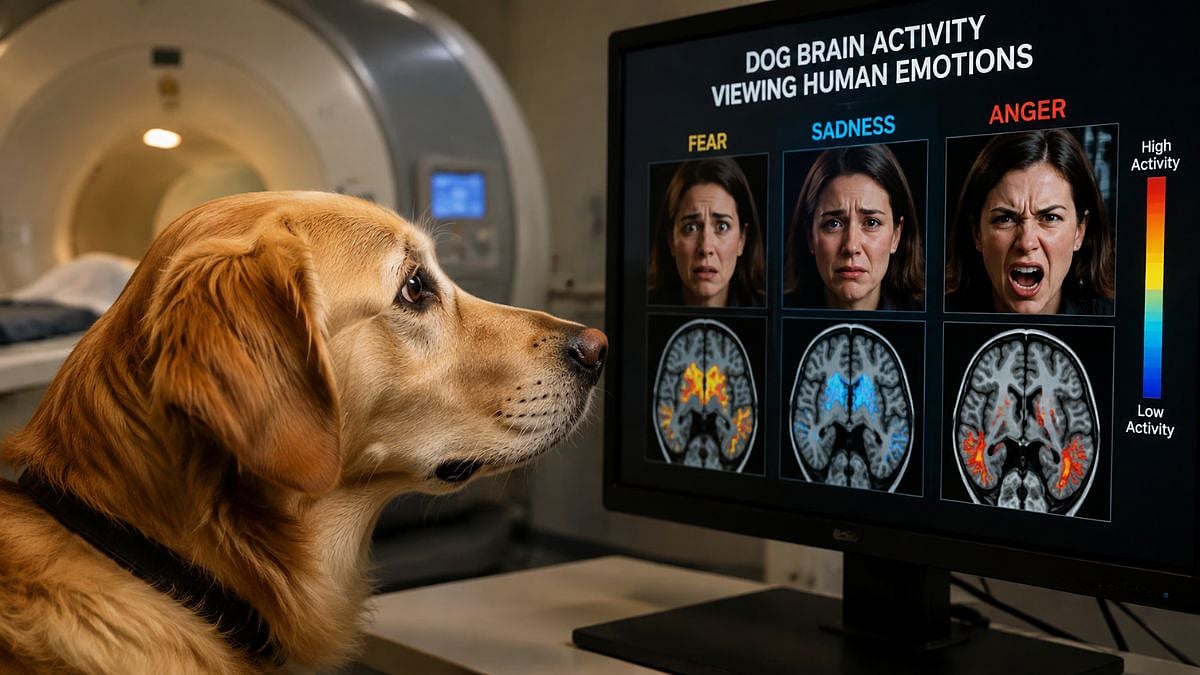
A recent study published in the journal iScience has found that dogs are capable of distinguishing between different negative human emotions, such as fear, anger, and sadness. The research, led by University of Vienna neuroscientist Raúl Hernández-Pérez, used magnetic resonance imaging (MRI) to scan the brains of pet dogs while they viewed photographs of human faces.
The study found that dogs pay close attention to human faces and are sensitive to human expressions. Previous research has shown that dogs look longer at emotional facial expressions and respond differently to emotional sounds compared to neutral ones. However, scientists were unsure whether dogs simply categorised human emotions broadly as 'good mood' and 'bad mood', or whether they recognised different emotional expressions as distinct signals.
Using machine learning to analyse activity across the dogs' brains, researchers found that different brain regions were involved in distinguishing fear from sadness and fear from anger. The right rostral suprasylvian gyrus was activated when distinguishing between fear and sadness, while fear and anger were differentiated through activity in the right mid ectosylvian gyrus and left splenial gyrus.
The analysis did not detect differences in the brain areas activated when dogs viewed images showing human anger and sadness. Fear, however, stood apart from the other negative emotions. One possible explanation is that fear and anger attract dogs' attention more strongly than sadness, and may require dogs to react rapidly to protect themselves.
The study involved relatively small numbers of animals, with eight and 12 dogs taking part across the two components of the study. Nevertheless, it provides the first MRI-based proof-of-concept evidence that dogs' brains can distinguish between two human facial expressions.
Dogs have been living alongside humans for thousands of years, and their ability to respond to human emotions has likely played a key role in their successful domestication. This new research sheds light on the complex emotional lives of dogs and their ability to understand human emotions.
The findings of this study have implications for our understanding of the emotional lives of dogs and their relationships with humans. By recognising that dogs are capable of distinguishing between different negative human emotions, we can better appreciate the complexity of their emotional experiences and respond accordingly.
In conclusion, the study provides new insights into the emotional lives of dogs and their ability to understand human emotions. The findings suggest that dogs are capable of distinguishing between different negative human emotions, and that fear stands apart from other negative emotions.
This research contributes to our understanding of the complex relationships between humans and dogs, and highlights the importance of considering the emotional lives of dogs in our interactions with them. By recognising the emotional complexity of dogs, we can work to build stronger, more empathetic relationships with our canine companions.
The study's findings have the potential to inform a range of areas, from animal training and behaviour to human-dog relationships and emotional support. By continuing to explore the emotional lives of dogs, we can gain a deeper understanding of these complex animals and work to build more compassionate and empathetic relationships with them.
Overall, the research provides a fascinating glimpse into the emotional lives of dogs and their ability to understand human emotions. The findings highlight the complexity and sophistication of canine emotional experiences, and underscore the importance of considering the emotional lives of dogs in our interactions with them.
The study's results are a significant contribution to our understanding of the emotional lives of dogs, and have the potential to inform a range of areas related to human-dog relationships. By recognising the emotional complexity of dogs, we can work to build stronger, more empathetic relationships with our canine companions, and appreciate the complex emotional lives of these remarkable animals.
In the future, further research is needed to fully understand the emotional lives of dogs and their ability to understand human emotions. However, the findings of this study provide a significant step forward in our understanding of the complex relationships between humans and dogs, and highlight the importance of considering the emotional lives of dogs in our interactions with them.
The research has significant implications for our understanding of the emotional lives of dogs, and highlights the need for further research in this area. By continuing to explore the emotional lives of dogs, we can gain a deeper understanding of these complex animals and work to build more compassionate and empathetic relationships with them.
In conclusion, the study provides new insights into the emotional lives of dogs and their ability to understand human emotions. The findings suggest that dogs are capable of distinguishing between different negative human emotions, and that fear stands apart from other negative emotions. The research has significant implications for our understanding of the emotional lives of dogs, and highlights the need for further research in this area.
Frequently asked questions
Can dogs tell the difference between fear and sadness?
Yes, according to a recent study, dogs can distinguish between fear and sadness.
How do dogs respond to human emotions?
Dogs pay close attention to human faces and are sensitive to human expressions, responding differently to emotional sounds and facial expressions.