Rwenzori Mountains Hit by First Wildfire in 12,000 Years
African mountains see first major fire in millennia. Human actions and climate change blamed.
'%3E%3Crect%20width%3D'96'%20height%3D'96'%20fill%3D'%23B3261E'%2F%3E%3Ccircle%20cx%3D'30'%20cy%3D'24'%20r%3D'44'%20fill%3D'%23fff'%20opacity%3D'.12'%2F%3E%3Ccircle%20cx%3D'60'%20cy%3D'74'%20r%3D'40'%20fill%3D'%23000'%20opacity%3D'.10'%2F%3E%3C%2Fg%3E%3Cg%20fill%3D'%23fff'%3E%3Crect%20x%3D'29'%20y%3D'49'%20width%3D'8'%20height%3D'19'%20rx%3D'1'%2F%3E%3Crect%20x%3D'39'%20y%3D'40'%20width%3D'9'%20height%3D'28'%20rx%3D'1'%2F%3E%3Crect%20x%3D'50'%20y%3D'45'%20width%3D'8'%20height%3D'23'%20rx%3D'1'%2F%3E%3Crect%20x%3D'60'%20y%3D'53'%20width%3D'7'%20height%3D'15'%20rx%3D'1'%2F%3E%3Crect%20x%3D'41'%20y%3D'34'%20width%3D'5'%20height%3D'6'%2F%3E%3C%2Fg%3E%3C%2Fsvg%3E)
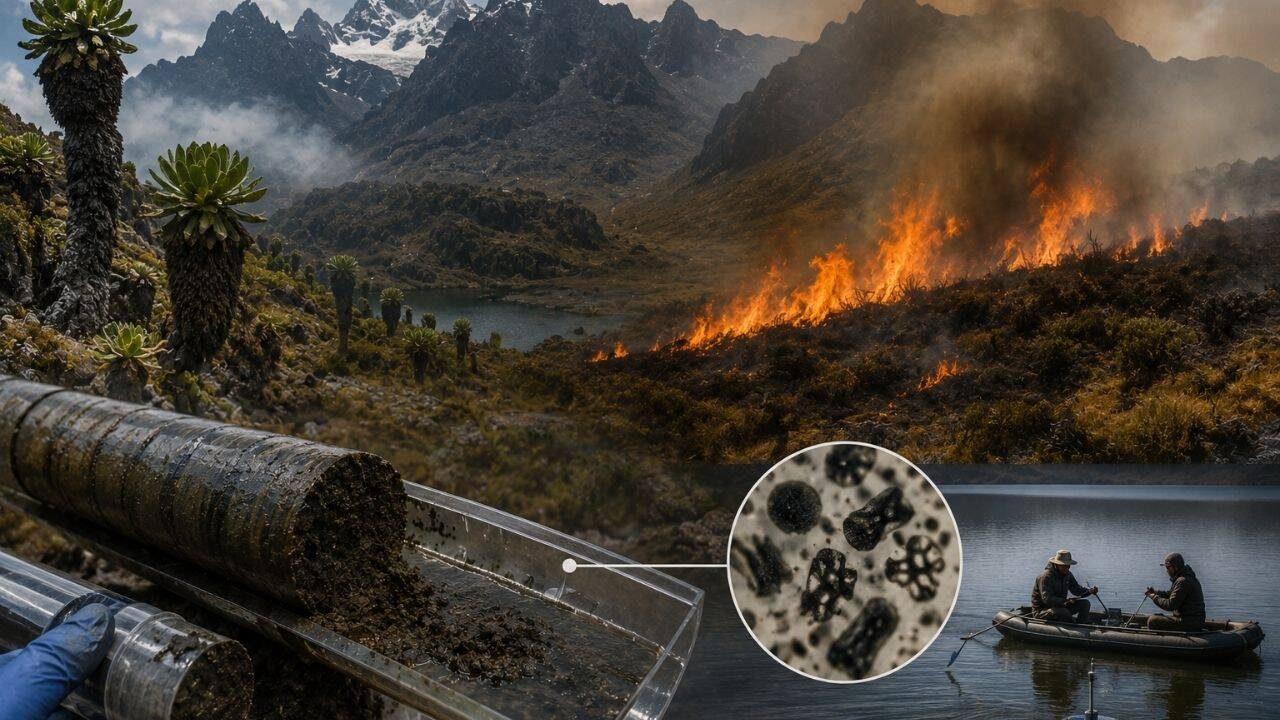
A significant wildfire event occurred in Africa's Rwenzori Mountains in 2012, marking the first major fire in the region for over 12,000 years. This event was identified through analysis of lake sediments, which revealed a substantial charcoal marker linked to the fire. The discovery suggests that human activities and climate change are having a profound impact on the delicate ecosystems of the Rwenzori Mountains.
The Rwenzori Mountains are a unique and fragile environment, with a distinct Afroalpine ecosystem. The lower slopes of the mountains have been affected by early human impact, with evidence of ongoing forest shifts and changes to the landscape. The 2012 wildfire is a significant concern, as it highlights the escalating threats to the Afroalpine environments.
The analysis of lake sediments is a crucial tool for understanding the history of the Rwenzori Mountains. By examining the layers of sediment, researchers can gain insights into the region's past, including the presence of charcoal markers that indicate fires. The discovery of the 12,000-year gap since the last major fire suggests that the Rwenzori Mountains have been relatively fire-free for millennia.
The impact of human actions and climate change on the Rwenzori Mountains is a major concern. The region is sensitive to changes in temperature and precipitation, and the introduction of human activities such as agriculture and settlement has altered the landscape. The 2012 wildfire is a stark reminder of the need to protect and conserve the fragile ecosystems of the Rwenzori Mountains.
The Afroalpine environments of the Rwenzori Mountains are home to a unique array of flora and fauna. The region is characterized by a distinct set of plant and animal species that are adapted to the high-altitude, low-temperature conditions. The loss of these ecosystems would have significant consequences for biodiversity and the health of the planet.
In conclusion, the 2012 wildfire in the Rwenzori Mountains is a significant event that highlights the impact of human actions and climate change on fragile mountain ecosystems. The discovery of the 12,000-year gap since the last major fire is a stark reminder of the need to protect and conserve these delicate environments.
The Rwenzori Mountains are an important part of Africa's natural heritage, and it is essential that we take steps to preserve and protect them. This includes addressing the root causes of climate change and human impact, as well as implementing conservation efforts to safeguard the region's unique biodiversity.
Ultimately, the 2012 wildfire in the Rwenzori Mountains serves as a warning about the need to protect our planet's fragile ecosystems. As the world continues to grapple with the challenges of climate change and human impact, it is essential that we prioritize conservation and sustainability efforts to preserve the natural beauty and biodiversity of regions like the Rwenzori Mountains.
Frequently asked questions
What was significant about the 2012 wildfire in the Rwenzori Mountains?
The 2012 wildfire was the first major fire in the region for over 12,000 years.
What is threatening the Afroalpine environments of the Rwenzori Mountains?
Human actions and climate change are altering the delicate ecosystems of the Rwenzori Mountains, posing a significant threat to the region's unique biodiversity.