US Targets International Criminal Court
Trump administration launches campaign against ICC, citing sovereignty concerns. The US seeks to protect its citizens from international prosecution.
'%3E%3Crect%20width%3D'96'%20height%3D'96'%20fill%3D'%234A235A'%2F%3E%3Ccircle%20cx%3D'30'%20cy%3D'24'%20r%3D'44'%20fill%3D'%23fff'%20opacity%3D'.12'%2F%3E%3Ccircle%20cx%3D'60'%20cy%3D'74'%20r%3D'40'%20fill%3D'%23000'%20opacity%3D'.10'%2F%3E%3C%2Fg%3E%3Cg%20fill%3D'none'%20stroke%3D'%23fff'%20stroke-width%3D'3'%3E%3Ccircle%20cx%3D'48'%20cy%3D'48'%20r%3D'16'%2F%3E%3Cellipse%20cx%3D'48'%20cy%3D'48'%20rx%3D'6.5'%20ry%3D'16'%2F%3E%3Cline%20x1%3D'32'%20y1%3D'42'%20x2%3D'64'%20y2%3D'42'%2F%3E%3Cline%20x1%3D'32'%20y1%3D'54'%20x2%3D'64'%20y2%3D'54'%2F%3E%3C%2Fg%3E%3C%2Fsvg%3E)
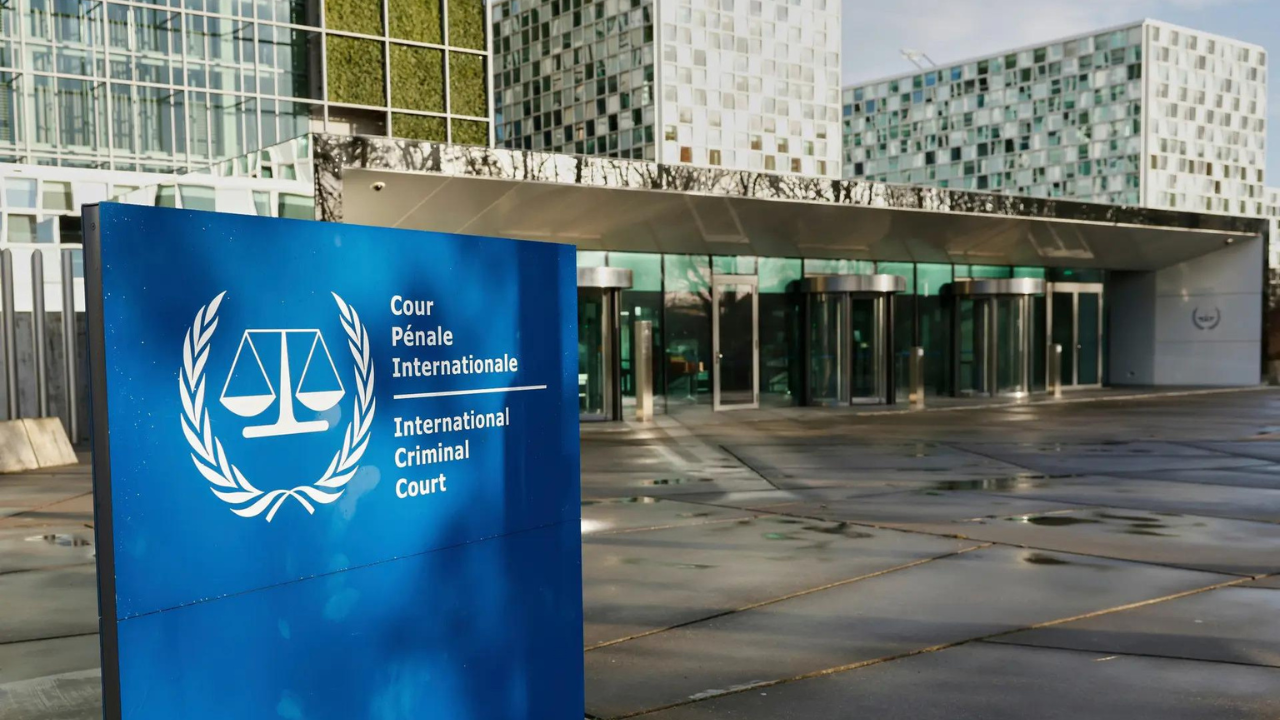
The Trump administration has initiated a campaign against the International Criminal Court (ICC), targeting the court's authority over American officials and military personnel. This move is driven by concerns that the ICC threatens US national sovereignty and self-governance.
The US argues that the ICC's jurisdiction over American citizens is a threat to its independence and ability to govern itself. In response, the Trump administration plans to employ diplomatic efforts and potential sanctions to disable the court. The primary goal of this campaign is to protect American citizens from international prosecution.
The ICC is an international tribunal that investigates and prosecutes individuals accused of war crimes, crimes against humanity, and genocide. The court was established in 2002 and has 123 member states. However, the US is not a member of the ICC, having refused to ratify the Rome Statute that established the court.
The Trump administration's campaign against the ICC is not unprecedented. The US has long been critical of the court, arguing that it lacks accountability and is prone to political manipulation. The current administration's efforts are seen as an escalation of this criticism, with the aim of dismantling the court's authority over American citizens.
The ICC has been involved in several high-profile cases in recent years, including investigations into war crimes in Afghanistan and the Israeli-Palestinian conflict. The court's actions have been met with resistance from several countries, including the US, which has argued that the ICC lacks the authority to prosecute its citizens.
The implications of the Trump administration's campaign against the ICC are significant. If successful, the effort could undermine the court's ability to hold individuals accountable for international crimes. This could have far-reaching consequences for global justice and human rights.
The US campaign against the ICC is also likely to have diplomatic repercussions. The move may strain relationships between the US and other countries that are members of the ICC, and could potentially lead to a decline in international cooperation on justice and human rights issues.
In the context of international relations, the Trump administration's campaign against the ICC reflects a broader trend of nationalism and skepticism towards international institutions. The move is seen as part of a larger effort by the US to assert its sovereignty and independence from international bodies.
The significance of this development for global governance and international justice cannot be overstated. The ICC plays a crucial role in holding individuals accountable for international crimes, and undermining its authority could have serious consequences for human rights and global stability.
In conclusion, the Trump administration's campaign against the ICC is a significant development in international relations. The move reflects a deep-seated concern about national sovereignty and the role of international institutions in governing global affairs. As the situation unfolds, it will be important to monitor the implications of this campaign for global justice, human rights, and international cooperation.