Ex-TISS Student Abhirup Paul Arrested in GN Saibaba Memorial Case
A former TISS student was arrested after a court rejected his anticipatory bail. He was part of a memorial gathering for GN Saibaba.
'%3E%3Crect%20width%3D'96'%20height%3D'96'%20fill%3D'%23B3261E'%2F%3E%3Ccircle%20cx%3D'30'%20cy%3D'24'%20r%3D'44'%20fill%3D'%23fff'%20opacity%3D'.12'%2F%3E%3Ccircle%20cx%3D'60'%20cy%3D'74'%20r%3D'40'%20fill%3D'%23000'%20opacity%3D'.10'%2F%3E%3C%2Fg%3E%3Cg%20fill%3D'%23fff'%3E%3Crect%20x%3D'29'%20y%3D'49'%20width%3D'8'%20height%3D'19'%20rx%3D'1'%2F%3E%3Crect%20x%3D'39'%20y%3D'40'%20width%3D'9'%20height%3D'28'%20rx%3D'1'%2F%3E%3Crect%20x%3D'50'%20y%3D'45'%20width%3D'8'%20height%3D'23'%20rx%3D'1'%2F%3E%3Crect%20x%3D'60'%20y%3D'53'%20width%3D'7'%20height%3D'15'%20rx%3D'1'%2F%3E%3Crect%20x%3D'41'%20y%3D'34'%20width%3D'5'%20height%3D'6'%2F%3E%3C%2Fg%3E%3C%2Fsvg%3E)
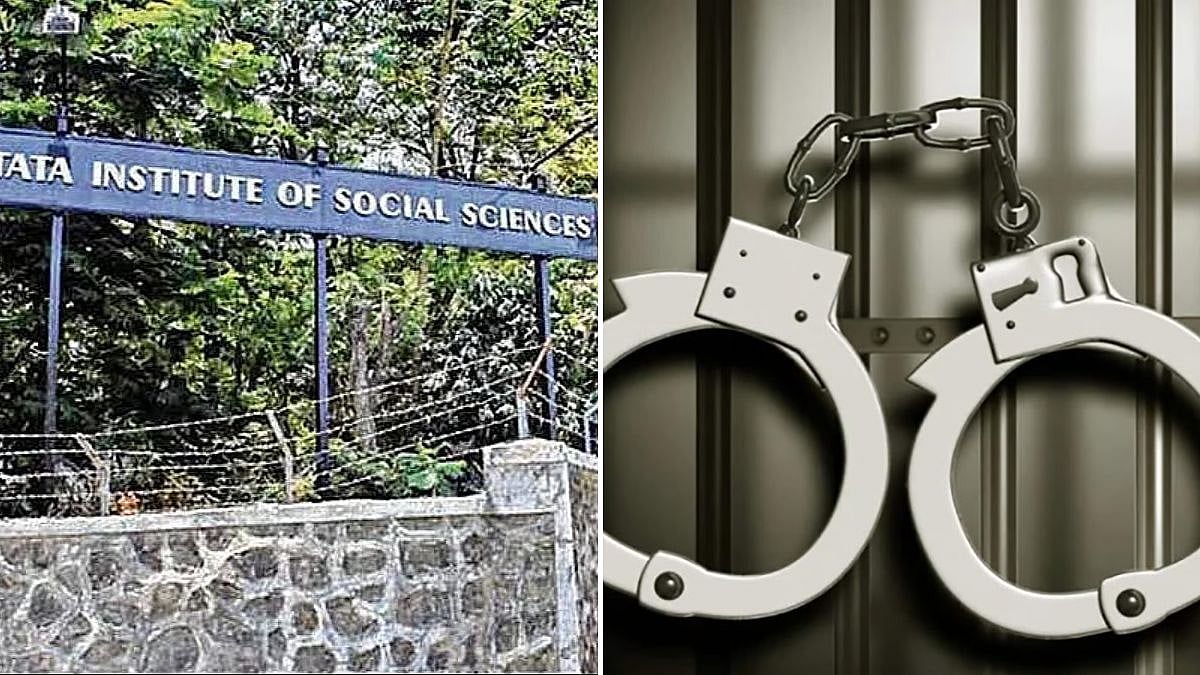
A former student of the Tata Institute of Social Sciences (TISS), Abhirup Paul, was arrested by the Mumbai Crime Branch on Thursday. This came after a sessions court rejected his anticipatory bail application in connection with a case related to a memorial gathering held for former Delhi University professor G.N. Saibaba.
The arrest took place in Chembur, and Paul was produced before a magistrate's court on August 8. The police had sought 10 days of custody, but the court initially granted limited custody. Paul has now been remanded in police custody till August 10.
The case relates to a memorial gathering held at the TISS Mumbai campus in October last year, where students paid tribute to Saibaba. According to the defence, only nine students attended the peaceful gathering, where candles were lit and poems written by Saibaba were recited. Some participants also carried placards bearing the message, “Rest in Power (1967–Forever)”.
The sessions court rejected the anticipatory bail applications of Paul and another former TISS student, Kamakhya Prasad Das, while granting relief to seven other accused in the case. The prosecution alleged that Paul and Das raised slogans demanding the release of student activists Umar Khalid and Sharjeel Imam, who are facing prolonged incarceration in connection with the Delhi riots case.
The court observed that paying homage to Saibaba by itself could not be considered an illegal act. However, the court noted that several of the acts attributed to the accused, considered individually, did not amount to offences. The court refused anticipatory bail to the two former students, stating that as students, they were expected to “respect the Law of Land.”
Defence lawyer Vijay Hiremath argued that the gathering was merely a memorial event and that seeking the release of jailed activists could not be treated as a criminal act. He also pointed to public discussions involving retired Supreme Court judges on prolonged incarceration and the right to a speedy trial under Article 21 of the Constitution.
G.N. Saibaba, who had more than 90 per cent disability, was a former English professor at Delhi University. He was arrested in a case alleging links with the banned CPI (Maoist) and was subsequently convicted before being acquitted by the Bombay High Court in March 2024. Saibaba died on October 12, 2024, while undergoing treatment at a hospital in Hyderabad.
The arrest of Abhirup Paul has sparked concerns about the freedom of expression and the right to pay tribute to a person who was ultimately acquitted by the court. The case highlights the complexities of the Indian legal system and the need for a nuanced approach to issues related to free speech and dissent.
The Mumbai Crime Branch's actions in this case will be closely watched, and the outcome of the case will have significant implications for the rights of students and activists in India. The case also raises questions about the role of the police and the judiciary in balancing the need to maintain law and order with the need to protect the rights of citizens.
In conclusion, the arrest of Abhirup Paul is a significant development in the GN Saibaba memorial case, and it highlights the ongoing debates about free speech, dissent, and the role of the state in India. The case will continue to be closely watched, and its outcome will have important implications for the rights of citizens in India.
The incident has also sparked a debate about the freedom of expression in educational institutions and the need for students to be able to express their opinions and pay tribute to individuals who have made significant contributions to society. The case of Abhirup Paul and the GN Saibaba memorial gathering will be an important test of the Indian legal system's ability to balance the need to maintain law and order with the need to protect the rights of citizens.
The Mumbai police and the judiciary will need to carefully consider the implications of their actions in this case, and ensure that the rights of all individuals involved are protected. The case will also be closely watched by human rights organizations and advocacy groups, who will be monitoring the situation to ensure that the rights of students and activists are protected.
In the end, the outcome of the case will depend on the ability of the Indian legal system to navigate the complex issues involved and to balance the competing interests of different stakeholders. The case of Abhirup Paul and the GN Saibaba memorial gathering will be an important test of the system's ability to do so, and its outcome will have significant implications for the rights of citizens in India.
The case has also raised questions about the role of the police in monitoring and regulating the activities of students and activists. The Mumbai police will need to carefully consider their actions in this case, and ensure that they are not infringing on the rights of citizens to express their opinions and pay tribute to individuals who have made significant contributions to society.
In conclusion, the arrest of Abhirup Paul is a significant development in the GN Saibaba memorial case, and it highlights the ongoing debates about free speech, dissent, and the role of the state in India. The case will continue to be closely watched, and its outcome will have important implications for the rights of citizens in India.
Frequently asked questions
What was the reason for Abhirup Paul's arrest?
Abhirup Paul was arrested in connection with a case related to a memorial gathering held for former Delhi University professor G.N. Saibaba.
What was the outcome of the anticipatory bail application?
The sessions court rejected the anticipatory bail applications of Paul and another former TISS student, Kamakhya Prasad Das.