NGT Seeks Replies On Bhopal Lake Fish Deaths
Mass fish deaths in Bhopal's Lower Lake spark NGT action. Replies sought within six weeks.
'%3E%3Crect%20width%3D'96'%20height%3D'96'%20fill%3D'%23B3261E'%2F%3E%3Ccircle%20cx%3D'30'%20cy%3D'24'%20r%3D'44'%20fill%3D'%23fff'%20opacity%3D'.12'%2F%3E%3Ccircle%20cx%3D'60'%20cy%3D'74'%20r%3D'40'%20fill%3D'%23000'%20opacity%3D'.10'%2F%3E%3C%2Fg%3E%3Cg%20fill%3D'%23fff'%3E%3Crect%20x%3D'29'%20y%3D'49'%20width%3D'8'%20height%3D'19'%20rx%3D'1'%2F%3E%3Crect%20x%3D'39'%20y%3D'40'%20width%3D'9'%20height%3D'28'%20rx%3D'1'%2F%3E%3Crect%20x%3D'50'%20y%3D'45'%20width%3D'8'%20height%3D'23'%20rx%3D'1'%2F%3E%3Crect%20x%3D'60'%20y%3D'53'%20width%3D'7'%20height%3D'15'%20rx%3D'1'%2F%3E%3Crect%20x%3D'41'%20y%3D'34'%20width%3D'5'%20height%3D'6'%2F%3E%3C%2Fg%3E%3C%2Fsvg%3E)
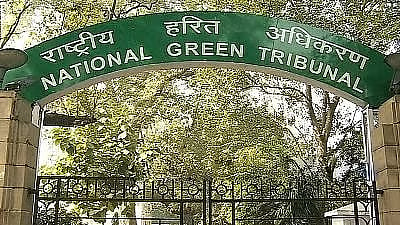
The National Green Tribunal (NGT) has taken suo motu cognisance of the mass fish deaths in Bhopal's Chhota Talab, also known as Lower Lake, and issued notices to key departments and officials. The tribunal has sought responses within six weeks regarding the incident, which is believed to have been caused by the continuous discharge of untreated sewage into the lake.
The NGT's Central Zone Bench in Bhopal took note of the death of a large number of fish in the lake and stated that the depletion of dissolved oxygen due to untreated sewage was the primary reason behind the incident. The tribunal observed that unless the discharge of untreated sewage is stopped and effective water quality improvement measures are implemented, similar incidents are likely to occur every monsoon.
The NGT has made the collector, Bhopal Municipal Corporation (BMC) commissioner, member secretary of the Madhya Pradesh Pollution Control Board (MPPCB), and director of the Fisheries Department parties to the case. All respondents have been directed to submit their replies along with details of corrective measures taken within six weeks.
To investigate the causes of the fish deaths, the NGT has constituted a four-member joint committee comprising representatives of the Central Pollution Control Board (CPCB), the Department of Aquatic Sciences at Barkatullah University, the Department of Agriculture and Fisheries, and the MPPCB. The committee will inspect the site, investigate the causes of the fish deaths, and submit its report to the tribunal within six weeks.
The MPPCB has been designated as the nodal agency for coordinating the investigation. The next hearing in the case has been scheduled for September 18. The mass fish deaths in Bhopal's Lower Lake had been reported earlier, with over five lakh fish found dead across the city's water bodies within 48 hours.
The incident has raised concerns over the functioning of the BMC's Lake Conservation Cell and the effectiveness of measures to prevent water pollution in the city. The NGT's action is seen as a step towards addressing the issue and preventing similar incidents in the future.
The city's water bodies, including the Lower Lake, are facing severe pollution due to the discharge of untreated sewage and industrial waste. The NGT's order is expected to prompt the authorities to take corrective measures to improve the water quality and prevent further pollution.
In the larger context, the incident highlights the need for effective measures to prevent water pollution and protect the environment. The NGT's action is a reminder of the importance of addressing environmental issues and taking steps to prevent pollution.
The significance of the NGT's order lies in its potential to bring about a positive change in the way the city's water bodies are managed and protected. It is expected to prompt the authorities to take concrete steps to improve the water quality and prevent further pollution, which will have a positive impact on the environment and the city's ecosystem.
In conclusion, the NGT's action on the mass fish deaths in Bhopal's Lower Lake is a step towards addressing the issue of water pollution in the city. The order is expected to prompt the authorities to take corrective measures to improve the water quality and prevent further pollution, which will have a positive impact on the environment and the city's ecosystem.
Frequently asked questions
What is the cause of the mass fish deaths in Bhopal's Lower Lake?
The cause of the mass fish deaths is believed to be the continuous discharge of untreated sewage into the lake, leading to depletion of dissolved oxygen.
What action has the NGT taken in the case?
The NGT has issued notices to key departments and officials, seeking replies within six weeks, and has constituted a four-member joint committee to investigate the causes of the fish deaths.