PM Modi Reviews Middle East Crisis Preparedness
PM Modi assesses India's readiness for potential disruptions. Key sectors reviewed include LPG and fertilisers.
'%3E%3Crect%20width%3D'96'%20height%3D'96'%20fill%3D'%234A235A'%2F%3E%3Ccircle%20cx%3D'30'%20cy%3D'24'%20r%3D'44'%20fill%3D'%23fff'%20opacity%3D'.12'%2F%3E%3Ccircle%20cx%3D'60'%20cy%3D'74'%20r%3D'40'%20fill%3D'%23000'%20opacity%3D'.10'%2F%3E%3C%2Fg%3E%3Cg%20fill%3D'none'%20stroke%3D'%23fff'%20stroke-width%3D'3'%3E%3Ccircle%20cx%3D'48'%20cy%3D'48'%20r%3D'16'%2F%3E%3Cellipse%20cx%3D'48'%20cy%3D'48'%20rx%3D'6.5'%20ry%3D'16'%2F%3E%3Cline%20x1%3D'32'%20y1%3D'42'%20x2%3D'64'%20y2%3D'42'%2F%3E%3Cline%20x1%3D'32'%20y1%3D'54'%20x2%3D'64'%20y2%3D'54'%2F%3E%3C%2Fg%3E%3C%2Fsvg%3E)
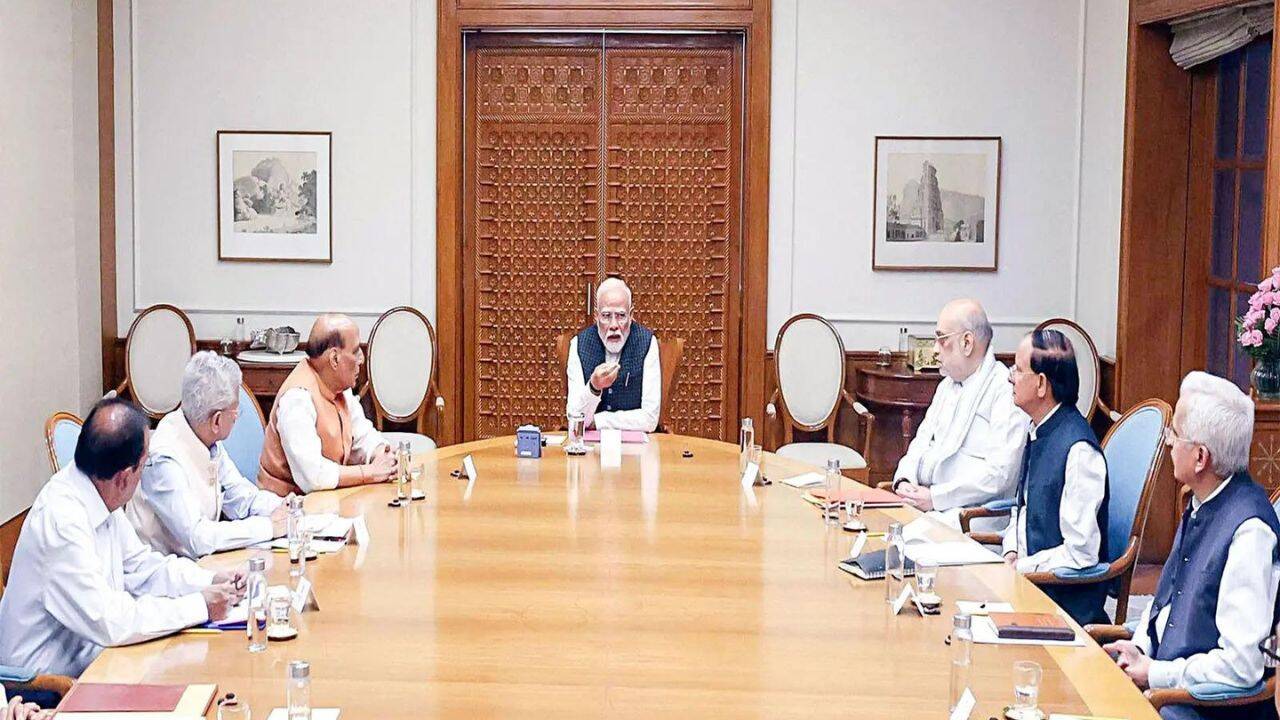
Prime Minister Narendra Modi recently conducted a review of India's preparedness for the Middle East crisis, focusing on crucial sectors such as LPG and Rabi fertilisers. The meeting aimed to assess the country's readiness to handle potential disruptions in the supply chain.
The Prime Minister's Office (PMO) has been closely monitoring the situation in the Middle East, considering its significant impact on India's energy security and fertiliser supply. The review meeting was attended by key officials from the Ministry of Petroleum and Natural Gas, the Ministry of Chemicals and Fertilisers, and other relevant departments.
During the meeting, discussions revolved around the current stockpile of LPG, the availability of Rabi fertilisers for the upcoming crop season, and the contingency plans in place to mitigate any potential shortages. The officials briefed the Prime Minister on the existing arrangements for importing LPG and fertilisers, as well as the measures being taken to diversify India's energy sources and reduce dependence on imports.
The Middle East has been a critical region for India's energy needs, with the country relying heavily on imports of crude oil and natural gas. The ongoing tensions in the region have raised concerns about the stability of energy supplies, prompting the government to take proactive measures to ensure the country's preparedness.
In recent years, India has made significant strides in increasing its domestic production of fertilisers, with a focus on promoting the use of indigenous resources. However, the country still relies on imports to meet its fertiliser requirements, particularly during peak seasons such as the Rabi crop season.
The review meeting underscored the importance of maintaining a stable supply chain, particularly in critical sectors such as energy and fertilisers. The government has been working to reduce its dependence on imports and promote domestic production, while also exploring alternative sources of energy and fertilisers.
The Prime Minister's initiative to review the country's preparedness for the Middle East crisis demonstrates the government's commitment to ensuring the stability and security of India's energy and fertiliser supplies. As the global situation continues to evolve, the government will remain vigilant and take necessary measures to protect the country's interests.
In conclusion, the review meeting highlighted the government's proactive approach to addressing potential disruptions in the supply chain, particularly in critical sectors such as LPG and Rabi fertilisers. The measures being taken to diversify India's energy sources, promote domestic production, and maintain a stable supply chain will help ensure the country's preparedness for any potential crisis in the Middle East.
Frequently asked questions
What is the significance of the Middle East crisis for India's energy security?
The Middle East is a critical region for India's energy needs, with the country relying heavily on imports of crude oil and natural gas. Any disruptions in the supply chain could have a significant impact on India's energy security.
What measures is the government taking to reduce its dependence on imports?
The government is promoting domestic production of fertilisers, exploring alternative sources of energy and fertilisers, and diversifying its energy sources to reduce dependence on imports.