China Gains 447,500 sq km of Planted Forest
China's tree planting programs increased forest cover, but fragmented natural habitats.
'%3E%3Crect%20width%3D'96'%20height%3D'96'%20fill%3D'%234A235A'%2F%3E%3Ccircle%20cx%3D'30'%20cy%3D'24'%20r%3D'44'%20fill%3D'%23fff'%20opacity%3D'.12'%2F%3E%3Ccircle%20cx%3D'60'%20cy%3D'74'%20r%3D'40'%20fill%3D'%23000'%20opacity%3D'.10'%2F%3E%3C%2Fg%3E%3Cg%20fill%3D'none'%20stroke%3D'%23fff'%20stroke-width%3D'3'%3E%3Ccircle%20cx%3D'48'%20cy%3D'48'%20r%3D'16'%2F%3E%3Cellipse%20cx%3D'48'%20cy%3D'48'%20rx%3D'6.5'%20ry%3D'16'%2F%3E%3Cline%20x1%3D'32'%20y1%3D'42'%20x2%3D'64'%20y2%3D'42'%2F%3E%3Cline%20x1%3D'32'%20y1%3D'54'%20x2%3D'64'%20y2%3D'54'%2F%3E%3C%2Fg%3E%3C%2Fsvg%3E)
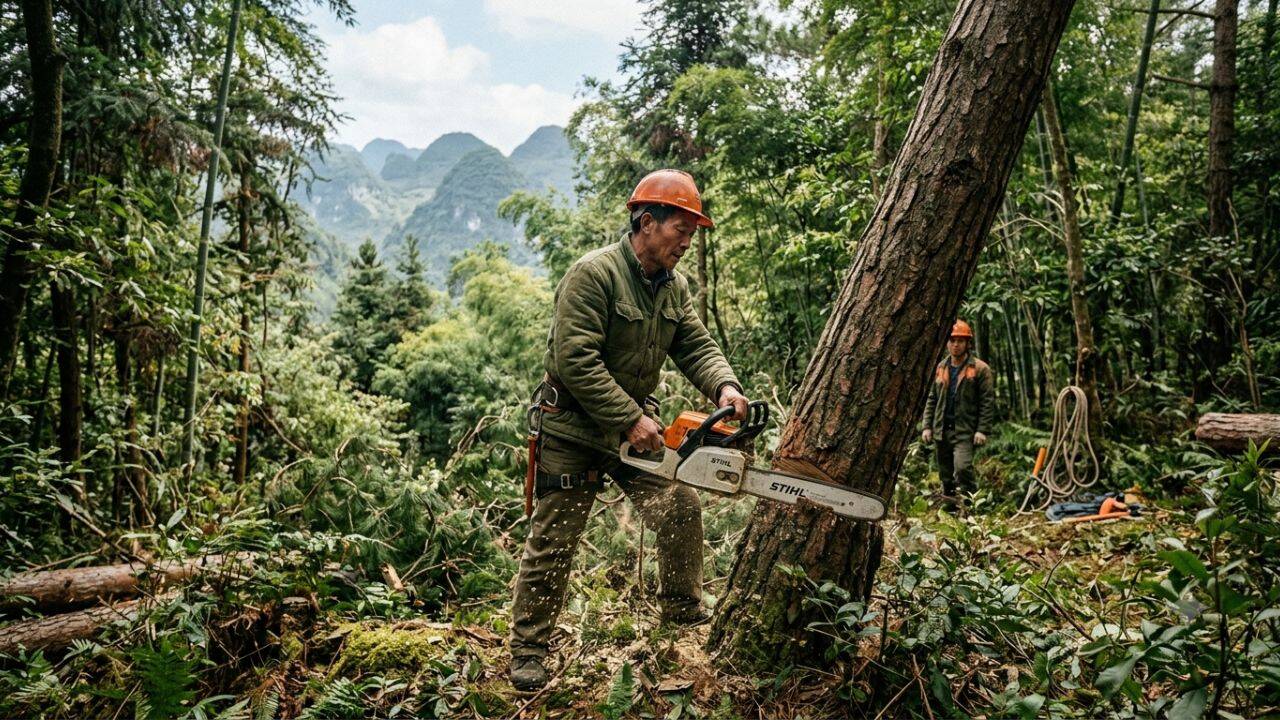
China has made significant strides in increasing its overall forest cover over the past three decades, thanks to large-scale tree planting programs. According to a recent study, the country has gained a substantial 447,500 square kilometers of planted forest. However, this achievement has come at a cost, as the expansion of plantations has led to the fragmentation of natural forests.
The study found that plantations often expanded near the edges of natural forests, breaking up connected habitats and disrupting the delicate balance of ecosystems. This fragmentation can have severe consequences for biodiversity, as it isolates wildlife populations and reduces the availability of food and shelter.
Despite these challenges, the study also highlighted the positive impact of China's Natural Forest Protection Program. Implemented to safeguard the country's natural forests, the program has helped slow the fragmentation of protected areas. By setting aside areas of natural forest and implementing sustainable management practices, the program has contributed to the preservation of China's rich biodiversity.
China's tree planting programs have been driven by a desire to increase forest cover and mitigate the effects of climate change. While these efforts have been successful in terms of expanding overall forest cover, they have also raised concerns about the impact on natural ecosystems. The study's findings suggest that a more nuanced approach is needed, one that balances the need for planted forests with the need to protect and preserve natural habitats.
The fragmentation of natural forests is a complex issue, driven by a range of factors including urbanization, agriculture, and infrastructure development. In China, the expansion of plantations has been a major driver of fragmentation, as large areas of land are converted to support the growth of trees. While plantations can provide important ecosystem services, such as carbon sequestration and soil erosion prevention, they can also lead to the loss of biodiversity and ecosystem function.
The study's findings have important implications for forest management practices in China and beyond. By highlighting the need to balance the expansion of planted forests with the protection of natural habitats, the research underscores the importance of sustainable forest management. This approach recognizes the value of both planted and natural forests, and seeks to manage them in a way that maximizes benefits for both people and the environment.
In conclusion, while China's tree planting programs have achieved significant success in increasing overall forest cover, they have also coincided with growing fragmentation of natural forests. The study's findings highlight the need for a more nuanced approach to forest management, one that balances the need for planted forests with the need to protect and preserve natural habitats. By adopting sustainable forest management practices, China and other countries can work to preserve the world's precious natural forests, while also supporting the growth of planted forests.
The long-term consequences of forest fragmentation are far-reaching and can have significant impacts on ecosystems and biodiversity. As the world continues to grapple with the challenges of climate change, deforestation, and habitat loss, the importance of sustainable forest management will only continue to grow. By learning from China's experiences and adopting a more sustainable approach to forest management, we can work to preserve the world's natural forests for future generations.
In the context of global efforts to combat climate change and protect biodiversity, the study's findings are a timely reminder of the need for sustainable forest management. As countries around the world seek to balance economic development with environmental protection, the importance of preserving natural forests and promoting sustainable land use practices will only continue to grow. By working together to address the challenges of forest fragmentation and promote sustainable forest management, we can help to ensure a healthier, more sustainable future for all.
The study's findings also have important implications for policymakers and forest managers in China and beyond. By highlighting the need for a more nuanced approach to forest management, the research underscores the importance of considering the potential impacts of tree planting programs on natural ecosystems. By adopting a more sustainable approach to forest management, policymakers and forest managers can work to minimize the negative impacts of forest fragmentation, while also supporting the growth of planted forests and promoting biodiversity conservation.
In terms of specific policy recommendations, the study suggests that policymakers and forest managers should prioritize the protection of natural forests and the promotion of sustainable land use practices. This can involve setting aside areas of natural forest as protected areas, implementing sustainable forest management practices, and promoting the use of planted forests as a means of supporting biodiversity conservation and ecosystem function. By working together to address the challenges of forest fragmentation and promote sustainable forest management, we can help to ensure a healthier, more sustainable future for all.
The importance of preserving natural forests and promoting sustainable land use practices cannot be overstated. As the world continues to grapple with the challenges of climate change, deforestation, and habitat loss, the need for sustainable forest management will only continue to grow. By learning from China's experiences and adopting a more sustainable approach to forest management, we can work to preserve the world's natural forests for future generations and promote a healthier, more sustainable future for all.
In conclusion, the study's findings highlight the need for a more nuanced approach to forest management in China and beyond. By balancing the need for planted forests with the need to protect and preserve natural habitats, we can work to promote biodiversity conservation, ecosystem function, and sustainable land use practices. As the world continues to grapple with the challenges of climate change and environmental protection, the importance of sustainable forest management will only continue to grow.
The study's findings are a timely reminder of the need for sustainable forest management and the importance of preserving natural forests. As countries around the world seek to balance economic development with environmental protection, the importance of promoting sustainable land use practices and preserving natural ecosystems will only continue to grow. By working together to address the challenges of forest fragmentation and promote sustainable forest management, we can help to ensure a healthier, more sustainable future for all.
The long-term consequences of forest fragmentation are far-reaching and can have significant impacts on ecosystems and biodiversity. As the world continues to grapple with the challenges of climate change, deforestation, and habitat loss, the importance of sustainable forest management will only continue to grow. By learning from China's experiences and adopting a more sustainable approach to forest management, we can work to preserve the world's natural forests for future generations and promote a healthier, more sustainable future for all.
The importance of preserving natural forests and promoting sustainable land use practices cannot be overstated. As the world continues to grapple with the challenges of climate change, deforestation, and habitat loss, the need for sustainable forest management will only continue to grow. By working together to address the challenges of forest fragmentation and promote sustainable forest management, we can help to ensure a healthier, more sustainable future for all.
In terms of future research directions, the study suggests that further research is needed to fully understand the impacts of forest fragmentation on ecosystems and biodiversity. This can involve conducting further studies on the effects of forest fragmentation on wildlife populations, ecosystem function, and biodiversity conservation. By working together to address the challenges of forest fragmentation and promote sustainable forest management, we can help to ensure a healthier, more sustainable future for all.
The study's findings have important implications for forest management practices in China and beyond. By highlighting the need to balance the expansion of planted forests with the protection of natural habitats, the research underscores the importance of sustainable forest management. This approach recognizes the value of both planted and natural forests, and seeks to manage them in a way that maximizes benefits for both people and the environment.
In conclusion, the study's findings highlight the need for a more nuanced approach to forest management in China and beyond. By balancing the need for planted forests with the need to protect and preserve natural habitats, we can work to promote biodiversity conservation, ecosystem function, and sustainable land use practices. As the world continues to grapple with the challenges of climate change and environmental protection, the importance of sustainable forest management will only continue to grow.
What it means for the environment and the world at large is that sustainable forest management is crucial for preserving natural forests and promoting biodiversity conservation. The study's findings are a timely reminder of the need for sustainable forest management and the importance of preserving natural forests. As countries around the world seek to balance economic development with environmental protection, the importance of promoting sustainable land use practices and preserving natural ecosystems will only continue to grow.
Frequently asked questions
What is the main finding of the study on China's forest cover?
The study found that China's large-scale tree planting programs increased overall forest cover, but also led to the fragmentation of natural forests.
What is the importance of sustainable forest management?
Sustainable forest management is crucial for preserving natural forests, promoting biodiversity conservation, and maintaining ecosystem function.