Northeast India Faces Severe Monsoon Floods
Assam hit by floods, 50,000 affected. Homes submerged, livelihoods impacted.
'%3E%3Crect%20width%3D'96'%20height%3D'96'%20fill%3D'%23B3261E'%2F%3E%3Ccircle%20cx%3D'30'%20cy%3D'24'%20r%3D'44'%20fill%3D'%23fff'%20opacity%3D'.12'%2F%3E%3Ccircle%20cx%3D'60'%20cy%3D'74'%20r%3D'40'%20fill%3D'%23000'%20opacity%3D'.10'%2F%3E%3C%2Fg%3E%3Cg%20fill%3D'%23fff'%3E%3Crect%20x%3D'29'%20y%3D'49'%20width%3D'8'%20height%3D'19'%20rx%3D'1'%2F%3E%3Crect%20x%3D'39'%20y%3D'40'%20width%3D'9'%20height%3D'28'%20rx%3D'1'%2F%3E%3Crect%20x%3D'50'%20y%3D'45'%20width%3D'8'%20height%3D'23'%20rx%3D'1'%2F%3E%3Crect%20x%3D'60'%20y%3D'53'%20width%3D'7'%20height%3D'15'%20rx%3D'1'%2F%3E%3Crect%20x%3D'41'%20y%3D'34'%20width%3D'5'%20height%3D'6'%2F%3E%3C%2Fg%3E%3C%2Fsvg%3E)
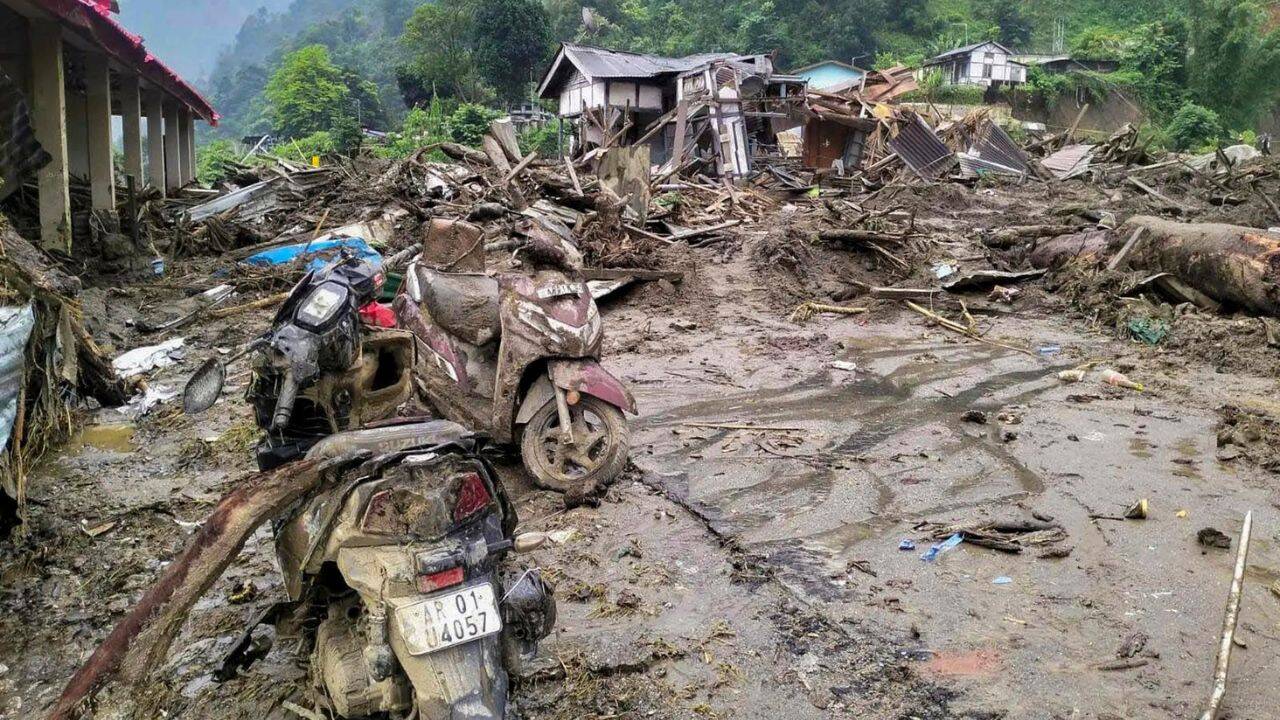
Northeast India is experiencing severe monsoon floods and landslides, with nearly 50,000 people in Assam affected by the rising waters. The floods have submerged villages and damaged agricultural land, impacting the livelihoods of many residents.
The people of Assam are struggling to come to terms with the devastation, with many wondering if their homes will still be standing tomorrow. The situation is dire, with thousands displaced and seeking refuge in relief camps. The heavy rainfall has caused extensive damage to homes and infrastructure across the region.
The monsoon season is an annual occurrence in Northeast India, but the severity of the floods this year has caught many off guard. The region's terrain, with its steep hills and narrow valleys, makes it prone to landslides and flooding. Despite efforts to mitigate the effects of the monsoon, the region is still struggling to cope with the aftermath of the floods.
The Assam government has set up relief camps to provide shelter and aid to those affected by the floods. However, many are still waiting for help to arrive, and the situation remains critical. The damage to agricultural land and infrastructure will have long-term consequences for the region's economy.
The Northeast region is no stranger to floods and landslides, but the frequency and severity of these events are increasing. Climate change is believed to be a contributing factor, with rising temperatures and changing weather patterns affecting the region's ecosystem.
As the people of Assam struggle to rebuild their lives, the government is facing criticism for its handling of the crisis. Many are calling for more to be done to prevent such disasters in the future, and to provide adequate support to those affected.
The situation in Assam is a stark reminder of the devastating impact of natural disasters on communities. The floods have not only damaged homes and infrastructure but have also disrupted livelihoods and caused immense human suffering.
In the coming days, the focus will be on providing relief and support to those affected by the floods. The government and aid agencies will need to work together to provide shelter, food, and medical aid to those in need. The road to recovery will be long and challenging, but with the right support, the people of Assam can rebuild their lives and communities.
The annual flood heartbreak in Northeast India is a reminder of the need for more effective disaster management and mitigation strategies. The region's vulnerability to floods and landslides requires a proactive approach to prevent such disasters in the future. As the region begins to rebuild, it is essential to prioritize the needs of those affected and work towards creating a more resilient and sustainable future.
The floods in Northeast India have significant implications for the country as a whole. The region's economy is heavily reliant on agriculture, and the damage to crops and infrastructure will have far-reaching consequences. The government will need to provide adequate support to the region to ensure that it can recover from this disaster and continue to contribute to the country's economy.
In conclusion, the severe monsoon floods in Northeast India have caused widespread devastation and disruption to the lives of thousands of people. The situation is critical, and the government and aid agencies must work together to provide relief and support to those affected. The region's vulnerability to floods and landslides requires a proactive approach to prevent such disasters in the future, and it is essential to prioritize the needs of those affected and work towards creating a more resilient and sustainable future.