Brazil Humpback Whales Surge to 35,000
Humpback whales in Brazil rebound, conservation efforts pay off, threats remain
'%3E%3Crect%20width%3D'96'%20height%3D'96'%20fill%3D'%23B3261E'%2F%3E%3Ccircle%20cx%3D'30'%20cy%3D'24'%20r%3D'44'%20fill%3D'%23fff'%20opacity%3D'.12'%2F%3E%3Ccircle%20cx%3D'60'%20cy%3D'74'%20r%3D'40'%20fill%3D'%23000'%20opacity%3D'.10'%2F%3E%3C%2Fg%3E%3Cg%20fill%3D'%23fff'%3E%3Crect%20x%3D'29'%20y%3D'49'%20width%3D'8'%20height%3D'19'%20rx%3D'1'%2F%3E%3Crect%20x%3D'39'%20y%3D'40'%20width%3D'9'%20height%3D'28'%20rx%3D'1'%2F%3E%3Crect%20x%3D'50'%20y%3D'45'%20width%3D'8'%20height%3D'23'%20rx%3D'1'%2F%3E%3Crect%20x%3D'60'%20y%3D'53'%20width%3D'7'%20height%3D'15'%20rx%3D'1'%2F%3E%3Crect%20x%3D'41'%20y%3D'34'%20width%3D'5'%20height%3D'6'%2F%3E%3C%2Fg%3E%3C%2Fsvg%3E)
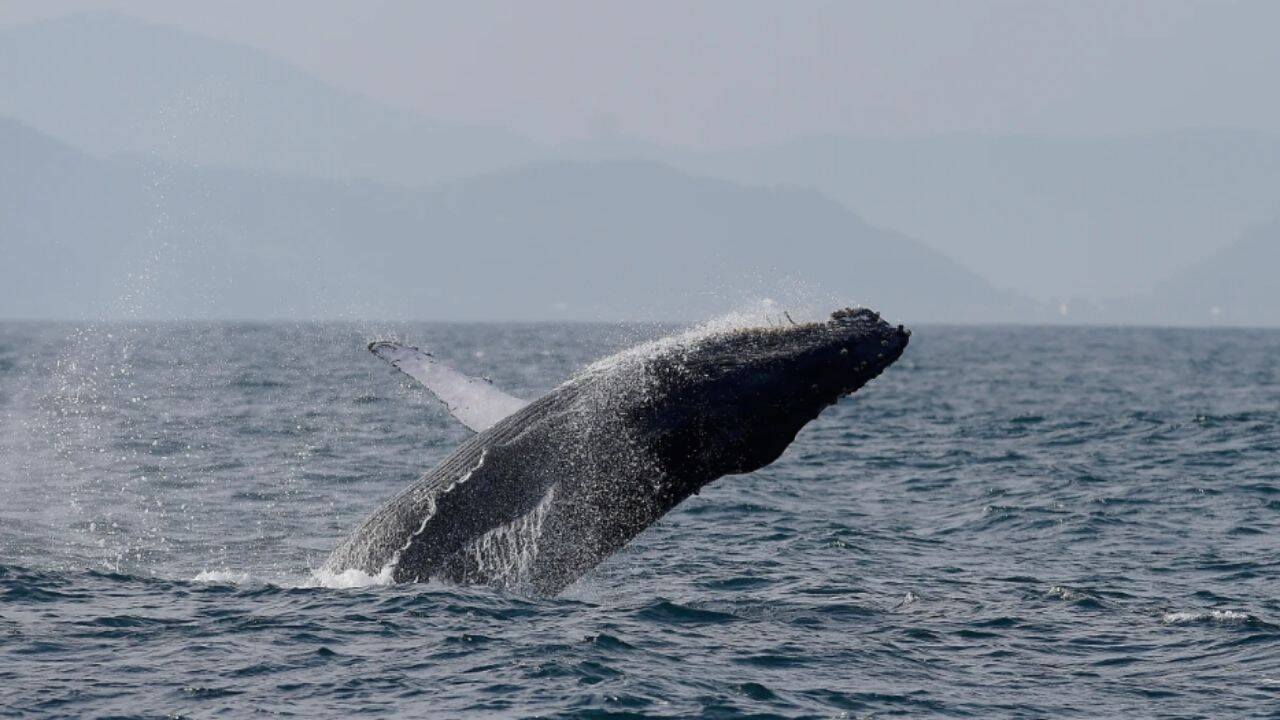
Brazil's humpback whale population has made a remarkable recovery, growing from approximately 2,000 to nearly 35,000 in just two decades. This significant increase is largely attributed to protection measures and a global ban on commercial whaling, which had previously pushed the species to the brink of extinction.
The recovery of humpback whales in Brazil's waters is a testament to the effectiveness of conservation efforts. Commercial whaling, once a major threat to the species, has been largely curtailed, allowing the whales to replenish their numbers.
Scientists are now focused on studying the migration patterns, family links, and behavior of these whales. This research aims to provide a deeper understanding of the species and its habits, ultimately informing further conservation efforts.
However, despite the progress made, humpback whales in Brazil still face numerous threats. Entanglement in fishing nets, collisions with ships, and the impacts of warming seas all pose significant dangers to the species.
The Brazilian government, in collaboration with international organizations, has implemented various measures to mitigate these threats. These include the establishment of protected areas, regulation of fishing practices, and education campaigns to raise awareness about the importance of whale conservation.
As the humpback whale population continues to grow, it is essential that conservation efforts remain a priority. The recovery of this species is not only a success story for Brazil but also a positive indicator for global whale conservation.
The study of humpback whales in Brazil also provides valuable insights into the broader impacts of human activities on marine ecosystems. By understanding the complex relationships between whales, their habitats, and human activities, scientists can develop more effective strategies for conserving marine biodiversity.
In conclusion, the rebound of humpback whales in Brazil is a significant conservation success, demonstrating the power of protection measures and international cooperation. As the species continues to face threats, ongoing research and conservation efforts are crucial to ensuring the long-term survival of these magnificent creatures.
Frequently asked questions
What was the initial population of humpback whales in Brazil?
The initial population of humpback whales in Brazil was approximately 2,000.
What factors contributed to the recovery of humpback whales in Brazil?
Protection measures and a global ban on commercial whaling contributed to the recovery of humpback whales in Brazil.