Ram Temple Enforces Uniform Dress Code For Priests
Priests at Ram Temple must wear uniform, Trust supplies attire
'%3E%3Crect%20width%3D'96'%20height%3D'96'%20fill%3D'%23B3261E'%2F%3E%3Ccircle%20cx%3D'30'%20cy%3D'24'%20r%3D'44'%20fill%3D'%23fff'%20opacity%3D'.12'%2F%3E%3Ccircle%20cx%3D'60'%20cy%3D'74'%20r%3D'40'%20fill%3D'%23000'%20opacity%3D'.10'%2F%3E%3C%2Fg%3E%3Cg%20fill%3D'%23fff'%3E%3Crect%20x%3D'29'%20y%3D'49'%20width%3D'8'%20height%3D'19'%20rx%3D'1'%2F%3E%3Crect%20x%3D'39'%20y%3D'40'%20width%3D'9'%20height%3D'28'%20rx%3D'1'%2F%3E%3Crect%20x%3D'50'%20y%3D'45'%20width%3D'8'%20height%3D'23'%20rx%3D'1'%2F%3E%3Crect%20x%3D'60'%20y%3D'53'%20width%3D'7'%20height%3D'15'%20rx%3D'1'%2F%3E%3Crect%20x%3D'41'%20y%3D'34'%20width%3D'5'%20height%3D'6'%2F%3E%3C%2Fg%3E%3C%2Fsvg%3E)
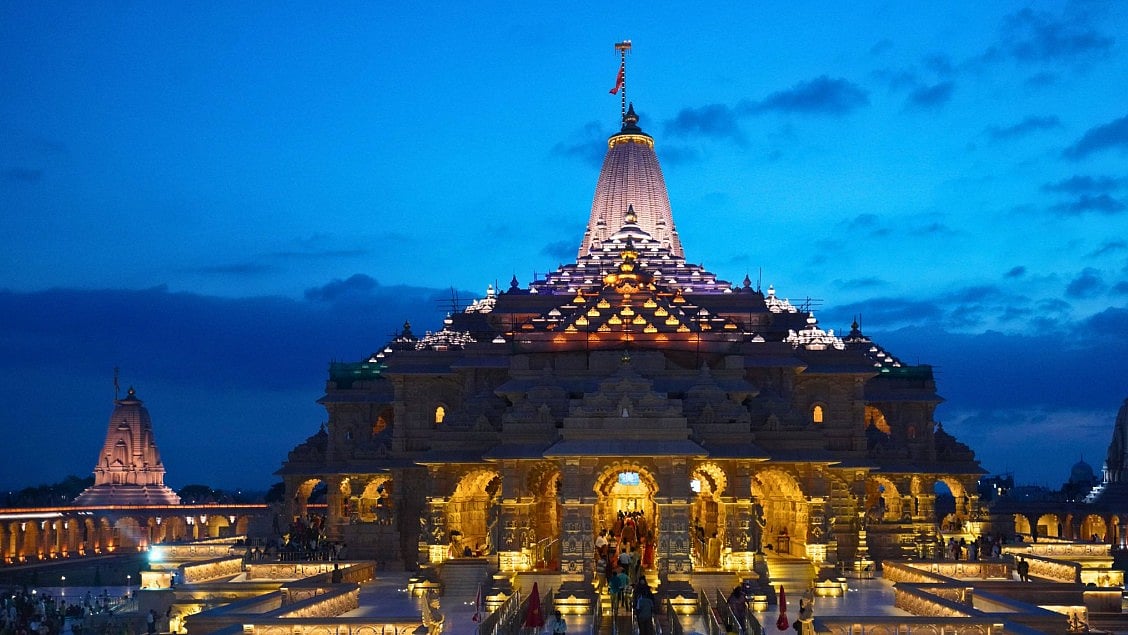
The Shri Ram Janmabhoomi Teerth Kshetra Trust has enforced a mandatory dress code for all priests serving at the Ram Temple complex in Ayodhya.
The new rule, which came into effect from Guru Purnima, requires all 13 temporary priests posted at the six subsidiary temples within the parikrama and the Sheshavatar Temple to wear the Trust-prescribed attire.
This attire comprises a yellow pitambari chaubandi, dhoti, and safa while performing religious rituals.
The Trust has supplied the official uniforms to all the priests, with two sets for summer and two for winter.
The uniform bears the Trust's maroon-coloured emblem on the left side.
Under the new arrangement, priests will arrive at the temple in regular clothes and change into the prescribed uniform inside the temple premises before beginning their duties.
Separate facilities have been created to safely store their personal clothing.
Temple authorities said the uniform will help devotees and staff easily identify priests within the sprawling temple complex.
The dress code was introduced on July 1, 2024, but was not enforced uniformly in the initial months due to reservations from the then chief priest, the late Acharya Satyendra Das.
Following his demise, the Trust has made the dress code mandatory for all priests without exception.
The priests at the Ram Lalla and Ram Parivar temples begin their duties at 4 am, conducting the daily rituals from the deity's awakening to the night shayan ceremony.
These include Madhuparka, Bal Bhog, Mangala Aarti, abhishek, and shringar at designated times.
The temple is opened for devotees at 7 am every day.
The Trust has also clarified that no air conditioning system has been installed inside the sanctum sanctorum as the temple has been constructed in the traditional North Indian Nagara architectural style, which relies on natural ventilation.
The move brings all priests serving in the temple complex under a common dress code, promoting unity and ease of identification.
This development is significant for the Ram Temple, as it aims to maintain a consistent and respectful atmosphere for devotees and staff alike.
The enforcement of the dress code is a step towards achieving this goal, and it will be interesting to see how it impacts the overall experience of visiting the temple.
Frequently asked questions
What is the new dress code for Ram Temple priests?
The new dress code comprises a yellow pitambari chaubandi, dhoti, and safa with the Trust's maroon-coloured emblem.
Why was the dress code introduced?
The dress code was introduced to promote unity and ease of identification among priests in the temple complex.