NDRF Trains Nashik Residents on Disaster Management
NDRF conducts training in Peth and Dindori, teaches citizens disaster precautions.
'%3E%3Crect%20width%3D'96'%20height%3D'96'%20fill%3D'%23B3261E'%2F%3E%3Ccircle%20cx%3D'30'%20cy%3D'24'%20r%3D'44'%20fill%3D'%23fff'%20opacity%3D'.12'%2F%3E%3Ccircle%20cx%3D'60'%20cy%3D'74'%20r%3D'40'%20fill%3D'%23000'%20opacity%3D'.10'%2F%3E%3C%2Fg%3E%3Cg%20fill%3D'%23fff'%3E%3Crect%20x%3D'29'%20y%3D'49'%20width%3D'8'%20height%3D'19'%20rx%3D'1'%2F%3E%3Crect%20x%3D'39'%20y%3D'40'%20width%3D'9'%20height%3D'28'%20rx%3D'1'%2F%3E%3Crect%20x%3D'50'%20y%3D'45'%20width%3D'8'%20height%3D'23'%20rx%3D'1'%2F%3E%3Crect%20x%3D'60'%20y%3D'53'%20width%3D'7'%20height%3D'15'%20rx%3D'1'%2F%3E%3Crect%20x%3D'41'%20y%3D'34'%20width%3D'5'%20height%3D'6'%2F%3E%3C%2Fg%3E%3C%2Fsvg%3E)
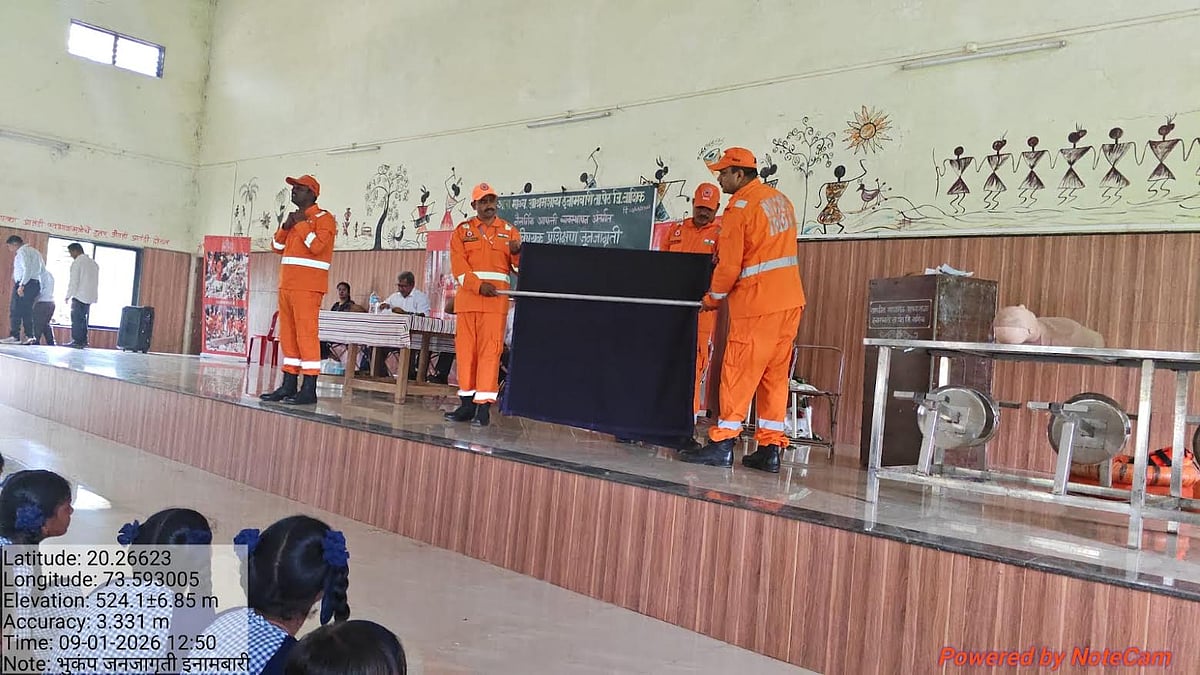
A special training and public awareness programme was conducted by the Nashik District Disaster Management Authority in collaboration with the National Disaster Response Force (NDRF) in Nashik's Peth and Dindori talukas. The programme was held in response to recent earthquake incidents reported in the area.
The training sessions were held at Inambari in Peth taluka and the Dindori Tehsil Office, where NDRF teams guided citizens on precautions to be taken during earthquakes, methods of moving to safer locations, and measures to be adopted during emergency situations. The team also conducted live demonstrations on rescue operations in various disaster situations.
Peth Tehsildar Shivaji Gawali, government employees, citizens, and students attended the morning session at Inambari. Similarly, Dindori Tehsildar Mukesh Kamble, Resident Naib Tehsildar Dr Chaitali Darade, circle officers, talathis, and other government employees and citizens attended the afternoon session at the Dindori Tehsil Office.
During the sessions, the NDRF team provided detailed information on precautions and measures to be taken during earthquakes, fires, floods, and other natural disasters. Guidance was also provided on disaster preparedness, remaining calm during emergencies, evacuating to safe locations, and cooperating with the administration in rescue and relief operations.
The initiatives were organised to create awareness among citizens about disaster management and to minimise the potential loss of lives and property through advance preparedness, proper training, and public awareness. While the intensity of natural disasters cannot be reduced, the impact can be significantly minimised through such efforts.
The Nashik District Disaster Management Authority and the NDRF aim to equip citizens with the necessary knowledge and skills to respond to disasters effectively. By conducting such training programmes, they hope to reduce the risk of casualties and damage to property in the event of a disaster.
The importance of disaster management and preparedness cannot be overstated, especially in areas prone to natural disasters like earthquakes. The NDRF's efforts in Nashik are a step in the right direction, and it is essential for citizens to take an active role in disaster preparedness and response.
In conclusion, the NDRF's training programme in Nashik's Peth and Dindori talukas is a significant initiative in creating awareness and promoting disaster preparedness among citizens. By working together, the authorities and citizens can minimize the impact of natural disasters and ensure a safer and more resilient community.
The success of such initiatives depends on the active participation of citizens, and it is crucial for residents to take the necessary precautions and follow the guidelines provided by the authorities. By doing so, they can contribute to creating a safer and more disaster-resilient community in Nashik.
The NDRF's efforts in Nashik serve as a model for other districts and cities to follow, and it is essential for authorities across the country to prioritize disaster management and preparedness. By working together, we can create a safer and more resilient India, capable of withstanding the impact of natural disasters.
In the end, disaster management is a collective responsibility, and it requires the active participation of citizens, authorities, and emergency responders. The NDRF's training programme in Nashik is a significant step in this direction, and it is essential for us to continue working together to create a safer and more disaster-resilient community.
The impact of the NDRF's training programme in Nashik will be felt in the long run, and it is essential for the authorities to continue conducting such initiatives to create awareness and promote disaster preparedness among citizens. By doing so, we can minimize the risk of casualties and damage to property in the event of a disaster and create a safer and more resilient community in Nashik.
The NDRF's efforts in Nashik are a testament to the importance of disaster management and preparedness, and it is essential for us to prioritize this aspect of emergency response. By working together, we can create a safer and more resilient India, capable of withstanding the impact of natural disasters.
In conclusion, the NDRF's training programme in Nashik is a significant initiative in creating awareness and promoting disaster preparedness among citizens. It is essential for authorities across the country to prioritize disaster management and preparedness, and for citizens to take an active role in disaster response and recovery. By doing so, we can minimize the impact of natural disasters and create a safer and more resilient community in Nashik and across India.
The significance of the NDRF's training programme in Nashik cannot be overstated, and it is essential for us to continue working together to create a safer and more disaster-resilient community. The programme serves as a model for other districts and cities to follow, and it is crucial for authorities to prioritize disaster management and preparedness.
In the end, disaster management is a collective responsibility, and it requires the active participation of citizens, authorities, and emergency responders. The NDRF's training programme in Nashik is a significant step in this direction, and it is essential for us to continue working together to create a safer and more resilient community in Nashik and across India.
The NDRF's efforts in Nashik are a step in the right direction, and it is essential for citizens to take an active role in disaster preparedness and response. By working together, we can minimize the impact of natural disasters and create a safer and more resilient community in Nashik.
The importance of disaster management and preparedness cannot be overstated, especially in areas prone to natural disasters like earthquakes. The NDRF's efforts in Nashik are a testament to the importance of disaster management and preparedness, and it is essential for us to prioritize this aspect of emergency response.
In conclusion, the NDRF's training programme in Nashik is a significant initiative in creating awareness and promoting disaster preparedness among citizens. It is essential for authorities across the country to prioritize disaster management and preparedness, and for citizens to take an active role in disaster response and recovery. By doing so, we can minimize the impact of natural disasters and create a safer and more resilient community in Nashik and across India.
What it means for Mumbai and India is that disaster management and preparedness are crucial aspects of emergency response, and it is essential for authorities and citizens to work together to create a safer and more resilient community. The NDRF's efforts in Nashik serve as a model for other districts and cities to follow, and it is crucial for authorities to prioritize disaster management and preparedness.
The success of such initiatives depends on the active participation of citizens, and it is crucial for residents to take the necessary precautions and follow the guidelines provided by the authorities. By doing so, they can contribute to creating a safer and more disaster-resilient community in Nashik and across India.
In the end, disaster management is a collective responsibility, and it requires the active participation of citizens, authorities, and emergency responders. The NDRF's training programme in Nashik is a significant step in this direction, and it is essential for us to continue working together to create a safer and more resilient community in Nashik and across India.
Frequently asked questions
What is the purpose of NDRF's training programme in Nashik?
The purpose of NDRF's training programme in Nashik is to create awareness and promote disaster preparedness among citizens.
What are the key aspects of disaster management covered in the training programme?
The training programme covers key aspects of disaster management, including precautions to be taken during earthquakes, methods of moving to safer locations, and measures to be adopted during emergency situations.