SC Asks CBSE to Exempt Class VI from 3-Language Policy
SC reiterates call to CBSE, 3-language policy exemption sought
'%3E%3Crect%20width%3D'96'%20height%3D'96'%20fill%3D'%23B3261E'%2F%3E%3Ccircle%20cx%3D'30'%20cy%3D'24'%20r%3D'44'%20fill%3D'%23fff'%20opacity%3D'.12'%2F%3E%3Ccircle%20cx%3D'60'%20cy%3D'74'%20r%3D'40'%20fill%3D'%23000'%20opacity%3D'.10'%2F%3E%3C%2Fg%3E%3Cg%20fill%3D'%23fff'%3E%3Crect%20x%3D'29'%20y%3D'49'%20width%3D'8'%20height%3D'19'%20rx%3D'1'%2F%3E%3Crect%20x%3D'39'%20y%3D'40'%20width%3D'9'%20height%3D'28'%20rx%3D'1'%2F%3E%3Crect%20x%3D'50'%20y%3D'45'%20width%3D'8'%20height%3D'23'%20rx%3D'1'%2F%3E%3Crect%20x%3D'60'%20y%3D'53'%20width%3D'7'%20height%3D'15'%20rx%3D'1'%2F%3E%3Crect%20x%3D'41'%20y%3D'34'%20width%3D'5'%20height%3D'6'%2F%3E%3C%2Fg%3E%3C%2Fsvg%3E)
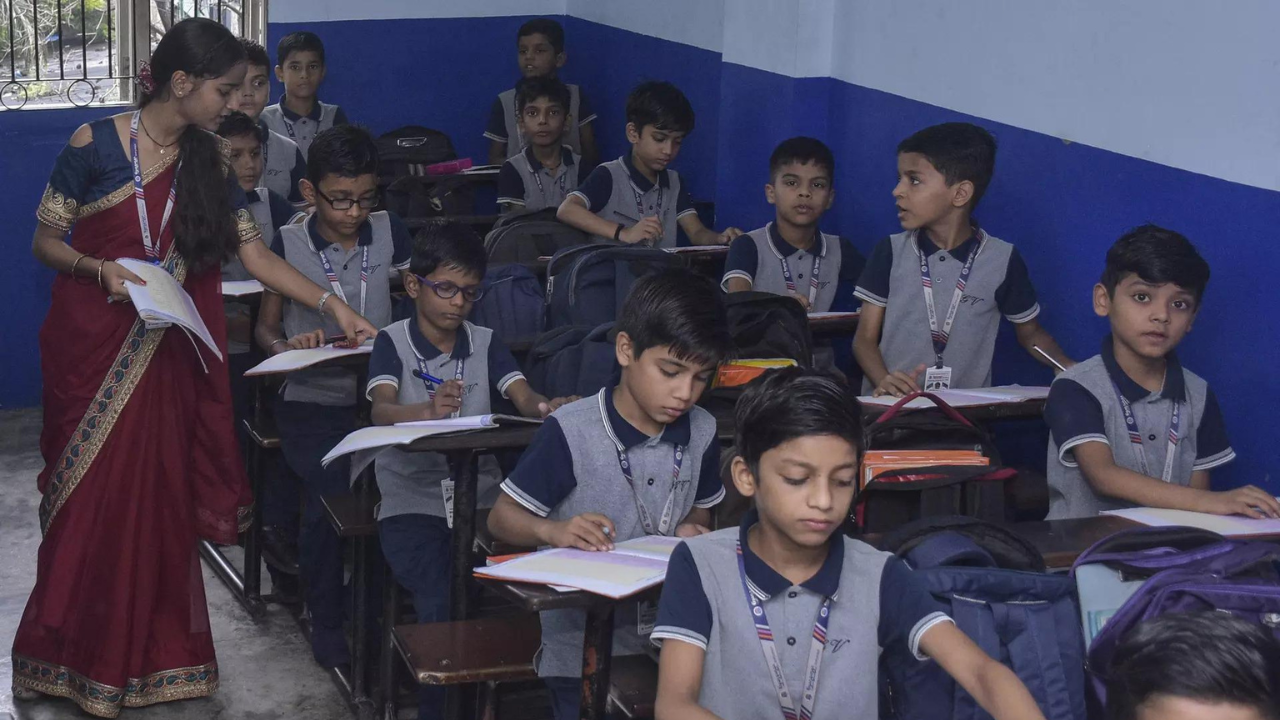
The Supreme Court has reiterated its call to the Central Board of Secondary Education (CBSE) to exempt Class VI students from its three-language policy. This decision comes after the court acknowledged that the issue of whether English is a native or foreign language requires a full-fledged hearing.
The CBSE's three-language policy has been a topic of discussion for some time now, with many arguing that it puts undue pressure on students. The policy requires students to study three languages, including English, Hindi, and a regional language.
The Supreme Court's decision to ask the CBSE to exempt Class VI students from this policy is seen as a significant move. The court has recognized that the issue is complex and requires a detailed hearing. The CBSE has been asked to reconsider its policy and provide relief to Class VI students.
The three-language policy was introduced to promote the study of Indian languages and to reduce the dominance of English in the education system. However, many have argued that the policy is impractical and puts too much pressure on students.
The Supreme Court's decision is expected to have a significant impact on the education system in India. The court's call to exempt Class VI students from the three-language policy is seen as a step towards reducing the burden on students and promoting a more practical approach to language education.
The CBSE is expected to respond to the Supreme Court's call and provide a solution to the issue. The board may consider exempting Class VI students from the three-language policy or introducing alternative measures to reduce the burden on students.
In recent years, there has been a growing debate about the relevance of the three-language policy. Many have argued that the policy is outdated and does not reflect the changing needs of the education system. The Supreme Court's decision is seen as a significant step towards addressing these concerns and promoting a more effective approach to language education.
The issue of whether English is a native or foreign language is complex and requires a detailed hearing. The Supreme Court has recognized this and has asked the CBSE to reconsider its policy. The court's decision is expected to have a significant impact on the education system in India and is seen as a step towards promoting a more practical approach to language education.
In conclusion, the Supreme Court's call to the CBSE to exempt Class VI students from its three-language policy is a significant move. The court's decision is expected to have a significant impact on the education system in India and is seen as a step towards promoting a more practical approach to language education.
Frequently asked questions
What is the three-language policy of CBSE?
The three-language policy requires students to study three languages, including English, Hindi, and a regional language.
Why has the SC asked CBSE to exempt Class VI students?
The SC has asked CBSE to exempt Class VI students due to the complexity of the issue and the need for a full-fledged hearing on whether English is a native or foreign language.