Santosh Pandit Detained by Pune Police
Pune Police detain social media activist Santosh Pandit, booked for allegedly abusive video on Minister Chandrakant Patil. Pandit was taken from his residence around 1 am on Thursday.
'%3E%3Crect%20width%3D'96'%20height%3D'96'%20fill%3D'%231A5276'%2F%3E%3Ccircle%20cx%3D'30'%20cy%3D'24'%20r%3D'44'%20fill%3D'%23fff'%20opacity%3D'.12'%2F%3E%3Ccircle%20cx%3D'60'%20cy%3D'74'%20r%3D'40'%20fill%3D'%23000'%20opacity%3D'.10'%2F%3E%3C%2Fg%3E%3Cg%20fill%3D'%23fff'%3E%3Cpath%20d%3D'M31%2041%20L48%2031%20L65%2041%20Z'%2F%3E%3Crect%20x%3D'33'%20y%3D'43'%20width%3D'4'%20height%3D'17'%2F%3E%3Crect%20x%3D'41'%20y%3D'43'%20width%3D'4'%20height%3D'17'%2F%3E%3Crect%20x%3D'51'%20y%3D'43'%20width%3D'4'%20height%3D'17'%2F%3E%3Crect%20x%3D'59'%20y%3D'43'%20width%3D'4'%20height%3D'17'%2F%3E%3Crect%20x%3D'30'%20y%3D'62'%20width%3D'36'%20height%3D'4'%20rx%3D'1'%2F%3E%3C%2Fg%3E%3C%2Fsvg%3E)
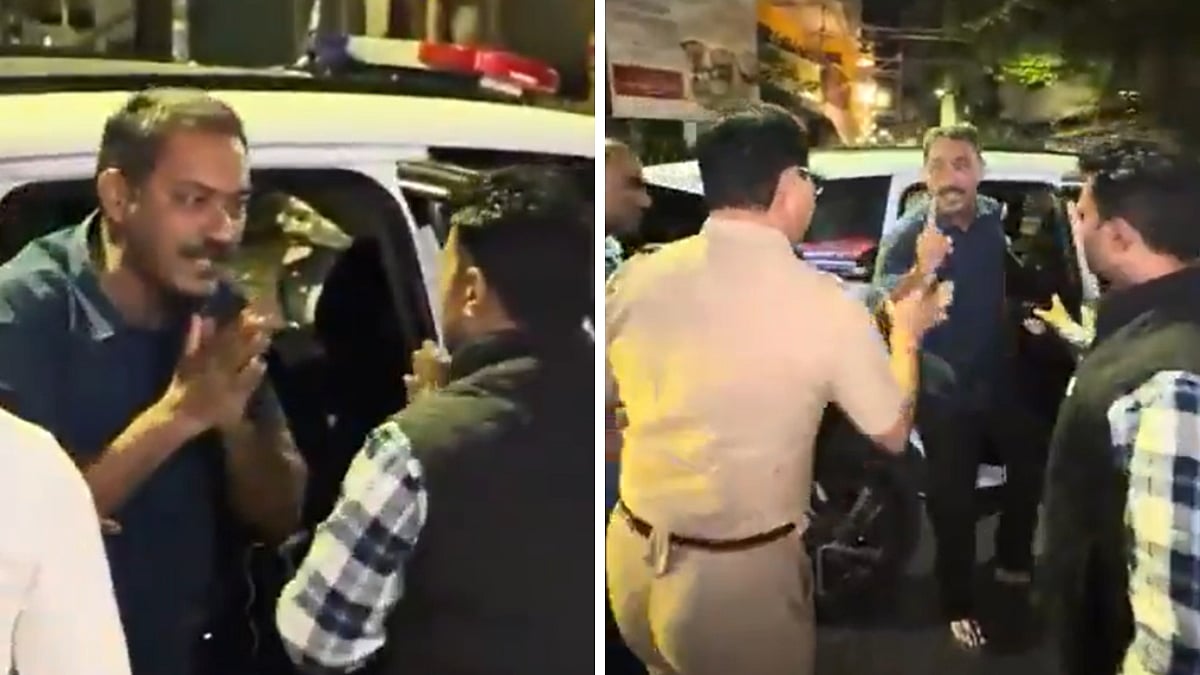
Social media activist and content creator Santosh Pandit was taken into custody by Pune Police around 1 am on Thursday from his residence. This comes days after the Deccan Police registered a case against him over an allegedly abusive video targeting Maharashtra minister Chandrakant Patil.
The case was registered following a complaint by BJP’s former local corporator Sunil Pandey, who alleged that the accused had publicly defamed Patil through a video uploaded on a social media account named ‘Rajkaran Express’. The video criticised Patil over allegations that elected representatives were ignoring issues faced by the public, but Pandey claimed that the content went beyond political criticism and contained abusive and indecent language directed at the minister.
The video was later widely circulated on social media, reportedly leading to anger among BJP office-bearers and workers. Pandey approached the Deccan Police, alleging that the video had been created and circulated with an intention to defame Patil. Based on the complaint, police registered a case under Sections 356, 296 and 3(5) of the Bharatiya Nyaya Sanhita (BNS).
Assistant Police Inspector S. Jadhav is conducting the investigation, which includes examining the social media account, the contents of the video, and the circumstances surrounding its creation and circulation.
This is not the first time Santosh Pandit has been in the news. Just days ago, he confronted BJP MLA Gopichand Padalkar over his SUV allegedly lacking an HSRP while travelling on a road. When Pandit questioned the MLA about the plate, Padalkar called it a “Marathi number plate” and later asked, “Where is your helmet?”
Pandit's detention has sparked interest on social media, with many users sharing videos of the late-night action. The incident highlights the ongoing debate about freedom of speech and the limits of criticism of public figures in India.
The Maharashtra government has been facing criticism over various issues, including the handling of public grievances. The opposition has been accusing the government of ignoring the concerns of the common people, and the video in question appears to be a part of this larger debate.
As the investigation continues, it remains to be seen how the case against Santosh Pandit will unfold. The incident has already sparked a lively discussion on social media, with many users weighing in on the issue of freedom of speech and the limits of criticism of public figures.
In conclusion, the detention of Santosh Pandit by Pune Police is a significant development in the ongoing debate about freedom of speech and the limits of criticism of public figures in India. The incident highlights the need for a nuanced discussion about the balance between the right to free speech and the need to protect public figures from defamation and abuse.
The case against Pandit is likely to have implications for social media activists and content creators in India, who often use their platforms to criticise public figures and policies. As the investigation continues, it will be important to watch how the case unfolds and what implications it may have for freedom of speech in India.
The Maharashtra government has a responsibility to protect the rights of its citizens, including the right to free speech. However, it also has a responsibility to protect public figures from defamation and abuse. The case against Santosh Pandit highlights the need for a balanced approach to these competing interests.
In the end, the detention of Santosh Pandit by Pune Police is a reminder that the debate about freedom of speech and the limits of criticism of public figures in India is ongoing and complex. As the case against Pandit continues to unfold, it will be important to watch how the incident affects the larger debate about freedom of speech in India.
The incident also raises questions about the role of social media in Indian society. Social media platforms have become an important tool for citizens to express their opinions and criticise public figures. However, they also pose challenges for law enforcement and the government, who must balance the need to protect public figures from defamation and abuse with the need to protect the right to free speech.
As the investigation into the case against Santosh Pandit continues, it will be important to consider the implications of the incident for social media activists and content creators in India. The case highlights the need for a nuanced discussion about the balance between the right to free speech and the need to protect public figures from defamation and abuse.
In conclusion, the detention of Santosh Pandit by Pune Police is a significant development in the ongoing debate about freedom of speech and the limits of criticism of public figures in India. The incident highlights the need for a balanced approach to competing interests and the importance of protecting the rights of citizens, including the right to free speech.
What it means for Mumbai and India is that the case against Santosh Pandit will have implications for social media activists and content creators, and will likely spark a lively discussion about the balance between the right to free speech and the need to protect public figures from defamation and abuse.
Frequently asked questions
Why was Santosh Pandit detained by Pune Police?
Santosh Pandit was detained by Pune Police for allegedly posting an abusive video on social media targeting Maharashtra minister Chandrakant Patil.
What are the charges against Santosh Pandit?
The charges against Santosh Pandit include sections 356, 296 and 3(5) of the Bharatiya Nyaya Sanhita (BNS) for allegedly defaming Minister Chandrakant Patil.