UK Seeks FIFA Action Over Falklands Poster
Argentina's World Cup win sparks controversy, UK demands action
'%3E%3Crect%20width%3D'96'%20height%3D'96'%20fill%3D'%234A235A'%2F%3E%3Ccircle%20cx%3D'30'%20cy%3D'24'%20r%3D'44'%20fill%3D'%23fff'%20opacity%3D'.12'%2F%3E%3Ccircle%20cx%3D'60'%20cy%3D'74'%20r%3D'40'%20fill%3D'%23000'%20opacity%3D'.10'%2F%3E%3C%2Fg%3E%3Cg%20fill%3D'none'%20stroke%3D'%23fff'%20stroke-width%3D'3'%3E%3Ccircle%20cx%3D'48'%20cy%3D'48'%20r%3D'16'%2F%3E%3Cellipse%20cx%3D'48'%20cy%3D'48'%20rx%3D'6.5'%20ry%3D'16'%2F%3E%3Cline%20x1%3D'32'%20y1%3D'42'%20x2%3D'64'%20y2%3D'42'%2F%3E%3Cline%20x1%3D'32'%20y1%3D'54'%20x2%3D'64'%20y2%3D'54'%2F%3E%3C%2Fg%3E%3C%2Fsvg%3E)
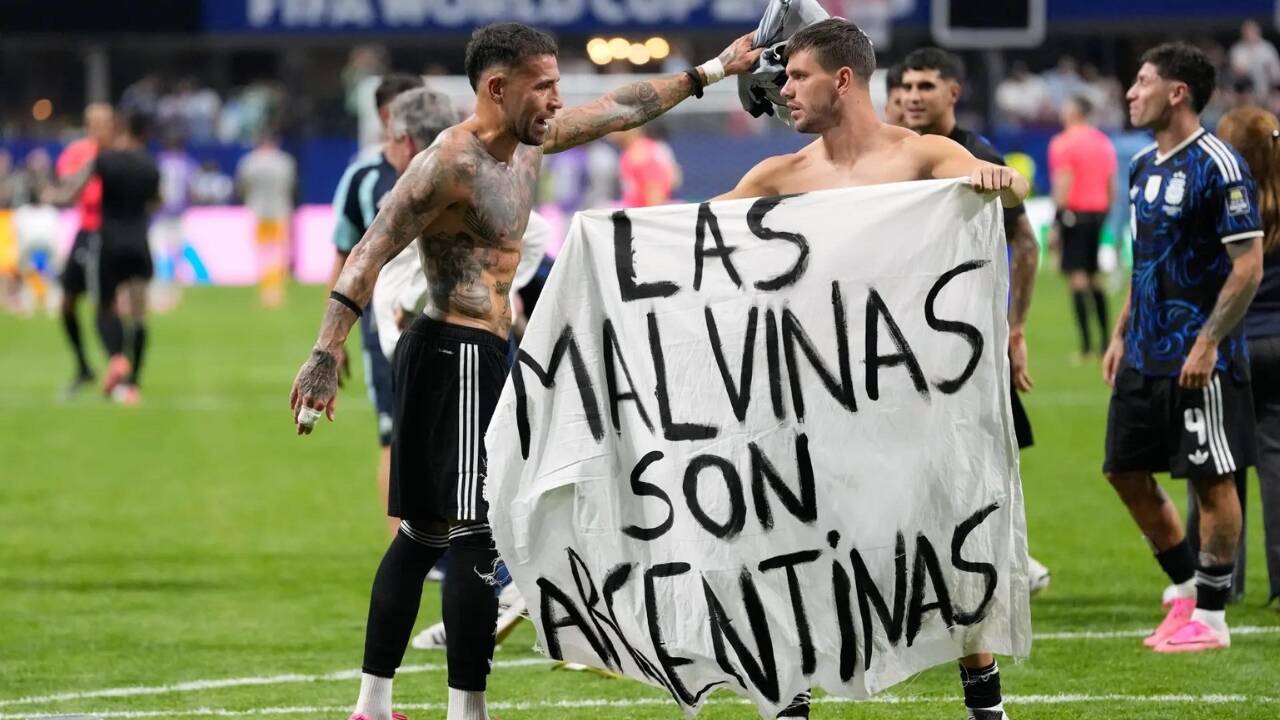
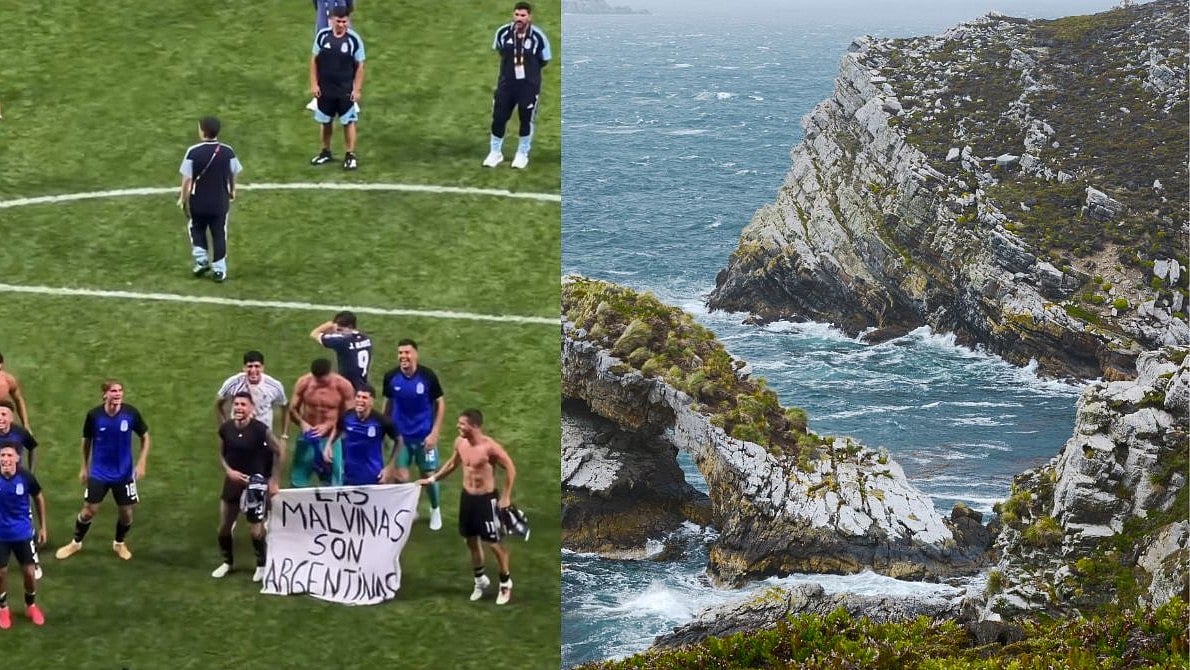
The British government has called on FIFA to take action against Argentina after the country's football players posed with a banner reading 'Las Malvinas son Argentinas' following their World Cup semifinal win over England. The match, which took place in Atlanta, saw Argentina defeat England 2-1.
The banner, which translates to 'The Malvinas are Argentine', refers to the Falkland Islands, a British overseas territory in the South Atlantic that has been a point of contention between the UK and Argentina for decades. Argentina claims sovereignty over the islands, which they refer to as Islas Malvinas.
The incident has sparked a diplomatic row between the two countries, with the UK government expressing its displeasure at the display. The British government has asked FIFA to take action against Argentina, citing the organization's rules against political displays during matches.
The Falkland Islands have been a source of tension between the UK and Argentina since the 1982 war, in which British forces defeated an Argentine invasion of the islands. The dispute over the islands' sovereignty remains unresolved, with Argentina continuing to claim ownership.
The incident has also sparked debate about the role of politics in sports, with some arguing that the banner was a legitimate expression of Argentine patriotism, while others see it as a provocative gesture that crosses the line into politics.
FIFA has yet to respond to the UK's request for action, but the incident is likely to have significant implications for the ongoing World Cup tournament. The controversy has also highlighted the complex and often fraught relationship between sports and politics, particularly in cases where national identity and sovereignty are at stake.
The UK government's decision to involve FIFA in the dispute reflects the organization's role as a global governing body for football, as well as its rules against political displays during matches. However, the incident also raises questions about the limits of free expression in sports, and the extent to which political statements should be allowed during international competitions.
In the context of the World Cup, the incident has sparked a wider debate about the role of national identity and politics in sports. As the tournament continues, it remains to be seen how FIFA will respond to the UK's request for action, and what implications this may have for future matches.
The controversy surrounding the Falklands poster has significant implications for the relationship between the UK and Argentina, and highlights the ongoing tensions between the two countries over the disputed islands. As the World Cup continues, it is likely that this incident will remain a major talking point, both on and off the pitch.
In terms of its significance for India, the incident highlights the complex and often fraught nature of international relations, particularly in cases where national identity and sovereignty are at stake. The controversy surrounding the Falklands poster also raises questions about the role of politics in sports, and the extent to which national identity should be expressed during international competitions.
Overall, the incident has sparked a significant diplomatic row between the UK and Argentina, and has highlighted the complex and often fraught relationship between sports and politics. As the World Cup continues, it remains to be seen how FIFA will respond to the UK's request for action, and what implications this may have for future matches.