Penguins Struggle to Find Food Due to Sea Ice
Penguins face challenges in finding food, Sea ice affects prey behavior
'%3E%3Crect%20width%3D'96'%20height%3D'96'%20fill%3D'%23B3261E'%2F%3E%3Ccircle%20cx%3D'30'%20cy%3D'24'%20r%3D'44'%20fill%3D'%23fff'%20opacity%3D'.12'%2F%3E%3Ccircle%20cx%3D'60'%20cy%3D'74'%20r%3D'40'%20fill%3D'%23000'%20opacity%3D'.10'%2F%3E%3C%2Fg%3E%3Cg%20fill%3D'%23fff'%3E%3Crect%20x%3D'29'%20y%3D'49'%20width%3D'8'%20height%3D'19'%20rx%3D'1'%2F%3E%3Crect%20x%3D'39'%20y%3D'40'%20width%3D'9'%20height%3D'28'%20rx%3D'1'%2F%3E%3Crect%20x%3D'50'%20y%3D'45'%20width%3D'8'%20height%3D'23'%20rx%3D'1'%2F%3E%3Crect%20x%3D'60'%20y%3D'53'%20width%3D'7'%20height%3D'15'%20rx%3D'1'%2F%3E%3Crect%20x%3D'41'%20y%3D'34'%20width%3D'5'%20height%3D'6'%2F%3E%3C%2Fg%3E%3C%2Fsvg%3E)
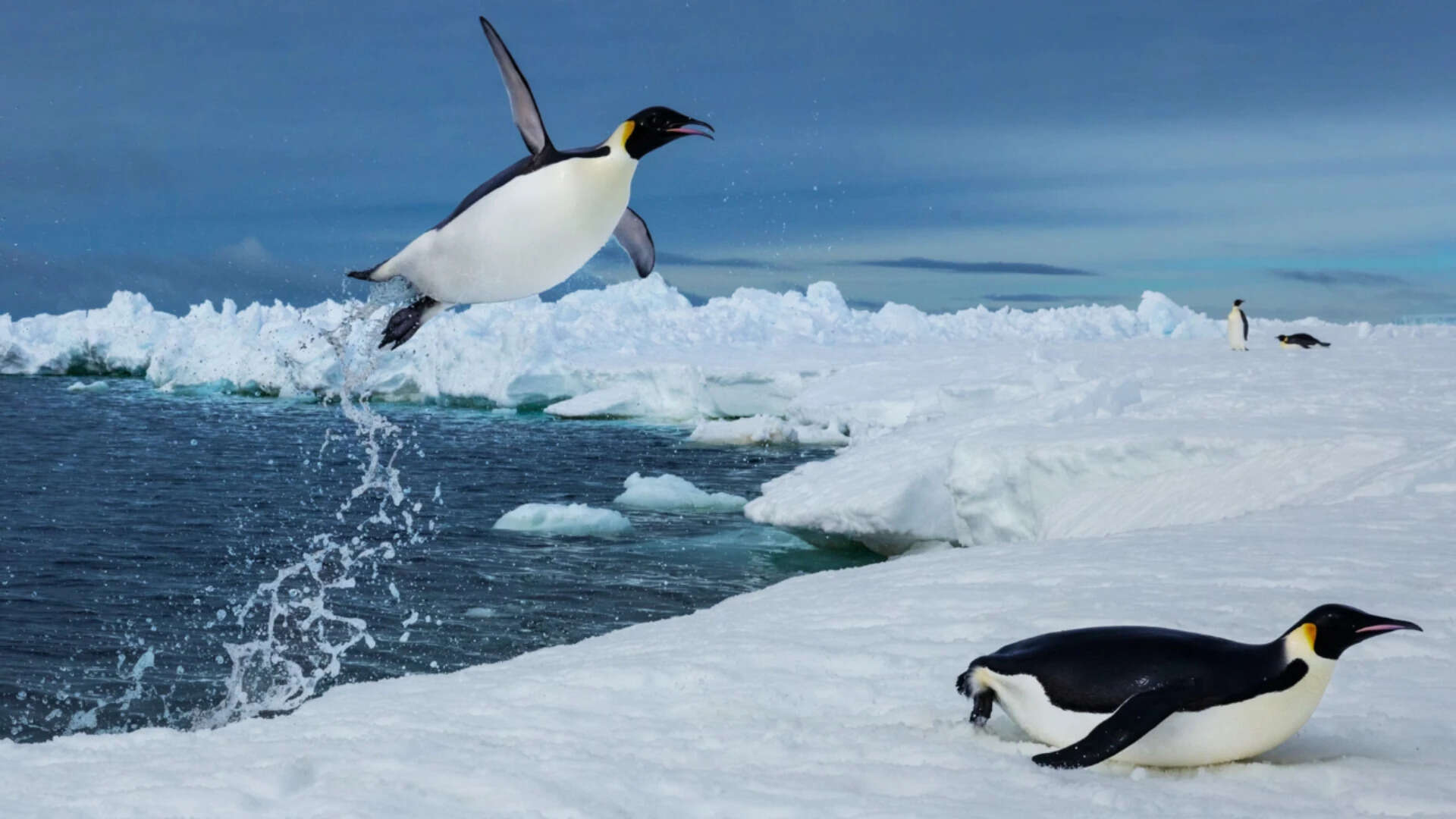
A recent study has shed light on the struggles penguins face in sourcing food due to altered prey behaviors. The study, which tracked 6,000 penguin dives, reveals that sea ice can make prey harder to reach. As krill and fish migrate deeper or spread out to elude predators, penguins must dive greater depths and swim longer distances in search of sustenance.
The study highlights the importance of considering these changing hunting dynamics in conservation initiatives. Penguins are adapting to the evolving oceans, but it's crucial for conservation efforts to take into account the impact of sea ice on prey behavior.
Penguins are highly efficient swimmers, but the changing ocean conditions are making it difficult for them to find food. The study suggests that penguins are diving deeper and swimming longer distances to catch their prey, which can be energetically costly.
The impact of sea ice on prey behavior is a complex issue. As the ocean warms, sea ice is melting at an alarming rate, which is affecting the distribution and behavior of krill and fish. This, in turn, is making it harder for penguins to find food.
The study's findings have significant implications for conservation initiatives. It highlights the need for conservation efforts to consider the impact of sea ice on prey behavior and the subsequent effect on penguin populations.
In recent years, penguin populations have been declining due to various factors, including climate change, overfishing, and habitat destruction. The study's findings suggest that conservation efforts should focus on protecting penguin habitats and reducing the impact of human activities on the ocean ecosystem.
The ocean ecosystem is complex and interconnected, and changes in one part of the ecosystem can have far-reaching consequences. The study's findings highlight the need for a comprehensive approach to conservation, one that takes into account the impact of sea ice on prey behavior and the subsequent effect on penguin populations.
In conclusion, the study's findings have significant implications for conservation initiatives. It highlights the need for conservation efforts to consider the impact of sea ice on prey behavior and the subsequent effect on penguin populations. As the ocean continues to evolve, it's crucial for conservation efforts to adapt and take into account the changing hunting dynamics.
The study's findings are a reminder of the importance of protecting the ocean ecosystem and the species that depend on it. As we continue to learn more about the impact of sea ice on prey behavior, we can develop more effective conservation strategies to protect penguin populations and the ocean ecosystem as a whole.
The impact of sea ice on penguin populations is a pressing issue that requires immediate attention. The study's findings suggest that conservation efforts should focus on protecting penguin habitats and reducing the impact of human activities on the ocean ecosystem. By taking a comprehensive approach to conservation, we can help protect penguin populations and the ocean ecosystem for future generations.
The study's findings are a significant contribution to our understanding of the impact of sea ice on penguin populations. It highlights the need for continued research and conservation efforts to protect penguin populations and the ocean ecosystem. As we move forward, it's crucial that we consider the impact of sea ice on prey behavior and the subsequent effect on penguin populations.
In the end, the study's findings are a reminder of the importance of protecting the ocean ecosystem and the species that depend on it. By working together, we can develop effective conservation strategies to protect penguin populations and the ocean ecosystem as a whole.
The changing ocean conditions and the impact of sea ice on prey behavior are significant concerns for penguin populations. The study's findings suggest that conservation efforts should focus on protecting penguin habitats and reducing the impact of human activities on the ocean ecosystem.
The ocean ecosystem is facing numerous challenges, including climate change, overfishing, and habitat destruction. The study's findings highlight the need for a comprehensive approach to conservation, one that takes into account the impact of sea ice on prey behavior and the subsequent effect on penguin populations.
In conclusion, the study's findings have significant implications for conservation initiatives. The impact of sea ice on penguin populations is a pressing issue that requires immediate attention. By taking a comprehensive approach to conservation, we can help protect penguin populations and the ocean ecosystem for future generations.
What it means for the world is that the ocean ecosystem is facing numerous challenges, and it's crucial that we take a comprehensive approach to conservation. The study's findings are a significant contribution to our understanding of the impact of sea ice on penguin populations, and they highlight the need for continued research and conservation efforts to protect penguin populations and the ocean ecosystem.