Ancient Sea Covered South Dakota
Millions of years ago, a vast sea split North America. Its creatures' fossils still shine today.
'%3E%3Crect%20width%3D'96'%20height%3D'96'%20fill%3D'%23B3261E'%2F%3E%3Ccircle%20cx%3D'30'%20cy%3D'24'%20r%3D'44'%20fill%3D'%23fff'%20opacity%3D'.12'%2F%3E%3Ccircle%20cx%3D'60'%20cy%3D'74'%20r%3D'40'%20fill%3D'%23000'%20opacity%3D'.10'%2F%3E%3C%2Fg%3E%3Cg%20fill%3D'%23fff'%3E%3Crect%20x%3D'29'%20y%3D'49'%20width%3D'8'%20height%3D'19'%20rx%3D'1'%2F%3E%3Crect%20x%3D'39'%20y%3D'40'%20width%3D'9'%20height%3D'28'%20rx%3D'1'%2F%3E%3Crect%20x%3D'50'%20y%3D'45'%20width%3D'8'%20height%3D'23'%20rx%3D'1'%2F%3E%3Crect%20x%3D'60'%20y%3D'53'%20width%3D'7'%20height%3D'15'%20rx%3D'1'%2F%3E%3Crect%20x%3D'41'%20y%3D'34'%20width%3D'5'%20height%3D'6'%2F%3E%3C%2Fg%3E%3C%2Fsvg%3E)
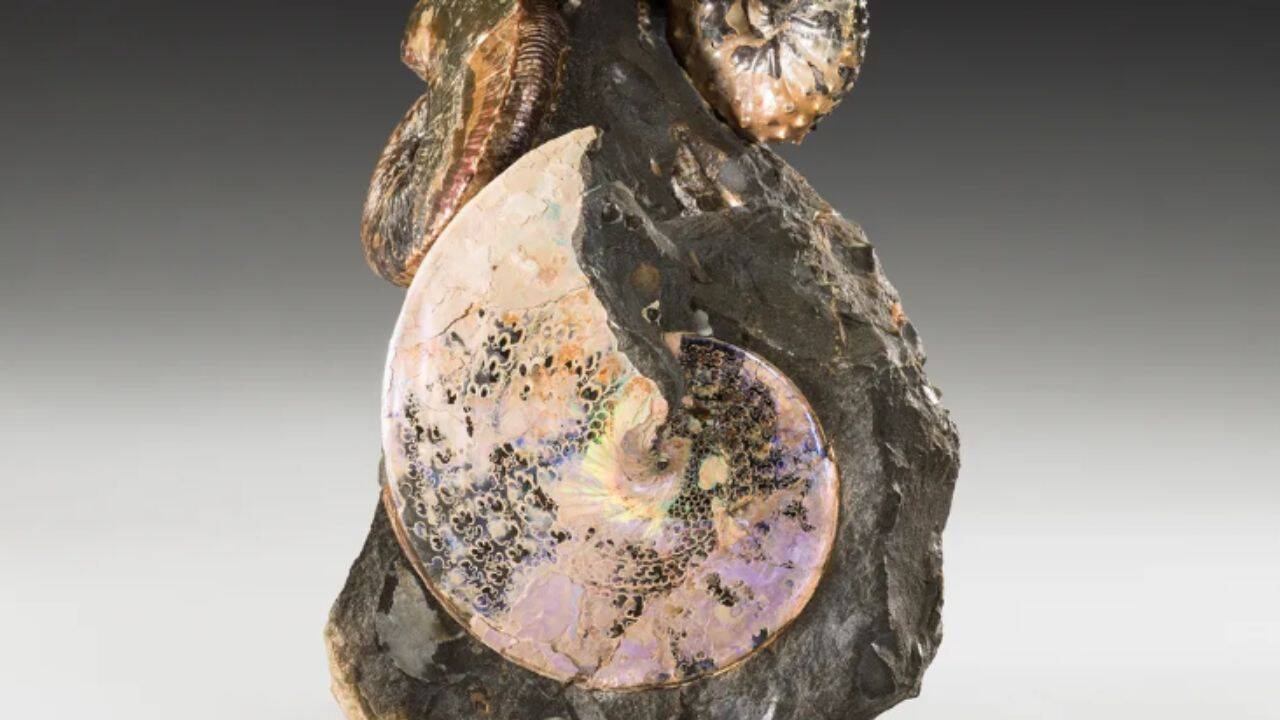
Millions of years ago, the state of South Dakota in North America was covered by a vast inland sea. This ancient seaway, which split the continent, supported a diverse range of marine life, including ammonites and marine reptiles. The sea played a crucial role in shaping the region's ecosystem and geological history.
The fossils from this period are now displayed at the Smithsonian's National Museum of Natural History, where they continue to fascinate visitors with their beauty and historical significance. One of the most striking features of these fossils is their ability to still shine, thanks to their mother-of-pearl composition. This unique characteristic has helped preserve the fossils for millions of years, providing a glimpse into the prehistoric marine ecosystems that once thrived in the region.
The discovery of these fossils has revealed valuable insights into Earth's history and the evolution of marine life. Scientists continue to study the fossils and the geological formations in which they are found, gaining a better understanding of the ancient sea and its inhabitants. The research has also shed light on the region's geological history, including the formation of the sea and its eventual disappearance.
The ancient sea that covered South Dakota is a significant part of the region's natural history, and its legacy can still be seen today. The fossils found in the area are a testament to the diversity of marine life that once existed in the region, and they continue to inspire scientific research and discovery.
The Smithsonian's National Museum of Natural History is one of the world's premier institutions for the study and display of natural history specimens. The museum's collection of fossils from the ancient sea that covered South Dakota is one of the most extensive and well-preserved in the world, and it continues to be an important resource for scientists and researchers.
The study of fossils and geological formations is an ongoing process, and new discoveries are continually being made. These discoveries help to refine our understanding of Earth's history and the evolution of life on our planet. The ancient sea that covered South Dakota is just one example of the many fascinating stories that can be told through the study of fossils and geological formations.
In conclusion, the ancient sea that once covered South Dakota is a fascinating topic that continues to capture the imagination of scientists and the general public alike. The discovery of fossils from this period has provided valuable insights into Earth's history and the evolution of marine life, and it continues to be an important area of research and study.
The significance of this discovery extends beyond the scientific community, as it also highlights the importance of preserving our natural history and cultural heritage. The fossils from the ancient sea that covered South Dakota are a testament to the region's rich natural history, and they continue to inspire wonder and awe in all who see them.
As we continue to learn more about the ancient sea and its inhabitants, we are reminded of the importance of protecting our planet's natural resources and preserving its natural history for future generations. The study of fossils and geological formations is an ongoing process, and it is essential that we continue to support and fund research in this area, so that we can gain a deeper understanding of our planet's history and the evolution of life on Earth.
The ancient sea that covered South Dakota may be gone, but its legacy lives on through the fossils and geological formations that remain. These remnants of a bygone era continue to inspire scientific research and discovery, and they serve as a reminder of the importance of preserving our natural history and cultural heritage.