IIM Indore Study: NPS Fails Late Entrants, UPS Shifts Pension Burden
NPS may not provide adequate retirement income, UPS has actuarial fairness issue
'%3E%3Crect%20width%3D'96'%20height%3D'96'%20fill%3D'%23B3261E'%2F%3E%3Ccircle%20cx%3D'30'%20cy%3D'24'%20r%3D'44'%20fill%3D'%23fff'%20opacity%3D'.12'%2F%3E%3Ccircle%20cx%3D'60'%20cy%3D'74'%20r%3D'40'%20fill%3D'%23000'%20opacity%3D'.10'%2F%3E%3C%2Fg%3E%3Cg%20fill%3D'%23fff'%3E%3Crect%20x%3D'29'%20y%3D'49'%20width%3D'8'%20height%3D'19'%20rx%3D'1'%2F%3E%3Crect%20x%3D'39'%20y%3D'40'%20width%3D'9'%20height%3D'28'%20rx%3D'1'%2F%3E%3Crect%20x%3D'50'%20y%3D'45'%20width%3D'8'%20height%3D'23'%20rx%3D'1'%2F%3E%3Crect%20x%3D'60'%20y%3D'53'%20width%3D'7'%20height%3D'15'%20rx%3D'1'%2F%3E%3Crect%20x%3D'41'%20y%3D'34'%20width%3D'5'%20height%3D'6'%2F%3E%3C%2Fg%3E%3C%2Fsvg%3E)
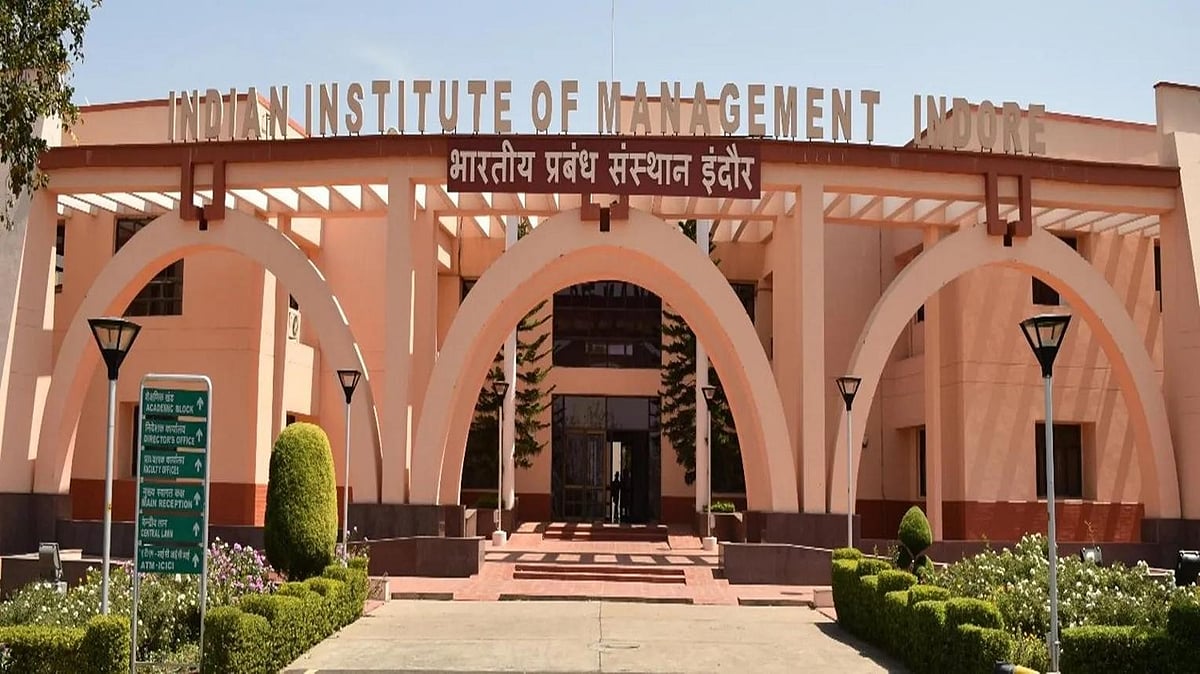
A recent study by IIM Indore has found that India's pension reforms have created a dilemma over who bears the cost of guaranteeing an adequate retirement income. The study examined the actuarial and fiscal implications of the shift from the Old Pension Scheme (OPS) to contributory pension systems, including the National Pension System (NPS) and the Unified Pension Scheme (UPS).
The OPS, which was replaced by the NPS in 2004, assured government employees an inflation-indexed pension equal to 50% of their final salary. In contrast, the NPS requires employees to contribute 10% of wages and the government 14% towards individual retirement accounts. While the NPS reduced the government's long-term pension liability, it shifted investment and longevity risks to employees.
The UPS, introduced in 2025, combines the two approaches, requiring a statutory combined contribution of 28.5% of wages while guaranteeing a pension capped at 50% of an employee's final average salary. However, the study found that the NPS does not provide the same level of retirement security to employees entering service at different ages.
Using a cohort-based actuarial framework, the study found that the NPS meets or exceeds the 50% replacement-rate benchmark only for employees joining government service at age 23 or younger. Those entering service later face significant retirement income deficits because they have less time to accumulate and compound their pension savings.
The UPS addresses this shortfall by guaranteeing the 50% replacement rate, but the study flags an actuarial fairness issue arising from the scheme's uniform contribution rate and pension guarantee. Under a 4% real investment yield, employees entering service at age 26 or younger can accumulate assets that exceed the actuarial cost of their capped pension.
The study also found that raising the retirement age to 62 or 65 improves the financial viability of both systems by allowing contributions to compound for longer while reducing the pension payout period. However, the gains accrue differently under the NPS and UPS.
The study's findings have significant implications for India's pension reforms and the retirement security of government employees. It highlights the need for a more nuanced approach to pension design, taking into account the varying needs and circumstances of employees.
In conclusion, the IIM Indore study provides valuable insights into the actuarial and fiscal implications of India's pension reforms. It underscores the importance of ensuring that contributory pension systems provide adequate retirement income for all employees, regardless of their age of entry into service.
The study's recommendations, including raising the retirement age and revising the contribution rates, could help improve the financial viability of India's pension systems and provide better retirement security for government employees. Ultimately, the goal of pension reforms should be to ensure that all employees have a secure and dignified retirement, and the study's findings are an important step towards achieving this goal.
The implications of the study are far-reaching, and policymakers would do well to take note of its findings. By doing so, they can work towards creating a more sustainable and equitable pension system that benefits all employees, regardless of their age or circumstances.
In the context of India's pension reforms, the study's findings are a timely reminder of the need for careful planning and design. As the country continues to evolve and grow, it is essential that its pension systems keep pace, providing adequate retirement income for all employees and ensuring their financial security in old age.
The study's conclusions are clear: India's pension reforms have created a complex and challenging landscape, and policymakers must navigate this landscape carefully to ensure that all employees have a secure and dignified retirement. By doing so, they can help build a more sustainable and equitable society, where all citizens can thrive and prosper.
In the end, the IIM Indore study is a valuable contribution to the ongoing debate about India's pension reforms. Its findings and recommendations provide a roadmap for policymakers to follow, and its conclusions highlight the importance of careful planning and design in creating a sustainable and equitable pension system.
Frequently asked questions
What is the main finding of the IIM Indore study on pension reforms?
The study found that the NPS may not provide adequate retirement income for late entrants, while the UPS has an actuarial fairness issue.
How does the UPS address the shortfall in retirement income?
The UPS guarantees a pension capped at 50% of an employee's final average salary, but this creates an actuarial fairness issue due to the uniform contribution rate and pension guarantee.