5 Top Indore Hotels Expose Kitchen Hygiene Lapses
Food inspections reveal irregularities at major hotels. Kitchen hygiene and safety standards compromised.
'%3E%3Crect%20width%3D'96'%20height%3D'96'%20fill%3D'%231A5276'%2F%3E%3Ccircle%20cx%3D'30'%20cy%3D'24'%20r%3D'44'%20fill%3D'%23fff'%20opacity%3D'.12'%2F%3E%3Ccircle%20cx%3D'60'%20cy%3D'74'%20r%3D'40'%20fill%3D'%23000'%20opacity%3D'.10'%2F%3E%3C%2Fg%3E%3Cg%20fill%3D'%23fff'%3E%3Cpath%20d%3D'M31%2041%20L48%2031%20L65%2041%20Z'%2F%3E%3Crect%20x%3D'33'%20y%3D'43'%20width%3D'4'%20height%3D'17'%2F%3E%3Crect%20x%3D'41'%20y%3D'43'%20width%3D'4'%20height%3D'17'%2F%3E%3Crect%20x%3D'51'%20y%3D'43'%20width%3D'4'%20height%3D'17'%2F%3E%3Crect%20x%3D'59'%20y%3D'43'%20width%3D'4'%20height%3D'17'%2F%3E%3Crect%20x%3D'30'%20y%3D'62'%20width%3D'36'%20height%3D'4'%20rx%3D'1'%2F%3E%3C%2Fg%3E%3C%2Fsvg%3E)
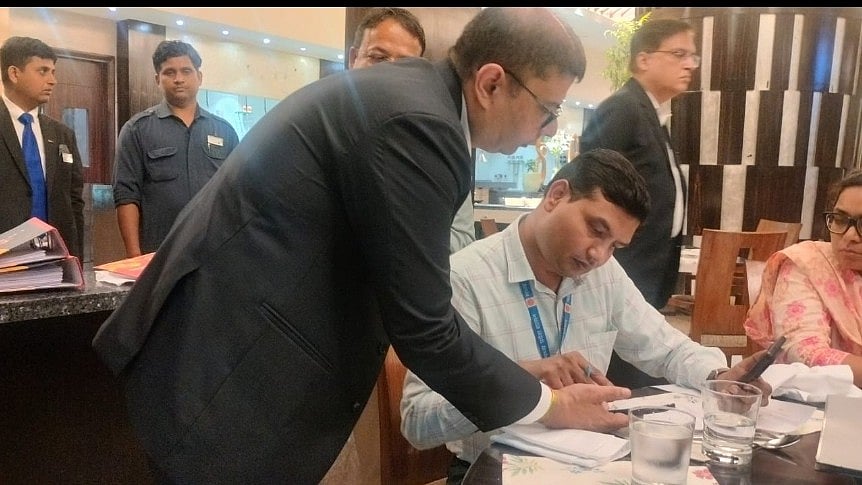
The Food Safety Administration conducted surprise inspections at five major hotels in Indore, Madhya Pradesh, on Saturday. The inspections covered Hotel Marriott, Hotel The Park, Radisson Blu, Radisson RED, and Hotel Grand Sheraton.
Senior food safety officer Manish Swami informed that the inspections checked food storage, labelling, kitchen hygiene, medical fitness records of food handlers, and other safety standards.
At Hotel Marriott, samples of paneer, peanut, and sugar powder were collected. Officials found waterlogging and slippery conditions in and around the kitchen, lack of proper anti-slip rubber mats, old and unhygienic chopping boards, faulty dustbins, and rusting storage trays.
The Park Hotel had its FSSAI licence not properly displayed at one of the two restaurants. Officials found rusting on part of the kitchen platform, improperly cleaned cooking pots, and doors without automatic closers.
At Radisson Blu, some imported food products lacked required importer details. Labelling issues were found on packets of Kulcha Bread and Shahi Jeera. The store was not properly organised for effective FIFO/FEFO practices.
Radisson RED had labelling deficiencies and improper storage organisation under FIFO/FEFO practices. Medical fitness certificates or records were not available in the required format.
At Hotel Grand Sheraton, samples of paneer, sunflower seeds, and raisins were collected. Some sunflower seeds found in poor condition were destroyed on the spot. The hotel lacked a pesticide testing report for water.
The Food Safety Administration said notices are being issued to establishments where violations of food safety, hygiene, storage, labelling, or other prescribed standards were found.
The inspections highlight the importance of maintaining high standards of kitchen hygiene and food safety in hotels. The Food Safety Administration has assured that no negligence related to food quality, hygiene, and consumer health would be tolerated, and inspections would continue.
This incident serves as a reminder to hotels and restaurants to prioritize food safety and hygiene to avoid any potential health risks to consumers. The Food Safety Administration's efforts to conduct regular inspections and enforce food safety standards are crucial in maintaining public health and trust in the food industry.
The hotels have been directed to take corrective measures to address the irregularities found during the inspections. The Food Safety Administration will continue to monitor the hotels' compliance with food safety standards.
In conclusion, the surprise inspections at the five major hotels in Indore have exposed kitchen hygiene lapses and highlighted the need for hotels to maintain high standards of food safety and hygiene. The Food Safety Administration's efforts to enforce food safety standards are essential in protecting public health and maintaining trust in the food industry.
The incident also underscores the importance of regular inspections and monitoring of food safety standards in hotels and restaurants. By taking proactive measures to ensure food safety and hygiene, hotels can prevent potential health risks to consumers and maintain a good reputation.
The Food Safety Administration's actions demonstrate its commitment to ensuring that hotels and restaurants in Indore maintain high standards of food safety and hygiene. The administration's efforts will help to protect public health and promote a culture of food safety in the city.
Overall, the inspections have highlighted the need for hotels to prioritize food safety and hygiene, and the Food Safety Administration's efforts to enforce food safety standards are crucial in maintaining public health and trust in the food industry.
Frequently asked questions
What hotels were inspected?
Hotel Marriott, Hotel The Park, Radisson Blu, Radisson RED, and Hotel Grand Sheraton.
What were the irregularities found?
Kitchen hygiene lapses, labelling issues, and improper storage organisation.