EC Meets TMC Factions Over 'Real Party' Claims
TMC factions claim to be the real party, EC intervenes. Meetings held to resolve dispute.
'%3E%3Crect%20width%3D'96'%20height%3D'96'%20fill%3D'%231A5276'%2F%3E%3Ccircle%20cx%3D'30'%20cy%3D'24'%20r%3D'44'%20fill%3D'%23fff'%20opacity%3D'.12'%2F%3E%3Ccircle%20cx%3D'60'%20cy%3D'74'%20r%3D'40'%20fill%3D'%23000'%20opacity%3D'.10'%2F%3E%3C%2Fg%3E%3Cg%20fill%3D'%23fff'%3E%3Cpath%20d%3D'M31%2041%20L48%2031%20L65%2041%20Z'%2F%3E%3Crect%20x%3D'33'%20y%3D'43'%20width%3D'4'%20height%3D'17'%2F%3E%3Crect%20x%3D'41'%20y%3D'43'%20width%3D'4'%20height%3D'17'%2F%3E%3Crect%20x%3D'51'%20y%3D'43'%20width%3D'4'%20height%3D'17'%2F%3E%3Crect%20x%3D'59'%20y%3D'43'%20width%3D'4'%20height%3D'17'%2F%3E%3Crect%20x%3D'30'%20y%3D'62'%20width%3D'36'%20height%3D'4'%20rx%3D'1'%2F%3E%3C%2Fg%3E%3C%2Fsvg%3E)
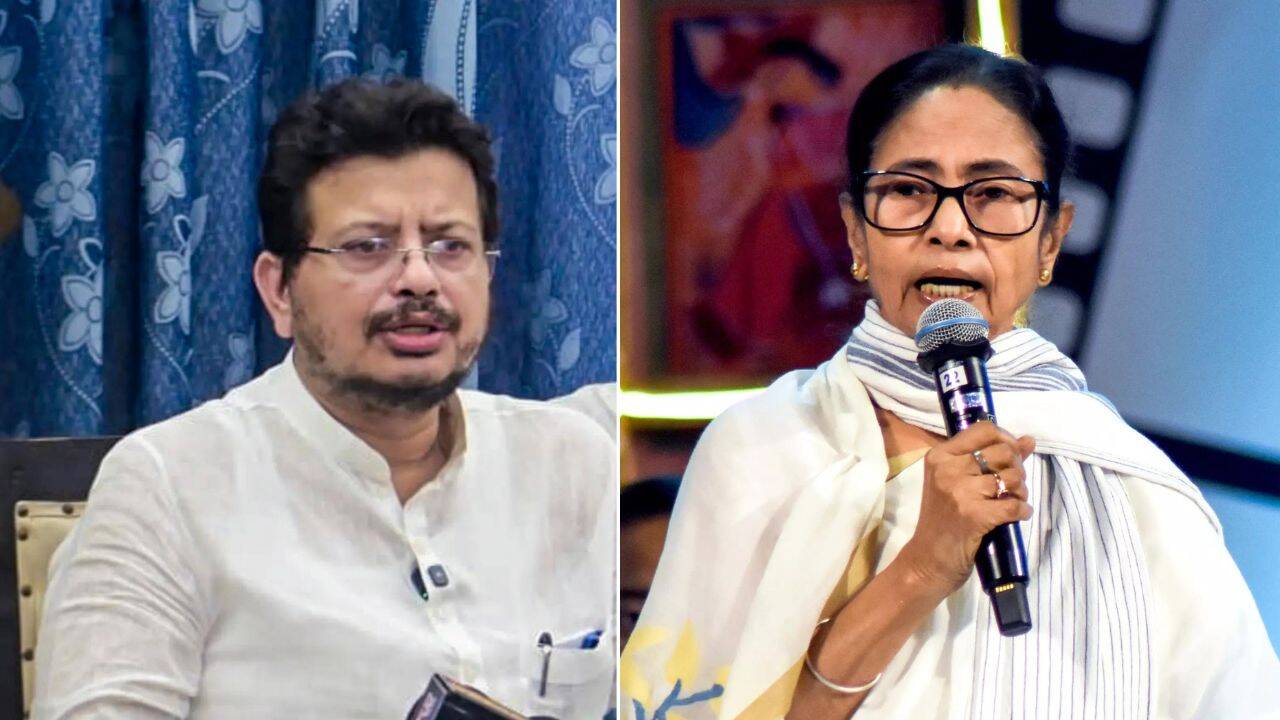
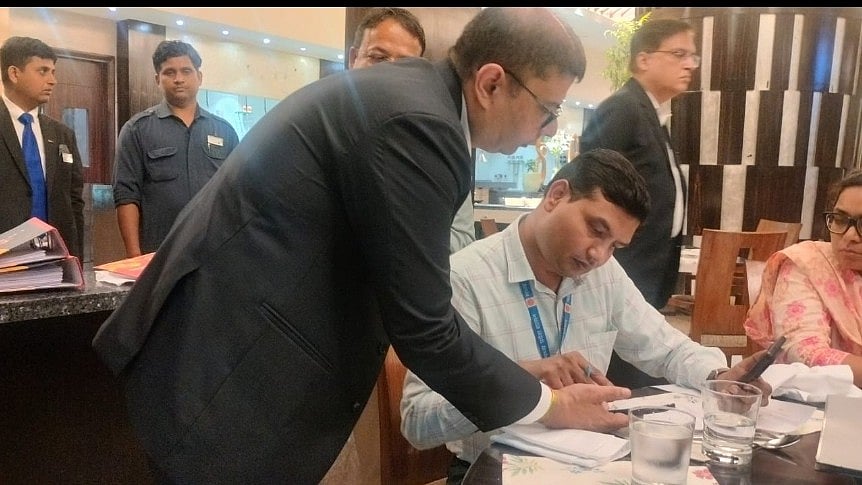
The Election Commission of India (EC) has met with both factions of the Trinamool Congress (TMC) to discuss their claims of being the 'real party'. The meetings were held to resolve the dispute between the two groups, each claiming to be the authentic representation of the TMC.
The TMC has been embroiled in a bitter internal conflict, with two factions emerging: one led by West Bengal Chief Minister Mamata Banerjee and the other by a breakaway group. Both factions have been trying to establish themselves as the legitimate TMC, leading to confusion among party members and supporters.
The EC's intervention comes as the TMC factions prepare for upcoming elections, where the party's symbol and name are at stake. The commission's decision will have significant implications for the party's future and its ability to contest elections.
The TMC was founded in 1998 by Mamata Banerjee, who has been the party's supreme leader since its inception. However, in recent years, the party has faced internal power struggles, leading to the emergence of the breakaway faction.
The EC's meetings with the TMC factions are part of its efforts to resolve the dispute and determine which group is the authentic TMC. The commission will examine the claims of both factions and review the party's constitution and rules to make a decision.
The outcome of the EC's decision will have far-reaching consequences for the TMC and its members. If one faction is recognized as the real party, it will have access to the party's symbol, name, and other resources, giving it a significant advantage in upcoming elections.
The TMC dispute is not an isolated incident, as several Indian political parties have faced similar internal conflicts in the past. The EC's role in resolving such disputes is crucial, as it helps to maintain the integrity of the electoral process and ensures that political parties operate in a fair and transparent manner.
In the context of Indian politics, the TMC dispute highlights the challenges faced by political parties in maintaining unity and cohesion. The EC's decision will be closely watched by political observers and will have significant implications for the future of the TMC and Indian politics as a whole.
The Election Commission's decision on the TMC dispute is expected to be made in the coming weeks, and it will be interesting to see how the situation unfolds. The outcome will have a significant impact on the party's future and its ability to contest elections, and it will be closely watched by political observers and party members alike.
The TMC dispute is a reminder of the complexities and challenges of Indian politics, where internal conflicts and power struggles are common. The EC's role in resolving such disputes is vital, and its decision will have significant implications for the future of the TMC and Indian politics.
In conclusion, the EC's meetings with the TMC factions mark an important step in resolving the dispute and determining which group is the authentic TMC. The commission's decision will have far-reaching consequences for the party and its members, and it will be closely watched by political observers and party members alike.
Frequently asked questions
What is the dispute between the TMC factions about?
The dispute is over which faction is the 'real party', with both groups claiming to be the authentic representation of the TMC.
What is the role of the Election Commission in resolving the dispute?
The Election Commission is examining the claims of both factions and reviewing the party's constitution and rules to determine which group is the authentic TMC.