NSE Self-Listing Plans Hit Regulatory Roadblock
NSE cannot list shares on its own platform, BSE CEO says. Regulatory issues cited.
'%3E%3Crect%20width%3D'96'%20height%3D'96'%20fill%3D'%230B6E4F'%2F%3E%3Ccircle%20cx%3D'30'%20cy%3D'24'%20r%3D'44'%20fill%3D'%23fff'%20opacity%3D'.12'%2F%3E%3Ccircle%20cx%3D'60'%20cy%3D'74'%20r%3D'40'%20fill%3D'%23000'%20opacity%3D'.10'%2F%3E%3C%2Fg%3E%3Cg%20fill%3D'none'%20stroke%3D'%23fff'%20stroke-width%3D'3.2'%20stroke-linecap%3D'round'%20stroke-linejoin%3D'round'%3E%3Cpolyline%20points%3D'31%2C59%2041%2C49%2049%2C54%2063%2C37'%2F%3E%3Cpolyline%20points%3D'55%2C37%2063%2C37%2063%2C45'%2F%3E%3C%2Fg%3E%3C%2Fsvg%3E)
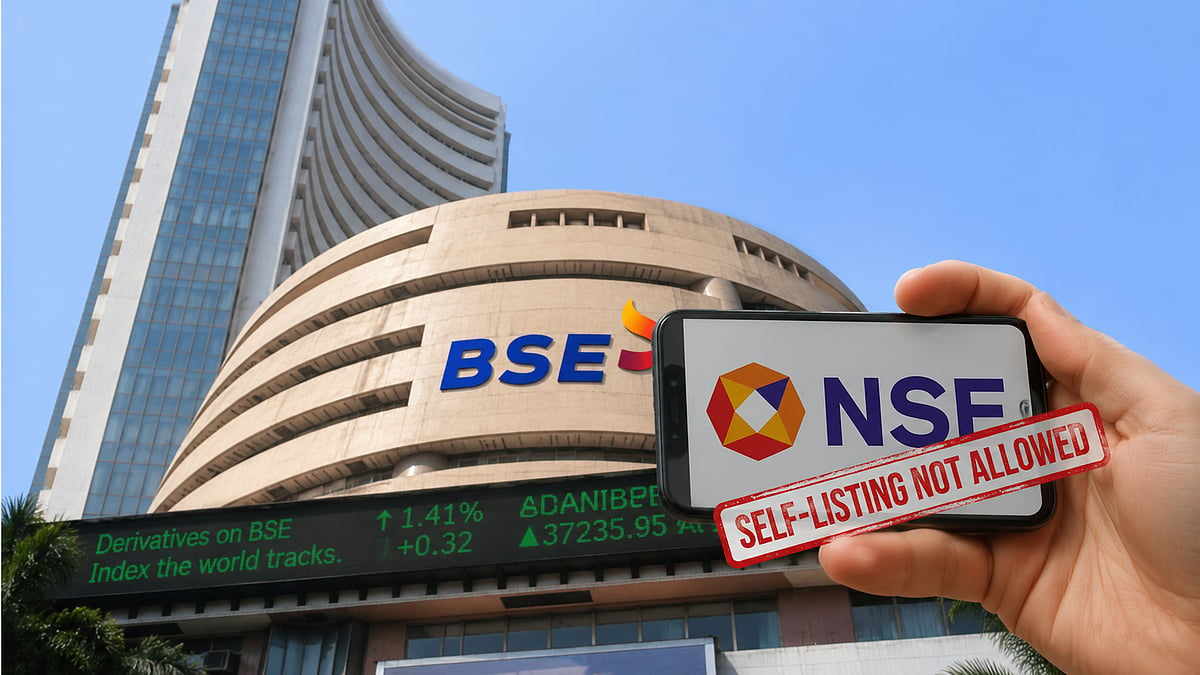
The National Stock Exchange (NSE) will not be able to list or trade its shares on its own platform following its proposed initial public offering (IPO), according to BSE Managing Director and CEO Sundararaman Ramamurthy. This clarification comes amid speculation over whether the NSE IPO could eventually pave the way for the exchange's shares to trade on its own platform after initially listing on the BSE.
Ramamurthy stated that the NSE has confirmed it will not seek regulatory permission for self-trading and will not file an addendum to its Draft Red Herring Prospectus (DRHP). The NSE has described speculation surrounding such a move as 'speculative and baseless'.
The BSE had previously sought permission in 2017 to trade its shares on its own exchange but was not permitted to do so. This sets a precedent for the NSE's situation, highlighting the regulatory hurdles it faces.
In related news, the BSE's recently introduced Closing Auction Session (CAS) has been affected by limited liquidity, which has weighed on index option volumes. Ramamurthy commented that liquidity is a crucial requirement for a CAS system and that the lack of liquidity has impacted participation.
The NSE's monthly equity derivatives turnover dropped to Rs 34.48 lakh crore in August, its lowest since November 2023. The BSE's August turnover stood at Rs 32.2 lakh crore, its lowest since June 2025.
The development has significant implications for the Indian stock market, as it highlights the regulatory challenges faced by exchanges. The NSE's IPO is highly anticipated, and the clarification on self-listing provides insight into the exchange's plans.
The Indian stock market has been experiencing fluctuations in recent times, with the NSE and BSE witnessing changes in their turnover and trading volumes. The introduction of new systems like the CAS has also had an impact on trading activities.
In a separate development, the NSE and BSE imposed a penalty of Rs 5.42 lakh on MTNL for violating SEBI's board composition rules. This move demonstrates the regulatory bodies' efforts to maintain compliance and adhere to rules.
The BSE shares jumped as much as 4.68% on Thursday to Rs 3,316.50, indicating a positive response from investors. However, the regulatory roadblock for the NSE's self-listing plans may have implications for the exchange's future plans and the overall Indian stock market.
The development is a significant one for the Indian stock market, as it highlights the regulatory challenges faced by exchanges and the importance of compliance with existing rules and regulations. The NSE's IPO and its plans for self-listing will be closely watched by investors and market participants, as it has the potential to impact the overall market dynamics.
In conclusion, the NSE's self-listing plans have hit a regulatory roadblock, and the exchange will not be able to list or trade its shares on its own platform following its proposed IPO. The development has significant implications for the Indian stock market and highlights the importance of regulatory compliance.
The regulatory framework governing the Indian stock market is complex, and exchanges must navigate these rules to operate effectively. The NSE's situation serves as a reminder of the challenges faced by exchanges in India and the need for clarity on regulatory issues.
The Indian stock market is a critical component of the country's economy, and developments like the NSE's self-listing plans have the potential to impact market dynamics. As the market continues to evolve, it is essential for regulatory bodies to provide clarity on existing rules and regulations to ensure smooth operation and compliance.
The NSE's IPO is a highly anticipated event, and the exchange's plans for self-listing will be closely watched by investors and market participants. The regulatory roadblock faced by the NSE serves as a reminder of the challenges faced by exchanges in India and the need for regulatory clarity.
In the context of the Indian stock market, the NSE's self-listing plans are significant, as they have the potential to impact market dynamics. The development highlights the importance of regulatory compliance and the need for clarity on existing rules and regulations.
The NSE's situation serves as a reminder of the complexities of the Indian stock market and the need for regulatory bodies to provide clarity on existing rules and regulations. As the market continues to evolve, it is essential for exchanges to navigate these complexities to operate effectively.
The regulatory framework governing the Indian stock market is designed to ensure fair play and protect investor interests. The NSE's self-listing plans have hit a regulatory roadblock, and the exchange will not be able to list or trade its shares on its own platform following its proposed IPO.
The development has significant implications for the Indian stock market, as it highlights the regulatory challenges faced by exchanges. The NSE's IPO is highly anticipated, and the clarification on self-listing provides insight into the exchange's plans.
The Indian stock market has been experiencing fluctuations in recent times, with the NSE and BSE witnessing changes in their turnover and trading volumes. The introduction of new systems like the CAS has also had an impact on trading activities.
The NSE's self-listing plans have been a topic of discussion among market participants, and the regulatory roadblock faced by the exchange serves as a reminder of the challenges faced by exchanges in India. The development highlights the importance of regulatory compliance and the need for clarity on existing rules and regulations.
The NSE's situation serves as a reminder of the complexities of the Indian stock market and the need for regulatory bodies to provide clarity on existing rules and regulations. As the market continues to evolve, it is essential for exchanges to navigate these complexities to operate effectively.
The regulatory framework governing the Indian stock market is designed to ensure fair play and protect investor interests. The NSE's self-listing plans have hit a regulatory roadblock, and the exchange will not be able to list or trade its shares on its own platform following its proposed IPO.
The development has significant implications for the Indian stock market, as it highlights the regulatory challenges faced by exchanges. The NSE's IPO is highly anticipated, and the clarification on self-listing provides insight into the exchange's plans.
The Indian stock market has been experiencing fluctuations in recent times, with the NSE and BSE witnessing changes in their turnover and trading volumes. The introduction of new systems like the CAS has also had an impact on trading activities.
In conclusion, the NSE's self-listing plans have hit a regulatory roadblock, and the exchange will not be able to list or trade its shares on its own platform following its proposed IPO. The development has significant implications for the Indian stock market and highlights the importance of regulatory compliance.
What it means for Mumbai and India is that the regulatory framework governing the Indian stock market is complex, and exchanges must navigate these rules to operate effectively. The NSE's situation serves as a reminder of the challenges faced by exchanges in India and the need for clarity on regulatory issues. The development has significant implications for the Indian stock market, as it highlights the regulatory challenges faced by exchanges and the importance of compliance with existing rules and regulations.
Frequently asked questions
Can the NSE list its shares on its own platform?
No, the NSE cannot list its shares on its own platform due to regulatory issues.
What is the impact of the regulatory roadblock on the NSE's IPO plans?
The regulatory roadblock does not affect the NSE's IPO plans, but it means the exchange will not be able to list or trade its shares on its own platform.