DRDO Tests Combat Parachute At 22,000 Feet In Ladakh
DRDO successfully tests combat parachute in extreme conditions. Three jumpers made the jump from 22,000 feet in -15°C temperature.
'%3E%3Crect%20width%3D'96'%20height%3D'96'%20fill%3D'%23B3261E'%2F%3E%3Ccircle%20cx%3D'30'%20cy%3D'24'%20r%3D'44'%20fill%3D'%23fff'%20opacity%3D'.12'%2F%3E%3Ccircle%20cx%3D'60'%20cy%3D'74'%20r%3D'40'%20fill%3D'%23000'%20opacity%3D'.10'%2F%3E%3C%2Fg%3E%3Cg%20fill%3D'%23fff'%3E%3Crect%20x%3D'29'%20y%3D'49'%20width%3D'8'%20height%3D'19'%20rx%3D'1'%2F%3E%3Crect%20x%3D'39'%20y%3D'40'%20width%3D'9'%20height%3D'28'%20rx%3D'1'%2F%3E%3Crect%20x%3D'50'%20y%3D'45'%20width%3D'8'%20height%3D'23'%20rx%3D'1'%2F%3E%3Crect%20x%3D'60'%20y%3D'53'%20width%3D'7'%20height%3D'15'%20rx%3D'1'%2F%3E%3Crect%20x%3D'41'%20y%3D'34'%20width%3D'5'%20height%3D'6'%2F%3E%3C%2Fg%3E%3C%2Fsvg%3E)
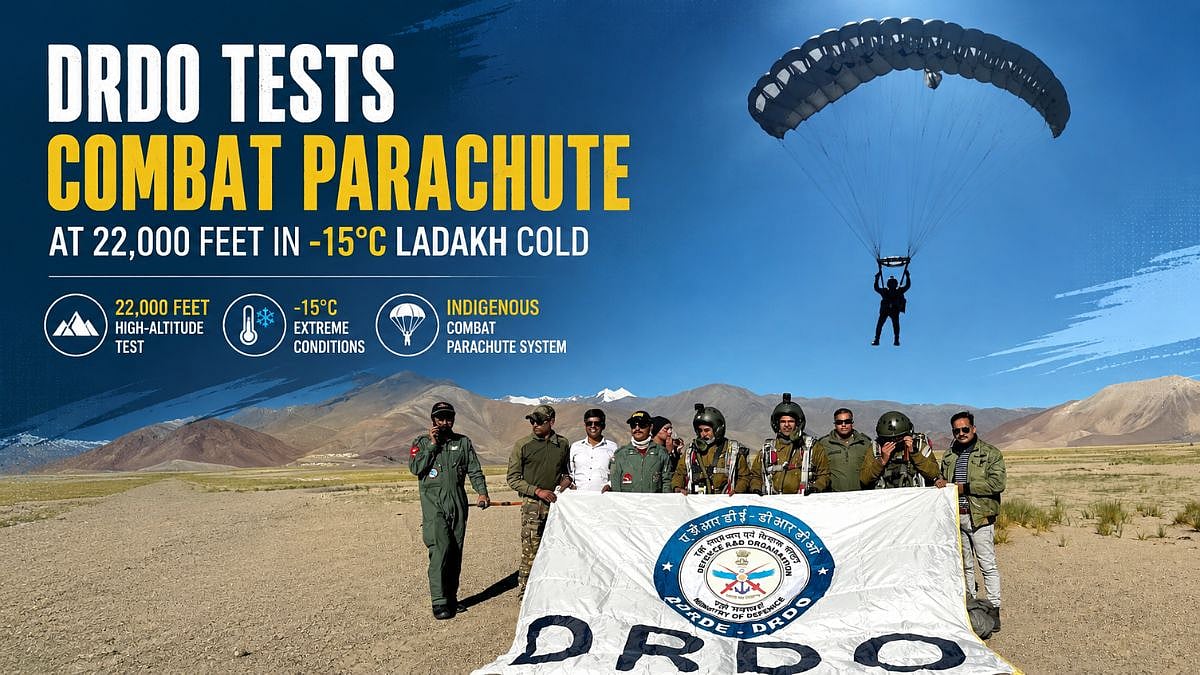
The Defence Research and Development Organisation (DRDO) has successfully tested its Military Combat Parachute System (MCPS) in one of the world’s highest-altitude drop zones in Ladakh’s Leh district. The trial, which took place on Wednesday, put the system through extreme conditions, with three test jumpers making the jump from 22,000 feet above mean sea level (AMSL) as the temperature dipped to -15°C.
The successful test is a significant demonstration of the system’s ability to operate in demanding high-altitude conditions. The MCPS was designed and developed by DRDO’s Aerial Delivery Research and Development Establishment (ADRDE). Wing Commander Rahul Jha, chief test jumper, MWO R J Singh, VM(G), and MWO Vivek Tiwari carried out the test.
The three jumpers used the MCPS along with other sub-systems, including an indigenous para computer, oxygen system, and jumpsuits. According to DRDO, the parachute was deployed at 20,000 feet before the jumpers made a safe landing at an altitude of 13,700 feet. The combination of the altitude, sub-zero temperature, and specialised equipment made the trial a tough test for the indigenous parachute system.
The successful completion of the trial under such conditions underlines the importance of developing equipment capable of meeting the demands of high-altitude military operations. DRDO said the successful trial demonstrated the “efficacy, reliability and tactical employability” of the MCPS in extreme high-altitude conditions.
The test also carries significance for India’s push towards self-reliance in critical defence technologies. Successfully testing an indigenous combat parachute system in such an unforgiving environment provides an important validation of the technology under conditions in which reliability can be crucial.
The development of the MCPS is a significant milestone in India’s defence research and development. The system is designed to provide a reliable and efficient means of deploying troops and equipment in high-altitude areas. The successful test of the MCPS is a major boost to India’s defence capabilities and demonstrates the country’s ability to develop and test complex defence systems.
The trial is also a testament to the skill and bravery of the test jumpers who carried out the jump in extreme conditions. The successful completion of the trial is a significant achievement for the DRDO and the Indian defence establishment.
In conclusion, the successful test of the MCPS is a major milestone in India’s defence research and development. The system has the potential to play a significant role in India’s defence capabilities, particularly in high-altitude areas. The successful completion of the trial is a testament to the skill and bravery of the test jumpers and the expertise of the DRDO.
The development of the MCPS is part of India’s push towards self-reliance in critical defence technologies. The country has been investing heavily in defence research and development in recent years, with a focus on developing indigenous systems and technologies. The successful test of the MCPS is a major boost to this effort and demonstrates India’s ability to develop and test complex defence systems.
The MCPS has the potential to be used in a variety of military operations, including special forces operations and disaster relief. The system’s ability to operate in high-altitude areas makes it an important asset for the Indian military, particularly in areas such as Ladakh and the Northeast.
Overall, the successful test of the MCPS is a significant achievement for the DRDO and the Indian defence establishment. The system has the potential to play a major role in India’s defence capabilities and demonstrates the country’s ability to develop and test complex defence systems.
The trial is a major milestone in India’s defence research and development and demonstrates the country’s commitment to developing indigenous defence technologies. The successful completion of the trial is a testament to the skill and bravery of the test jumpers and the expertise of the DRDO.
The development of the MCPS is a significant step forward for India’s defence capabilities and demonstrates the country’s ability to develop and test complex defence systems. The system has the potential to play a major role in India’s defence capabilities, particularly in high-altitude areas.
In the future, the MCPS is likely to play a significant role in India’s defence operations, particularly in areas such as Ladakh and the Northeast. The system’s ability to operate in high-altitude areas makes it an important asset for the Indian military.
The successful test of the MCPS is a major boost to India’s defence capabilities and demonstrates the country’s ability to develop and test complex defence systems. The system has the potential to play a significant role in India’s defence operations and is a significant milestone in India’s defence research and development.
The trial is a testament to the skill and bravery of the test jumpers and the expertise of the DRDO. The successful completion of the trial is a significant achievement for the DRDO and the Indian defence establishment.
The development of the MCPS is a significant step forward for India’s defence capabilities and demonstrates the country’s ability to develop and test complex defence systems. The system has the potential to play a major role in India’s defence operations, particularly in high-altitude areas.
The successful test of the MCPS is a major milestone in India’s defence research and development and demonstrates the country’s commitment to developing indigenous defence technologies. The system has the potential to play a significant role in India’s defence capabilities and is a significant achievement for the DRDO and the Indian defence establishment.
The trial is a major boost to India’s defence capabilities and demonstrates the country’s ability to develop and test complex defence systems. The MCPS has the potential to play a major role in India’s defence operations, particularly in areas such as Ladakh and the Northeast.
The successful test of the MCPS is a significant achievement for the DRDO and the Indian defence establishment. The system has the potential to play a major role in India’s defence capabilities and demonstrates the country’s ability to develop and test complex defence systems.
The development of the MCPS is a significant milestone in India’s defence research and development. The system has the potential to play a significant role in India’s defence operations, particularly in high-altitude areas.
The trial is a testament to the skill and bravery of the test jumpers and the expertise of the DRDO. The successful completion of the trial is a significant achievement for the DRDO and the Indian defence establishment.
The successful test of the MCPS is a major boost to India’s defence capabilities and demonstrates the country’s ability to develop and test complex defence systems. The system has the potential to play a significant role in India’s defence operations and is a significant milestone in India’s defence research and development.
The development of the MCPS is a significant step forward for India’s defence capabilities and demonstrates the country’s ability to develop and test complex defence systems. The system has the potential to play a major role in India’s defence operations, particularly in high-altitude areas.
In conclusion, the successful test of the MCPS is a major milestone in India’s defence research and development. The system has the potential to play a significant role in India’s defence capabilities, particularly in high-altitude areas. The successful completion of the trial is a testament to the skill and bravery of the test jumpers and the expertise of the DRDO.
What it means for India is that the country has taken a significant step forward in developing indigenous defence technologies. The successful test of the MCPS demonstrates India’s ability to develop and test complex defence systems, which is a major boost to the country’s defence capabilities. The system has the potential to play a significant role in India’s defence operations, particularly in high-altitude areas, and is a significant milestone in India’s defence research and development.
Frequently asked questions
What is the Military Combat Parachute System (MCPS)?
The MCPS is a combat parachute system designed and developed by DRDO’s Aerial Delivery Research and Development Establishment (ADRDE).
Where was the MCPS tested?
The MCPS was tested in one of the world’s highest-altitude drop zones in Ladakh’s Leh district.