EU Allows 2.5 Lakh Indian Cars At 8% Duty Under FTA
EU to provide concessional access to Indian cars, quota to rise to 4 lakh. Duty to be reduced gradually.
'%3E%3Crect%20width%3D'96'%20height%3D'96'%20fill%3D'%234A235A'%2F%3E%3Ccircle%20cx%3D'30'%20cy%3D'24'%20r%3D'44'%20fill%3D'%23fff'%20opacity%3D'.12'%2F%3E%3Ccircle%20cx%3D'60'%20cy%3D'74'%20r%3D'40'%20fill%3D'%23000'%20opacity%3D'.10'%2F%3E%3C%2Fg%3E%3Cg%20fill%3D'none'%20stroke%3D'%23fff'%20stroke-width%3D'3'%3E%3Ccircle%20cx%3D'48'%20cy%3D'48'%20r%3D'16'%2F%3E%3Cellipse%20cx%3D'48'%20cy%3D'48'%20rx%3D'6.5'%20ry%3D'16'%2F%3E%3Cline%20x1%3D'32'%20y1%3D'42'%20x2%3D'64'%20y2%3D'42'%2F%3E%3Cline%20x1%3D'32'%20y1%3D'54'%20x2%3D'64'%20y2%3D'54'%2F%3E%3C%2Fg%3E%3C%2Fsvg%3E)
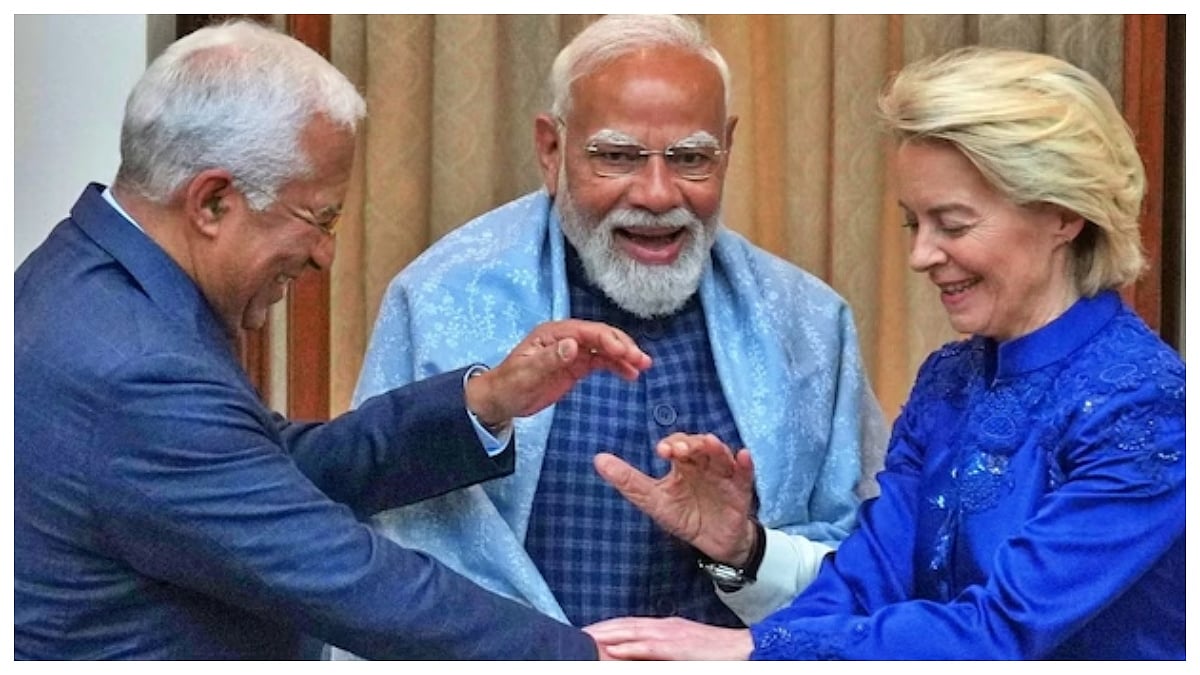
The European Union has agreed to provide India with concessional access for passenger vehicles under the proposed India-EU free trade agreement. According to the draft text released by the EU, 2.5 lakh Indian-made cars will be allowed to enter the EU market each year at an 8% duty.
This concession applies to Indian-origin internal combustion engine and hybrid electric vehicles priced up to Euro 50,000 on a CIF basis. The annual quota will increase progressively, reaching 4 lakh vehicles from the 10th year.
The concessional tariff will be reduced gradually after the agreement takes effect. The duty will fall to 6% in the second year, 4% in the third, 2% in the fourth and reach zero in the fifth year. Vehicles imported beyond the quota will attract the most favoured nation duty.
Cars priced above Euro 50,000 will not receive a quota-based concession, although their duty will decline from 8% initially to zero by the 10th year. The draft also provides separate tariff-rate quotas for battery electric vehicles, plug-in hybrid electric vehicles and other technologies.
For vehicles priced up to Euro 40,000, the quota will begin in the fifth year at 27,500 units with an 8% duty. It will rise to 1.25 lakh units from the 14th year, with the duty eliminated from the ninth year.
The agreement also proposes quota-based concessions for select Indian agricultural and processed food products, including table grapes, dried onions, cucumbers, gherkins, molasses-based rum and ghee. For ghee, the draft specifies an in-quota tariff at 50% of the base customs duty for an annual quantity of 1,000 metric tonnes.
The India-EU free trade agreement is expected to boost trade between the two regions. The agreement will provide Indian manufacturers with greater access to the EU market, and will also increase competition in the Indian market.
The reduction in duties and increase in quotas will make Indian vehicles more competitive in the EU market. This is expected to benefit Indian automakers, who will be able to export more vehicles to the EU.
The agreement is also expected to have a positive impact on the Indian economy, as it will increase exports and create new job opportunities.
In conclusion, the EU's decision to provide concessional access to Indian cars is a significant development in the India-EU free trade agreement. The agreement is expected to boost trade between the two regions and have a positive impact on the Indian economy.
Frequently asked questions
What is the initial quota for Indian cars in the EU market?
The initial quota is 2.5 lakh Indian-made cars per year at an 8% duty.
How will the duty on Indian cars in the EU market change over time?
The duty will be reduced gradually, falling to 6% in the second year, 4% in the third, 2% in the fourth and reaching zero in the fifth year.