Maharashtra Students Protest NEET
Students take to streets, demand change in NEET policy. No voting rights on campus.
'%3E%3Crect%20width%3D'96'%20height%3D'96'%20fill%3D'%231A5276'%2F%3E%3Ccircle%20cx%3D'30'%20cy%3D'24'%20r%3D'44'%20fill%3D'%23fff'%20opacity%3D'.12'%2F%3E%3Ccircle%20cx%3D'60'%20cy%3D'74'%20r%3D'40'%20fill%3D'%23000'%20opacity%3D'.10'%2F%3E%3C%2Fg%3E%3Cg%20fill%3D'%23fff'%3E%3Cpath%20d%3D'M31%2041%20L48%2031%20L65%2041%20Z'%2F%3E%3Crect%20x%3D'33'%20y%3D'43'%20width%3D'4'%20height%3D'17'%2F%3E%3Crect%20x%3D'41'%20y%3D'43'%20width%3D'4'%20height%3D'17'%2F%3E%3Crect%20x%3D'51'%20y%3D'43'%20width%3D'4'%20height%3D'17'%2F%3E%3Crect%20x%3D'59'%20y%3D'43'%20width%3D'4'%20height%3D'17'%2F%3E%3Crect%20x%3D'30'%20y%3D'62'%20width%3D'36'%20height%3D'4'%20rx%3D'1'%2F%3E%3C%2Fg%3E%3C%2Fsvg%3E)
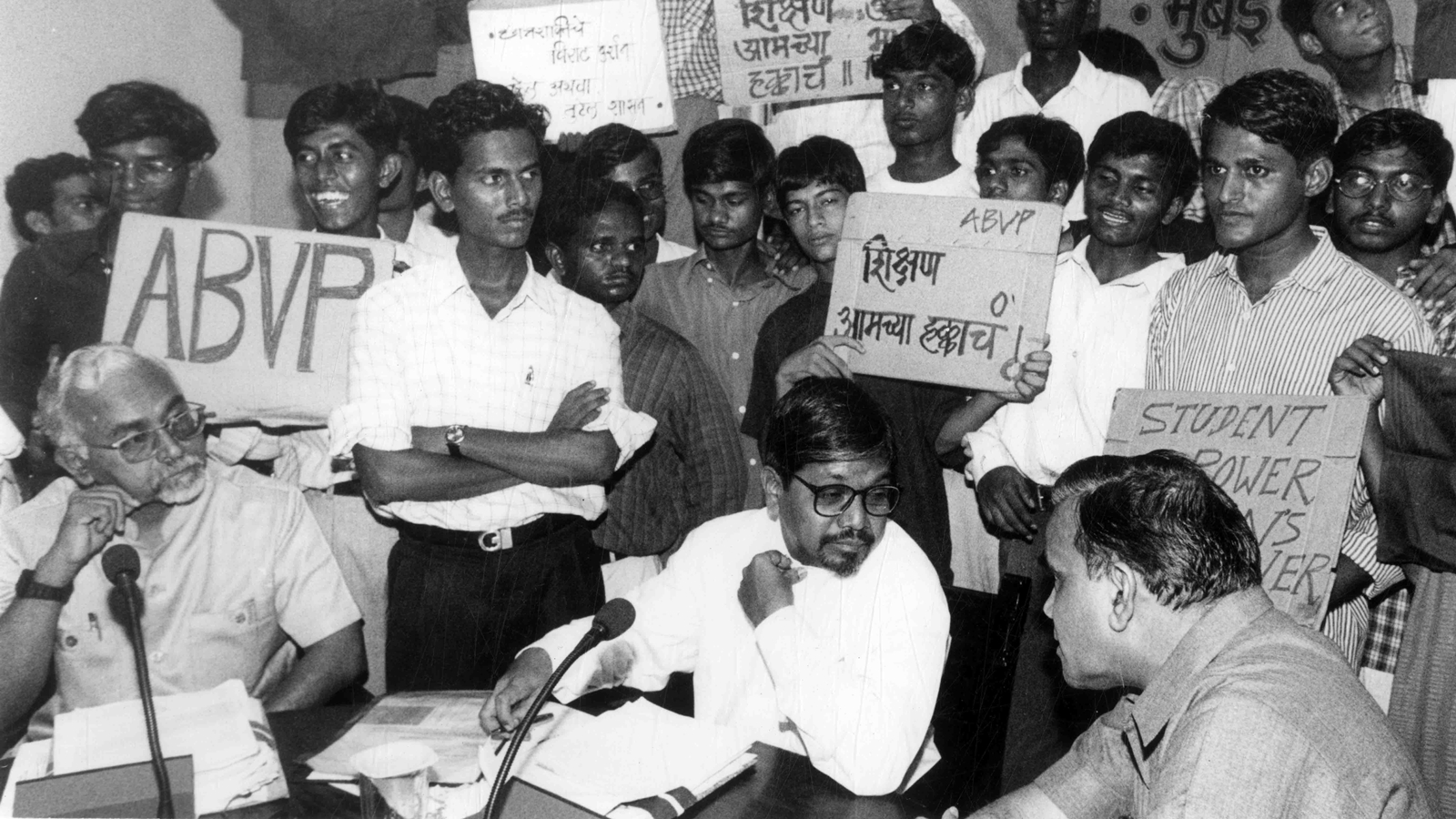
Thousands of students in Maharashtra took to the streets to protest against the National Eligibility cum Entrance Test (NEET) recently. The students, who were demanding changes in the NEET policy, marched through the streets of major cities in the state, including Mumbai and Pune.
The protest was sparked by the perceived unfairness of the NEET exam, which is used to determine admission to medical and dental colleges in India. Many students feel that the exam is biased towards those who have had access to expensive coaching and tuition, and that it does not accurately reflect their knowledge and abilities.
Despite their passion and dedication to the cause, the students who protested against NEET have no voting rights on their college campuses. In Maharashtra, the Lyngdoh Committee recommendations, which were implemented in 2006, bar students from voting in college elections if they are not residents of the same district as their college. This means that many students who are studying in colleges in other districts are not able to participate in the democratic process on their campuses.
The Lyngdoh Committee recommendations were intended to reduce violence and money power in student elections, but many students feel that they have had the opposite effect. By disenfranchising students who are not residents of the same district as their college, the recommendations have reduced the participation of students in the democratic process and have given more power to local students who may have vested interests.
The issue of voting rights for students on college campuses is a complex one, and there are valid arguments on both sides. On the one hand, allowing students to vote in college elections can increase participation and engagement in the democratic process, and can give students a greater sense of ownership and responsibility for their colleges. On the other hand, it can also lead to violence and money power, as local students may try to intimidate or bribe their fellow students into voting for them.
In recent years, there have been several attempts to reform the Lyngdoh Committee recommendations and to increase student participation in college elections. However, these attempts have been met with resistance from college administrators and local politicians, who are concerned about the potential consequences of allowing students to vote.
The protest against NEET is just one example of the ways in which students in Maharashtra are fighting for their rights and demanding change. Despite the challenges they face, the students remain committed to their cause and are determined to bring about positive change in their colleges and in their state.
The NEET protest highlights the need for greater student participation in the democratic process on college campuses. By giving students the right to vote, colleges can increase engagement and participation, and can give students a greater sense of ownership and responsibility for their colleges. It is time for college administrators and politicians to reconsider the Lyngdoh Committee recommendations and to find new ways to increase student participation in college elections.
In conclusion, the protest against NEET in Maharashtra highlights the need for greater student participation in the democratic process on college campuses. The issue of voting rights for students is complex, but it is clear that the current system is not working and that reform is needed. By giving students the right to vote, colleges can increase engagement and participation, and can give students a greater sense of ownership and responsibility for their colleges.
The future of student politics in Maharashtra depends on the ability of college administrators and politicians to reform the Lyngdoh Committee recommendations and to increase student participation in college elections. It is time for change, and it is time for students to have a greater say in the democratic process on their campuses.
The NEET protest is a wake-up call for college administrators and politicians to take the demands of students seriously and to work towards creating a more inclusive and participatory democratic process on college campuses.
Frequently asked questions
What is the NEET exam?
The National Eligibility cum Entrance Test (NEET) is an exam used to determine admission to medical and dental colleges in India.
Why do students in Maharashtra not have voting rights on campus?
The Lyngdoh Committee recommendations, implemented in 2006, bar students from voting in college elections if they are not residents of the same district as their college.