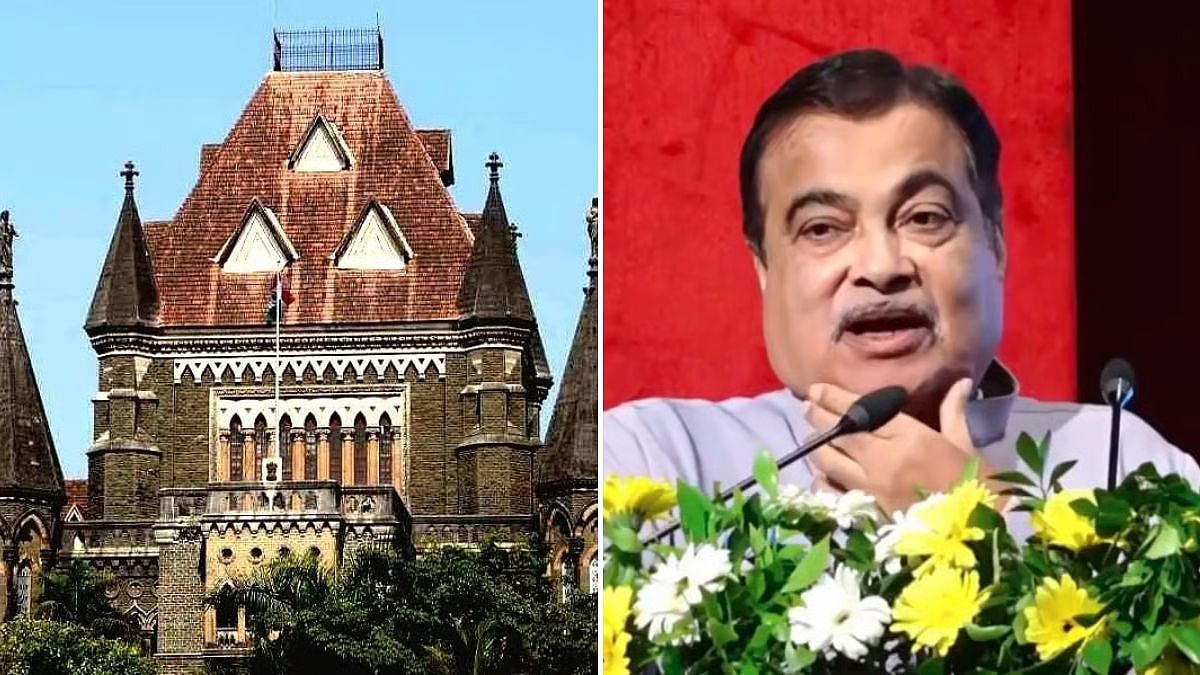
Calcutta High Court Rules On Vande Mataram In Madrasas
Calcutta High Court makes oral observation on singing Vande Mataram in madrasas. Court questions punitive action against non-compliant institutions.
'%3E%3Crect%20width%3D'96'%20height%3D'96'%20fill%3D'%231A5276'%2F%3E%3Ccircle%20cx%3D'30'%20cy%3D'24'%20r%3D'44'%20fill%3D'%23fff'%20opacity%3D'.12'%2F%3E%3Ccircle%20cx%3D'60'%20cy%3D'74'%20r%3D'40'%20fill%3D'%23000'%20opacity%3D'.10'%2F%3E%3C%2Fg%3E%3Cg%20fill%3D'%23fff'%3E%3Cpath%20d%3D'M31%2041%20L48%2031%20L65%2041%20Z'%2F%3E%3Crect%20x%3D'33'%20y%3D'43'%20width%3D'4'%20height%3D'17'%2F%3E%3Crect%20x%3D'41'%20y%3D'43'%20width%3D'4'%20height%3D'17'%2F%3E%3Crect%20x%3D'51'%20y%3D'43'%20width%3D'4'%20height%3D'17'%2F%3E%3Crect%20x%3D'59'%20y%3D'43'%20width%3D'4'%20height%3D'17'%2F%3E%3Crect%20x%3D'30'%20y%3D'62'%20width%3D'36'%20height%3D'4'%20rx%3D'1'%2F%3E%3C%2Fg%3E%3C%2Fsvg%3E)

The Calcutta High Court made an oral observation on Tuesday stating that the heavens will not fall if all six stanzas of Vande Mataram are sung in madrasas. This observation was made during the hearing of a Public Interest Litigation (PIL) challenging a government notification that makes the rendition of the complete national song mandatory in such institutions.
A Bench comprising Acting Chief Justice Tapabrata Chakraborty and Justice Partha Sarathi Sen made the observation. The court was addressing concerns over the religious implications of singing the national song. The Acting Chief Justice remarked that uttering a quote not in one's religion would not change their religious affiliation.
The court also drew a comparison with educational institutions run by other religious communities. Referring to Christian schools, the Bench observed that students from different faiths routinely participate in prayers without raising similar objections.
The petitioners, represented by Senior Advocate Bikash Ranjan Bhattacharya, argued that although Vande Mataram has been adopted as India's national song, it cannot be made compulsory for students studying in madrasas. The counsel submitted that the National Anthem occupies a higher constitutional status than the National Song and therefore the latter cannot be imposed.
The Bench, however, questioned whether the government had taken any punitive action against institutions that had not complied with the notification. The court asked if any coercive action had been taken for strict implementation of the circular. Responding to the query, the petitioners' counsel said the authorities had not yet attempted to enforce the notification.
The Bench then observed that unless any punitive action had been initiated, the petition was based only on apprehension. The court asked if anybody had suffered yet due to the notification. Appearing for the State, Additional Solicitor General Dhiraj Kumar Trivedi sought time to file a report and obtain detailed instructions.
He argued that an injunction could not be granted merely on the basis of a perceived future threat. Senior Advocate Kalyan Bandopadhyay also referred to a parliamentary debate on the issue, stating that Vande Mataram had been discussed in Parliament for nearly 12 hours in July last year, but no resolution was ultimately passed due to differences in opinion.
The court's observation highlights the ongoing debate over the singing of Vande Mataram in madrasas. The issue has sparked concerns over religious freedom and the role of the national song in educational institutions. As the case continues, it remains to be seen how the court will ultimately rule on the matter.
In the context of Indian education and nationalism, the singing of Vande Mataram has been a topic of discussion for years. The national song has been seen as a symbol of Indian patriotism and unity. However, its implementation in madrasas has raised concerns over religious implications and freedom.
The Calcutta High Court's observation is significant, as it suggests that the singing of Vande Mataram in madrasas may not be as contentious as previously thought. The court's comparison with Christian schools highlights the fact that students from different faiths can participate in prayers and songs without raising objections.
Ultimately, the court's ruling will have implications for the implementation of the national song in madrasas and other educational institutions. As the case continues, it is likely that the debate over Vande Mataram will remain a topic of discussion in Indian education and politics.
The significance of the court's observation lies in its potential to shape the future of nationalism and education in India. The ruling may set a precedent for the implementation of the national song in educational institutions, and its impact will be closely watched by educators, policymakers, and citizens alike.
In conclusion, the Calcutta High Court's oral observation on the singing of Vande Mataram in madrasas highlights the ongoing debate over nationalism and education in India. The court's ruling will have significant implications for the implementation of the national song in educational institutions, and its impact will be closely watched by all stakeholders involved.
Frequently asked questions
What is the issue with singing Vande Mataram in madrasas?
The issue is related to concerns over religious implications and freedom, as some argue that the national song cannot be made compulsory for students studying in madrasas.
What was the Calcutta High Court's observation on the matter?
The court orally observed that the heavens will not fall if all six stanzas of Vande Mataram are sung in madrasas, and questioned whether any punitive action had been taken against institutions that had not complied with the notification.