Harvard Shares Simple Meditation Techniques
Meditation helps relieve stress and improve sleep. Try these simple techniques.
'%3E%3Crect%20width%3D'96'%20height%3D'96'%20fill%3D'%23B3261E'%2F%3E%3Ccircle%20cx%3D'30'%20cy%3D'24'%20r%3D'44'%20fill%3D'%23fff'%20opacity%3D'.12'%2F%3E%3Ccircle%20cx%3D'60'%20cy%3D'74'%20r%3D'40'%20fill%3D'%23000'%20opacity%3D'.10'%2F%3E%3C%2Fg%3E%3Cg%20fill%3D'%23fff'%3E%3Crect%20x%3D'29'%20y%3D'49'%20width%3D'8'%20height%3D'19'%20rx%3D'1'%2F%3E%3Crect%20x%3D'39'%20y%3D'40'%20width%3D'9'%20height%3D'28'%20rx%3D'1'%2F%3E%3Crect%20x%3D'50'%20y%3D'45'%20width%3D'8'%20height%3D'23'%20rx%3D'1'%2F%3E%3Crect%20x%3D'60'%20y%3D'53'%20width%3D'7'%20height%3D'15'%20rx%3D'1'%2F%3E%3Crect%20x%3D'41'%20y%3D'34'%20width%3D'5'%20height%3D'6'%2F%3E%3C%2Fg%3E%3C%2Fsvg%3E)
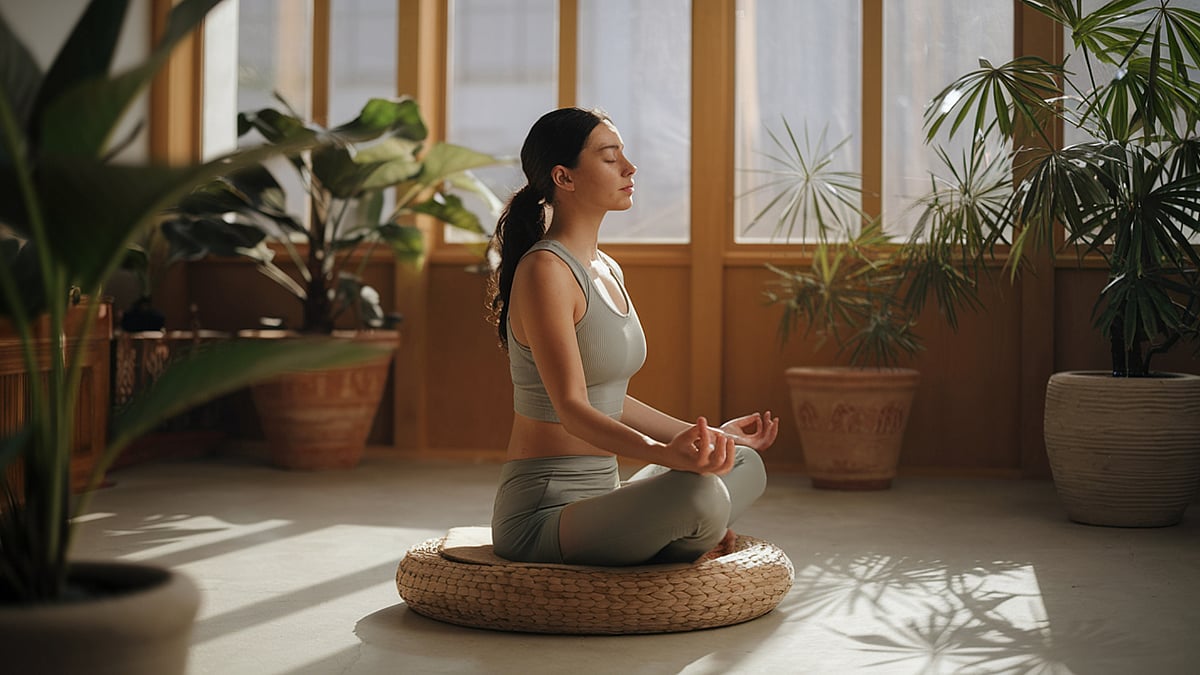
Harvard Health Publishing has highlighted meditation as a simple practice that can help people manage everyday stress and create a calmer state of mind. Meditation has been practiced for centuries across various traditions, including Hinduism, Buddhism, and Jainism.
While the reasons for practicing meditation may vary, modern health discussions increasingly focus on how meditation and mindfulness can support emotional and overall well-being. However, meditation and mindfulness are not the same, although the terms are often used interchangeably. Mindfulness refers to paying attention to the present moment and observing thoughts, feelings, and surroundings without judgment.
Meditation, on the other hand, is a practice that can help develop this awareness. According to Dr. Darshan Mehta, an assistant professor of medicine and psychiatry at Harvard Medical School, meditation can complement approaches such as psychotherapy, medication, physical rehabilitation, and other healthy lifestyle changes by helping people respond to stressful situations with greater awareness.
To start meditating, one does not require special equipment or extensive experience. Harvard's guidance suggests beginning with a short session of around five minutes and gradually increasing the duration. Choose a time when you are least likely to be disturbed, such as morning, midday, or evening.
Sit comfortably with your back supported, feet on the floor, and shoulders relaxed. You can also sit on a cushion or meditate while lying down, standing, or walking. One of the simplest techniques is diaphragmatic or belly breathing. Place one hand on your chest and another on your abdomen. Slowly inhale and notice your abdomen expanding, then breathe out gently as it falls.
When your mind wanders, simply bring your attention back to your breathing. Deep, controlled breathing can activate the body's relaxation response and may help slow the heart rate and lower blood pressure. Another technique is to focus on a repeated word, phrase, or sound, such as 'om' or 'peace.'
You can also try a body scan before bed, which involves gradually directing attention from your feet upward, noticing areas of tension or discomfort along the way. Practiced while lying in bed, it can become part of a relaxing nighttime routine.
By incorporating meditation into your daily routine, you can become more aware of your thoughts, manage everyday stress, and create a calmer state of mind. This can lead to improved sleep quality and overall well-being.
In today's fast-paced world, it's essential to take a step back and focus on our mental health. Meditation is a simple yet effective way to do so, and with Harvard's guidance, you can start your meditation journey today.
In conclusion, meditation is a powerful tool that can help you relieve stress and improve your sleep. By starting with short sessions and gradually increasing the duration, you can develop greater awareness and respond to stressful situations with greater ease.
So, take a deep breath, sit comfortably, and start your meditation journey today. You can begin with just five minutes a day and gradually increase the duration as you become more comfortable with the practice.
Remember, meditation is not a replacement for medical treatment or therapy, but it can be a useful complement to other approaches. Consult with a healthcare professional before starting any new practice, especially if you have any underlying medical conditions.
With regular practice, you can experience the benefits of meditation and improve your overall well-being. So, why not give it a try today?
Frequently asked questions
What is the difference between meditation and mindfulness?
Meditation is a practice that helps develop awareness, while mindfulness refers to paying attention to the present moment without judgment.
How can I start meditating?
Start with short sessions of around 5 minutes, choose a comfortable position, and focus on your breathing or a repeated word/phrase.