Bumblebees Survive Pesticide, But Genes Change
Bumblebees withstand modern pesticide, but their genes show changes. What does this mean for their survival?
'%3E%3Crect%20width%3D'96'%20height%3D'96'%20fill%3D'%23B3261E'%2F%3E%3Ccircle%20cx%3D'30'%20cy%3D'24'%20r%3D'44'%20fill%3D'%23fff'%20opacity%3D'.12'%2F%3E%3Ccircle%20cx%3D'60'%20cy%3D'74'%20r%3D'40'%20fill%3D'%23000'%20opacity%3D'.10'%2F%3E%3C%2Fg%3E%3Cg%20fill%3D'%23fff'%3E%3Crect%20x%3D'29'%20y%3D'49'%20width%3D'8'%20height%3D'19'%20rx%3D'1'%2F%3E%3Crect%20x%3D'39'%20y%3D'40'%20width%3D'9'%20height%3D'28'%20rx%3D'1'%2F%3E%3Crect%20x%3D'50'%20y%3D'45'%20width%3D'8'%20height%3D'23'%20rx%3D'1'%2F%3E%3Crect%20x%3D'60'%20y%3D'53'%20width%3D'7'%20height%3D'15'%20rx%3D'1'%2F%3E%3Crect%20x%3D'41'%20y%3D'34'%20width%3D'5'%20height%3D'6'%2F%3E%3C%2Fg%3E%3C%2Fsvg%3E)
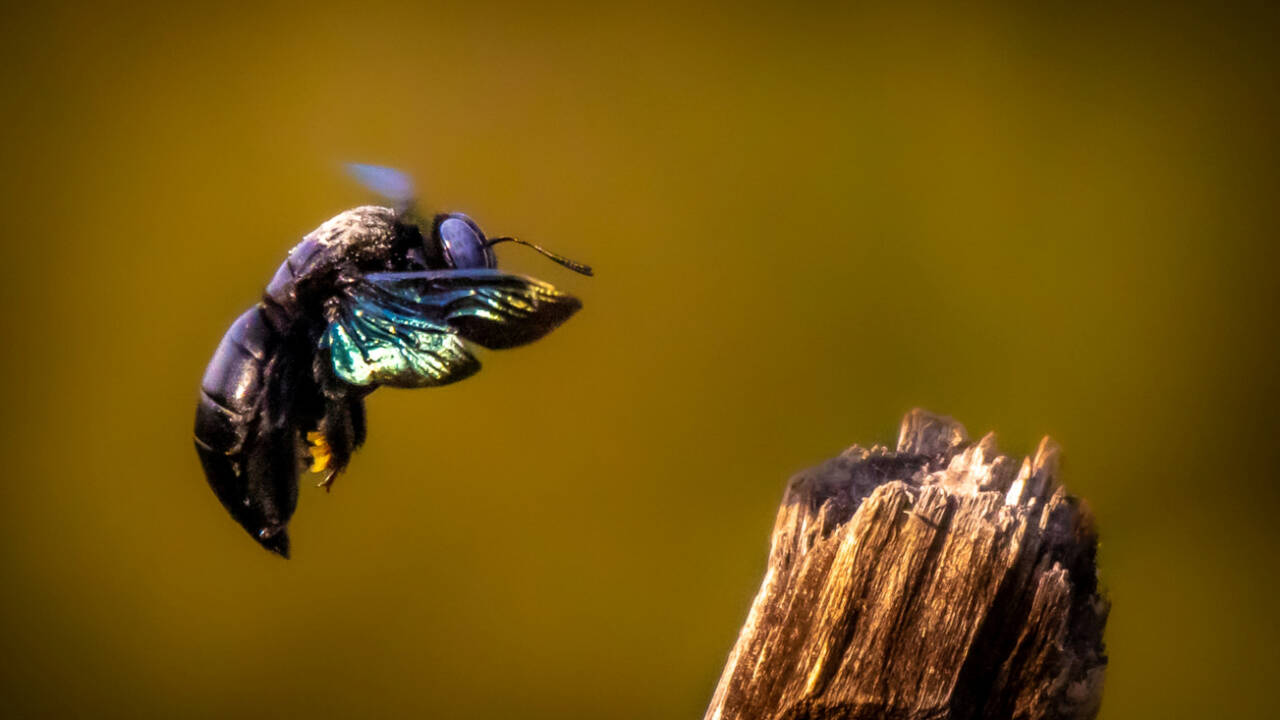
A recent study has found that bumblebees are able to survive exposure to modern pesticides, but the genes that help them do so are undergoing changes. This discovery was made after researchers examined the effects of a commonly used pesticide on bumblebee colonies.
The study revealed that while the bumblebees were able to withstand the pesticide, their genetic makeup began to shift in response to the exposure. This change in genes could have significant implications for the long-term survival of bumblebee populations.
Bumblebees play a crucial role in pollinating plants and crops, and their decline could have severe consequences for food production and ecosystem health. The use of pesticides has been linked to the decline of bee populations, and this study provides new insights into the complex relationship between bees and pesticides.
The researchers found that the bumblebees' ability to survive the pesticide was due to the activation of certain genes that helped to detoxify the chemical. However, this activation came at a cost, as the genes involved in other important functions, such as metabolism and reproduction, were suppressed.
This study highlights the need for further research into the effects of pesticides on bee populations and the importance of developing strategies to mitigate these effects. It also underscores the complexity of the relationship between bees and their environment, and the need for a nuanced approach to managing pesticide use.
The decline of bee populations is a global concern, and understanding the impact of pesticides on these populations is critical to developing effective conservation strategies. This study provides a valuable contribution to our understanding of this issue and highlights the need for continued research into the effects of pesticides on bee populations.
In the context of India, where agriculture is a significant sector, the decline of bee populations could have severe consequences for food production and ecosystem health. The Indian government has implemented measures to reduce the use of pesticides and promote sustainable agriculture practices, but more needs to be done to address this issue.
The study's findings have significant implications for the conservation of bumblebee populations and the development of strategies to protect these important pollinators. As the world grapples with the challenges of food production and ecosystem health, understanding the impact of pesticides on bee populations is critical to developing effective solutions.
In conclusion, the study's discovery that bumblebees can survive modern pesticides, but their genes begin to change, highlights the complex and nuanced relationship between bees and their environment. It underscores the need for further research into the effects of pesticides on bee populations and the importance of developing strategies to mitigate these effects.
What this means for Mumbai and India is that the conservation of bee populations is crucial for maintaining ecosystem health and food production. The city's and country's reliance on agriculture makes it essential to develop strategies to reduce the use of pesticides and promote sustainable agriculture practices. By understanding the impact of pesticides on bee populations, we can work towards developing effective solutions to protect these important pollinators and ensure the long-term health of our ecosystem.