NCLT Approves Subhash Chandra's ₹6.5 Crore Repayment Plan
Subhash Chandra's repayment plan approved, creditors may recover only 3 paise per ₹100 claimed.
'%3E%3Crect%20width%3D'96'%20height%3D'96'%20fill%3D'%23B3261E'%2F%3E%3Ccircle%20cx%3D'30'%20cy%3D'24'%20r%3D'44'%20fill%3D'%23fff'%20opacity%3D'.12'%2F%3E%3Ccircle%20cx%3D'60'%20cy%3D'74'%20r%3D'40'%20fill%3D'%23000'%20opacity%3D'.10'%2F%3E%3C%2Fg%3E%3Cg%20fill%3D'%23fff'%3E%3Crect%20x%3D'29'%20y%3D'49'%20width%3D'8'%20height%3D'19'%20rx%3D'1'%2F%3E%3Crect%20x%3D'39'%20y%3D'40'%20width%3D'9'%20height%3D'28'%20rx%3D'1'%2F%3E%3Crect%20x%3D'50'%20y%3D'45'%20width%3D'8'%20height%3D'23'%20rx%3D'1'%2F%3E%3Crect%20x%3D'60'%20y%3D'53'%20width%3D'7'%20height%3D'15'%20rx%3D'1'%2F%3E%3Crect%20x%3D'41'%20y%3D'34'%20width%3D'5'%20height%3D'6'%2F%3E%3C%2Fg%3E%3C%2Fsvg%3E)
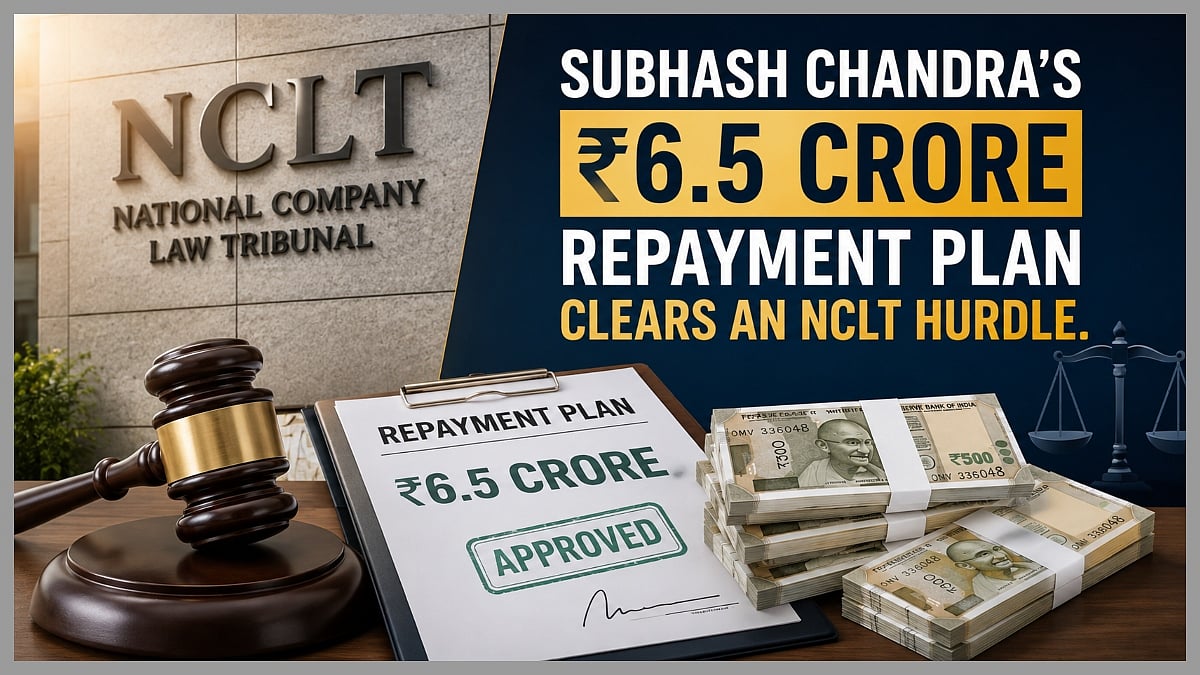
Subhash Chandra's repayment plan has been approved by the National Company Law Tribunal (NCLT), which may result in creditors recovering only ₹6.5 crore out of the ₹22,006.57 crore claims they had accepted against him. This means that nearly 99.97 percent of their dues may remain unpaid.
The plan was voted on by creditors in November 2024 and secured 80.814 percent of the voting share, crossing the required majority. However, several major banks, including Axis Bank, Canara Bank, and HDFC Bank, opposed the plan.
The NCLT's approval of the plan comes after a disagreement between the judicial and technical members of the original bench. The matter was referred to a third member, Nilesh Sharma, who rejected objections concerning the voting process and allegations that entities linked to Chandra had influenced the result.
The tribunal noted that Chandra's net worth had fallen significantly from around ₹45,888 crore in 2017 to nearly ₹31.79 crore. However, it said that this comparison alone could not prove that assets were hidden or diverted, and that evidence would be needed to support such claims.
The case began in 2022 when Indiabulls Housing Finance, now Sammaan Capital, initiated insolvency proceedings against Chandra over a ₹170 crore loan to Vivek Infracon that he had personally guaranteed. The NCLT admitted the petition in April 2024.
The approval of the repayment plan is a significant development in the case, and it will now return to the original bench for a formal order. The plan's approval has raised concerns about the recovery of debts by creditors, with some experts suggesting that it may set a precedent for other cases.
The NCLT's decision is also significant because it highlights the challenges faced by creditors in recovering debts from large corporate debtors. The case has also raised questions about the effectiveness of the insolvency and bankruptcy code in ensuring that debtors are held accountable for their debts.
In the context of the Indian economy, the case is important because it involves a high-profile corporate debtor and a large amount of debt. The outcome of the case will be closely watched by creditors, debtors, and regulators, and it may have implications for the broader economy.
The NCLT's approval of the repayment plan is a reminder that the recovery of debts is a complex and challenging process, and that creditors often face significant hurdles in recovering their dues. The case highlights the need for effective regulation and oversight to ensure that debtors are held accountable for their debts and that creditors are able to recover their dues in a fair and timely manner.
In conclusion, the NCLT's approval of Subhash Chandra's repayment plan is a significant development in the case, and it has raised important questions about the recovery of debts by creditors. The case highlights the challenges faced by creditors in recovering debts from large corporate debtors and the need for effective regulation and oversight to ensure that debtors are held accountable for their debts.
Frequently asked questions
What is the total amount of claims accepted by creditors against Subhash Chandra?
The total amount of claims accepted by creditors against Subhash Chandra is ₹22,006.57 crore.
How much may creditors recover under the approved repayment plan?
Creditors may recover only ₹6.5 crore under the approved repayment plan, which is approximately 3 paise per ₹100 claimed.