India Ends Boarding Pass Stamping For International Flyers
No more stamping from Sept 1. E-boarding passes accepted.
'%3E%3Crect%20width%3D'96'%20height%3D'96'%20fill%3D'%23B3261E'%2F%3E%3Ccircle%20cx%3D'30'%20cy%3D'24'%20r%3D'44'%20fill%3D'%23fff'%20opacity%3D'.12'%2F%3E%3Ccircle%20cx%3D'60'%20cy%3D'74'%20r%3D'40'%20fill%3D'%23000'%20opacity%3D'.10'%2F%3E%3C%2Fg%3E%3Cg%20fill%3D'%23fff'%3E%3Crect%20x%3D'29'%20y%3D'49'%20width%3D'8'%20height%3D'19'%20rx%3D'1'%2F%3E%3Crect%20x%3D'39'%20y%3D'40'%20width%3D'9'%20height%3D'28'%20rx%3D'1'%2F%3E%3Crect%20x%3D'50'%20y%3D'45'%20width%3D'8'%20height%3D'23'%20rx%3D'1'%2F%3E%3Crect%20x%3D'60'%20y%3D'53'%20width%3D'7'%20height%3D'15'%20rx%3D'1'%2F%3E%3Crect%20x%3D'41'%20y%3D'34'%20width%3D'5'%20height%3D'6'%2F%3E%3C%2Fg%3E%3C%2Fsvg%3E)
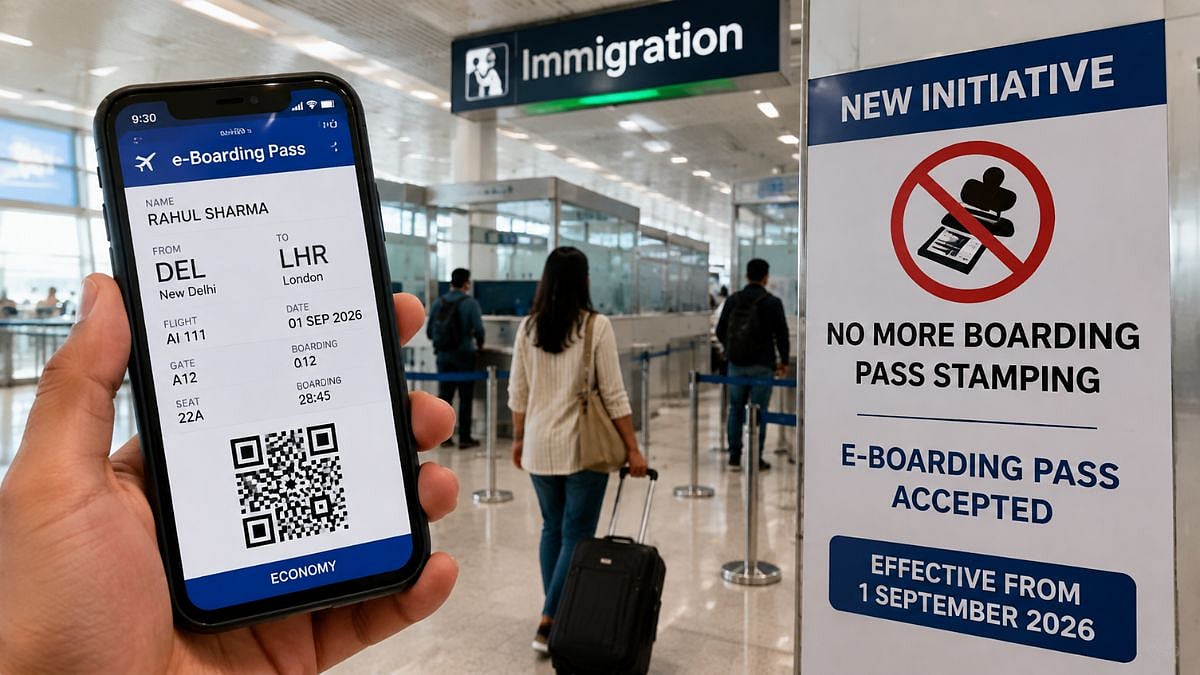
From September 1, international flyers from Indian airports will no longer need to get their boarding passes stamped at immigration counters. The Bureau of Immigration (BOI) has decided to do away with the mandatory requirement of physical boarding passes and the stamping of boarding passes at immigration counters at all international airports in the country.
The decision aims to make the clearance process simpler and more convenient for passengers. International travellers will be able to show e-boarding passes on their smartphones for immigration clearance. Physical boarding passes will continue to be accepted, but immigration authorities will no longer stamp them.
According to officials, the practice of stamping boarding passes was causing inconvenience to passengers. There were also instances in which boarding passes could not be read properly because of improper or incorrect stamping. The authorities consequently decided that the practice was no longer necessary.
The change is expected to make international departures more straightforward for passengers, particularly those who already rely on digital boarding passes. Removing a procedure that officials themselves found inconvenient is a practical step towards reducing unnecessary paperwork at airports.
Security officials pointed out that the Central Industrial Security Force (CISF) does not stamp the boarding passes of international travellers during individual frisking. Passengers only have to produce their boarding passes for the required clearance. In fact, the CISF stopped stamping boarding passes of both domestic and international passengers many years ago.
Another change may also be on the way for Indian passport holders. Officials said a pilot project is under way concerning the stamping of immigration entry and exit on Indian passports. The authorities plan to do away with this stamping practice after the pilot exercise is completed.
The proposed changes point towards a more digital immigration process at Indian airports, with fewer physical stamps and documents involved. For passengers, the immediate change from September 1 means one simple thing: an e-boarding pass on a smartphone will be enough for immigration clearance, while those carrying a physical boarding pass can still use it without getting it stamped.
The move is part of a larger effort to streamline and modernize the immigration process at Indian airports. With the increasing use of digital technology, the need for physical stamps and documents is decreasing. The changes are expected to make the travel experience more convenient and efficient for passengers.
The decision to end boarding pass stamping is a significant step towards creating a more passenger-friendly airport experience. It is expected to reduce wait times and make the immigration process more efficient. The move is also expected to reduce the risk of errors and inconsistencies associated with physical stamping.
Overall, the changes to the immigration process at Indian airports are a positive development for passengers. They are expected to make the travel experience more convenient, efficient, and hassle-free. With the increasing use of digital technology, it is likely that we will see more changes in the future aimed at streamlining and modernizing the immigration process.
The impact of the changes will be felt by passengers traveling from Indian airports from September 1. They will no longer need to worry about getting their boarding passes stamped, and can instead focus on enjoying their travel experience. The changes are a significant step towards creating a more modern and efficient immigration process at Indian airports.
In conclusion, the decision to end boarding pass stamping is a welcome move for passengers traveling from Indian airports. It is expected to make the travel experience more convenient, efficient, and hassle-free. With the increasing use of digital technology, it is likely that we will see more changes in the future aimed at streamlining and modernizing the immigration process.
The changes are part of a larger effort to improve the overall travel experience at Indian airports. They are expected to reduce wait times, make the immigration process more efficient, and reduce the risk of errors and inconsistencies associated with physical stamping. The move is a significant step towards creating a more passenger-friendly airport experience.
The decision to end boarding pass stamping is a significant development for the travel industry in India. It is expected to have a positive impact on the travel experience of passengers, and is a step towards creating a more modern and efficient immigration process at Indian airports.
The proposed changes are a positive step towards streamlining the immigration process at Indian airports. They are expected to make the travel experience more convenient, efficient, and hassle-free for passengers. With the increasing use of digital technology, it is likely that we will see more changes in the future aimed at modernizing the immigration process.
In the coming months, passengers can expect to see more changes aimed at streamlining the immigration process at Indian airports. The authorities are expected to introduce more digital solutions to make the travel experience more convenient and efficient. The changes are a significant step towards creating a more modern and efficient immigration process at Indian airports.
The decision to end boarding pass stamping is a welcome move for passengers traveling from Indian airports. It is expected to make the travel experience more convenient, efficient, and hassle-free. With the increasing use of digital technology, it is likely that we will see more changes in the future aimed at streamlining and modernizing the immigration process.
The changes are part of a larger effort to improve the overall travel experience at Indian airports. They are expected to reduce wait times, make the immigration process more efficient, and reduce the risk of errors and inconsistencies associated with physical stamping. The move is a significant step towards creating a more passenger-friendly airport experience.
In conclusion, the decision to end boarding pass stamping is a significant development for the travel industry in India. It is expected to have a positive impact on the travel experience of passengers, and is a step towards creating a more modern and efficient immigration process at Indian airports.
What it means for Mumbai and India is that the travel experience will become more convenient and efficient. The changes are expected to reduce wait times and make the immigration process more efficient. The move is a significant step towards creating a more passenger-friendly airport experience.
Frequently asked questions
When will boarding pass stamping end in India?
Boarding pass stamping will end in India from September 1, 2026.
Can I still use a physical boarding pass?
Yes, physical boarding passes will still be accepted, but they will not be stamped.